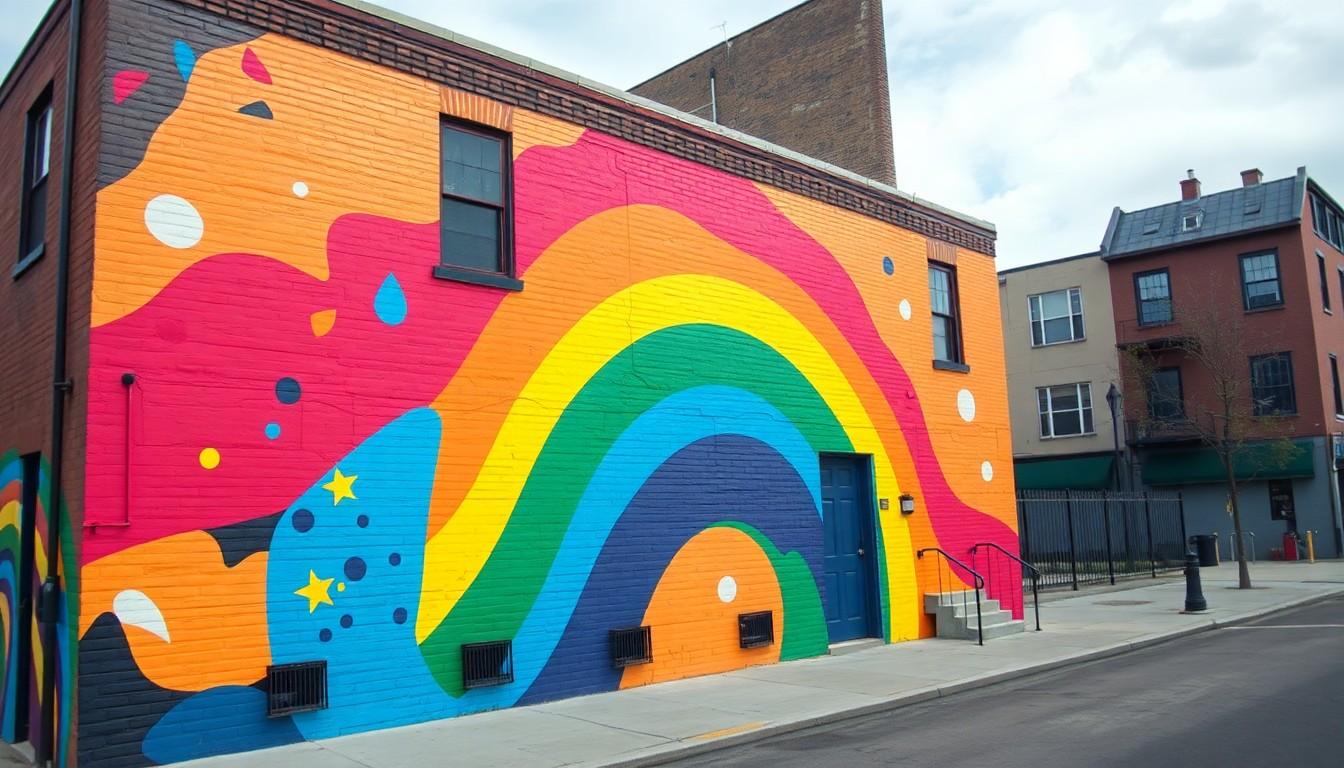
Visitors and locals in Jacksonville’s Five Points are finding a bold new way to celebrate LGBTQ+ history after rainbow crosswalks disappeared. The 1,700-square-foot mural near Park and Lomax streets brings colour, memory and belonging back to one of Riverside Avondale’s liveliest corners, offering a lasting public statement that’s harder to quietly remove.
Essential Takeaways
- A permanent-looking statement: The Five Points mural covers around 1,700 square feet near Park and Lomax streets.
- Created for visibility: Artist Shaun Thurston designed it to represent people across the spectrum of humanity.
- A response to change: It follows the removal of rainbow crosswalks after state transportation directives.
- Part of a wider story: Jacksonville has also marked Ax Handle Saturday and staged Pride displays on its bridges.
- A neighbourhood landmark: Five Points remains a popular Riverside Avondale destination for LGBTQ+ visitors and allies.
Five Points gets its colour back
The new Five Points mural doesn't whisper. Its broad sweep of colour is designed to catch the eye, invite a pause and make a busy Jacksonville neighbourhood feel even more unmistakably itself.
Unveiled near Park and Lomax streets, the 1,700-square-foot artwork celebrates LGBTQ+ people and their history. According to local coverage from Action News Jax, the mural honours a wide range of community members while replacing the visual presence once provided by the neighbourhood's rainbow crosswalks. [2], [5]
That matters because public art isn't simply decoration here. In a district known for restaurants, independent shops and nightlife, the mural turns a familiar meeting point into a visible reminder that identity and local history belong in public spaces too. [4], [6]
Why the mural follows the rainbow crosswalks
The artwork arrives roughly a year after rainbow crosswalks in Five Points were painted over following state transportation directives. The change was practical on paper, but emotionally it landed differently for many residents, who had come to see the crossings as a colourful sign of welcome. [2], [7]
So the mural offers a different kind of canvas. Pavement can be resurfaced or repainted, while a large wall in a prominent neighbourhood creates a more durable focal point for conversation, photographs and community gatherings.
That doesn't mean a mural solves every disagreement. It does, however, show how local communities can respond when official rules narrow the ways history and identity are displayed. Jacksonville's answer has been creative, public and, frankly, rather difficult to ignore. [3], [4]
A broader Jacksonville tradition of visible history
The Five Points project sits within a wider run of public gestures across Jacksonville. Residents have previously used rainbow-coloured lights and glow sticks to illuminate bridges when official rainbow lighting was restricted, turning themselves into a moving display of Pride. [1], [6]
The city has also unveiled a historical marker commemorating Ax Handle Saturday, the 1960 attack on Black teenagers taking part in peaceful sit-ins. That marker places a painful chapter of local racial history in the landscape rather than leaving it confined to archives or classrooms. [1], [7]
Together, these moments suggest a familiar pattern: when one form of recognition disappears, another can emerge. Sometimes it's a mural, sometimes a marker and sometimes a crowd carrying lights across a bridge on a warm Florida evening.
What visitors can expect in Riverside Avondale
For visitors, the mural adds another stop to a neighbourhood already known for its independent character. Five Points is easy to explore on foot, with food, drinks, shops and local landmarks packed into a compact area. The artwork makes a natural meeting point before dinner, after a gallery visit or during a Riverside Avondale wander. [4], [6]
It also gives people a simple way to engage with the area respectfully. Take time to look closely, support nearby businesses and avoid blocking the artwork for other visitors who want a photograph. The best public art experiences are shared ones, not hurried photo opportunities.
Anyone planning a Jacksonville LGBTQ+ itinerary will find that the mural works particularly well alongside the district's Pride-friendly venues and cultural stops. Visit Jacksonville's local guide describes Riverside Avondale and Five Points as important parts of the city's LGBTQIA+ scene, making the artwork a fitting addition rather than an isolated attraction. [6]
A rainbow that's meant to stay in view
Artist Shaun Thurston said the mural intentionally represents people across the spectrum of humanity, allowing residents to recognise themselves in both the figures and the rainbow. That inclusive approach gives the work a broader reach than a single slogan could manage. [5], [7]
The timing is also significant. Florida has introduced restrictions affecting how race, racism, sexual orientation and gender identity can be discussed in public education, while state officials argue those measures are intended to prevent ideological indoctrination rather than erase history. [1]
Against that backdrop, Jacksonville's mural feels like a local statement about who gets to be seen. It doesn't replace teaching, policy or lived experience, but it does put a clear message on the street: a city's diversity can be regulated on paper, yet it keeps resurfacing in the places where people gather.
Jacksonville's public art is doing more than decorating walls
The Five Points mural is colourful, but its real power is that it connects memory with place. Residents don't have to seek out a museum or wait for a parade to encounter this piece; they can find it during an ordinary walk through the neighbourhood. [3], [4]
That everyday visibility is what makes the project feel significant. A rainbow on the ground may vanish, but a community can keep telling its story through walls, markers, marches and the people who show up.
For Jacksonville, the outlook is clear enough. Public art will keep changing, but the city's demand to be represented isn't going anywhere.
It's a bright, local reminder that visibility can find another canvas.
Source Reference Map
Story idea inspired by: [1]
Sources by paragraph: