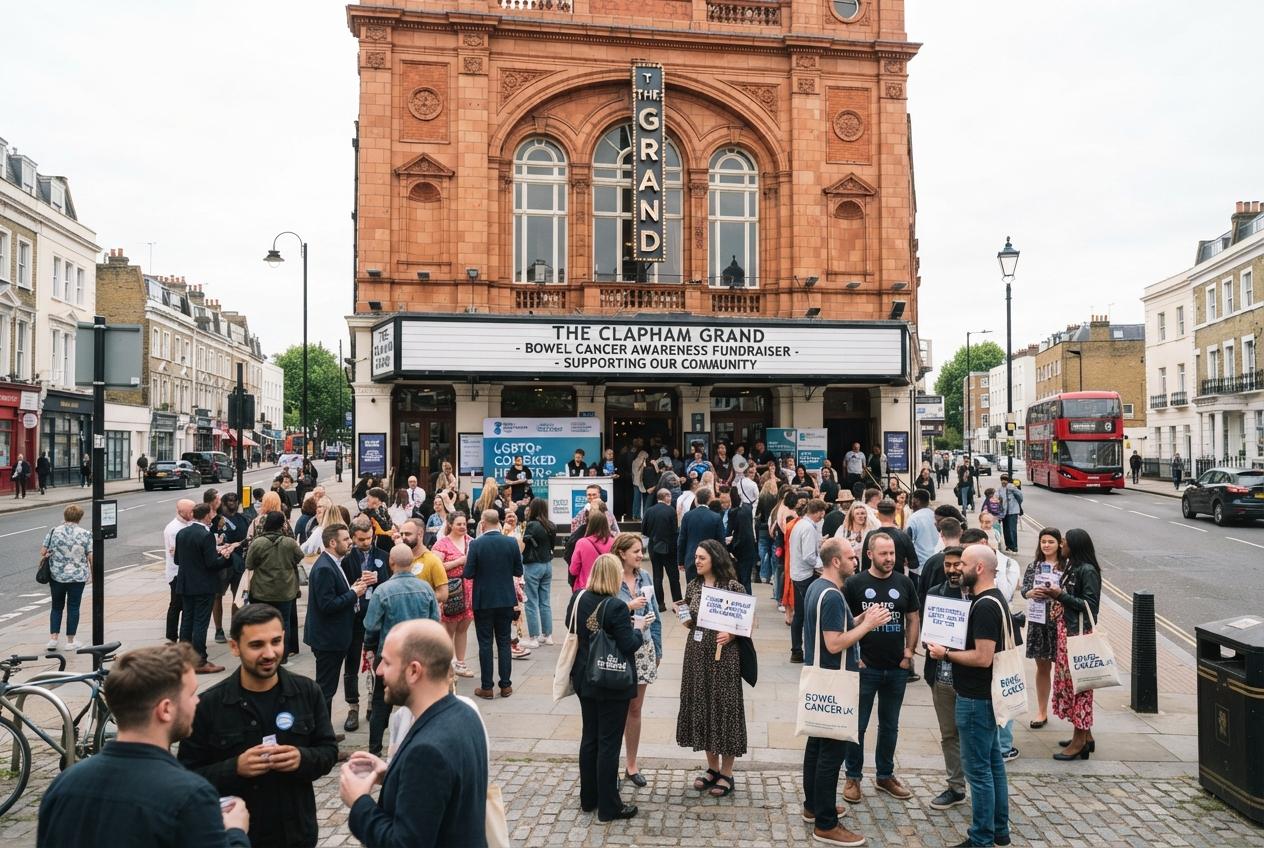
Shoppers aren't the only ones talking about health this autumn. In south-west London, a colourful charity night is turning bowel cancer awareness into a communal celebration, using music, drag and dancing to reach LGBTQIA+ audiences who can too easily be missed by traditional screening messages.
Essential Takeaways
- A personal story: Dan Edwards lived with bowel symptoms for around three years before receiving a stage 3 diagnosis.
- A serious discovery: Doctors found a 10cm tumour that had grown into the duodenum and nearby lymph nodes.
- A community-led response: Booty Call CIC's event will combine entertainment with LGBTQIA+ cancer-awareness work.
- A practical reminder: Persistent bowel changes, blood in the stool, pain, bloating, weight loss or unusual tiredness should be discussed with a GP.
- A lively line-up: Drag artists, DJs, pop acts and special guests will perform at The Clapham Grand in London.
From an awkward symptom to a life-changing diagnosis
It started with something many people might dismiss as embarrassing or inconvenient: persistent diarrhoea. Edwards experienced symptoms for roughly three years and initially connected them with late nights and unreliable food, before looking visibly unwell in August 2024.
Further investigation brought a colonoscopy, CT scan and blood tests. Doctors then discovered a 10cm tumour in his right colon, with the cancer extending into the duodenum and nearby lymph nodes. Colon Cancer Coalition guidance similarly stresses the importance of recognising warning signs and discussing concerns with healthcare professionals rather than quietly hoping they'll disappear. ([4])
Edwards was diagnosed with stage 3 bowel cancer in October 2024. He started immunotherapy the following month, had surgery in March 2025 and was told by April that there was no evidence of remaining cancer. It's a striking reminder that a symptom doesn't have to be dramatic to deserve attention.
Why LGBTQ+ cancer awareness needs a wider lens
The planned fundraiser comes from Booty Call CIC, the non-profit Edwards established to bring bowel cancer information into LGBTQIA+ spaces. Its approach reflects a simple but important point: health advice works better when people can see their own lives, communities and concerns reflected in it.
Cancer-awareness campaigns have increasingly focused on making screening information easier to understand and more accessible. UCLA Health's colon cancer screening resources underline the value of awareness campaigns that encourage people to learn about screening and speak with clinicians about personal risk. ([7]) For some LGBTQ+ people, however, concerns about stigma, previous healthcare experiences or feeling overlooked may create an extra barrier.
Edwards has described the need to make cancer conversations less awkward and more visible. That matters because a polished poster in a waiting room won't always reach someone who rarely feels that healthcare messaging was designed with them in mind.
A Pride afterparty with a health message
The event is being presented as a mix of a Royal Variety Performance and a Pride afterparty. The evening will feature live music, drag, DJs, dancing and pop throwbacks, while keeping bowel cancer awareness at its centre.
The bill includes The Cheeky Girls, Supersister and Booty Luv, alongside special guests Diane and Linda from The Traitors. Gareth Howells and Jane Boulton will host, with Just May and Kiki Snatch from RuPaul's Drag Race also appearing. A large DJ line-up will keep the party moving through the night.
That celebratory format is more than a gimmick. Community organisations such as the Cheeky Charity network show how fundraising and public engagement can work through shared experiences, partnerships and approachable events. ([2], [3]) A room that feels welcoming may make a difficult conversation feel less clinical and more human.
What bowel cancer symptoms should prompt a check?
Persistent changes in bowel habits are worth taking seriously, particularly when they continue or appear alongside other symptoms. These can include blood in the stool, abdominal pain, bloating, unexplained weight loss and unusual tiredness.
The right response isn't to panic or diagnose yourself online. Instead, keep track of what has changed, how long it has been happening and whether symptoms are getting worse, then contact your GP. Screening advice varies according to age, location, family history and personal risk, so a clinician can help explain what applies to you.
People with concerns about access, communication or representation can also ask for adjustments and clearer explanations. Screening isn't exactly a glamorous subject, but making it easier to discuss could help more people act earlier.
A party designed to keep the conversation going
The fundraiser will take place at The Clapham Grand on Friday 23 October 2026, running from 8pm until 2.20am. Every ticket sold will support Booty Call CIC's work bringing cancer awareness into LGBTQIA+ spaces, with tickets available through Outsavvy.
Its wider message is refreshingly direct: health information doesn't always have to arrive in a solemn package. Sometimes a packed dance floor, a familiar performer and a community that understands the awkward bits can open the door to a conversation people have been avoiding.
For Edwards, the event links his experience as a cancer survivor with his life as a gay man and DJ. That personal connection gives the fundraiser its spark, but the practical takeaway is universal: unusual symptoms deserve attention, whoever you are.
Don't ignore persistent bowel changes, and don't underestimate the power of a welcoming conversation.
Source Reference Map
Story idea inspired by: [1]
Sources by paragraph: