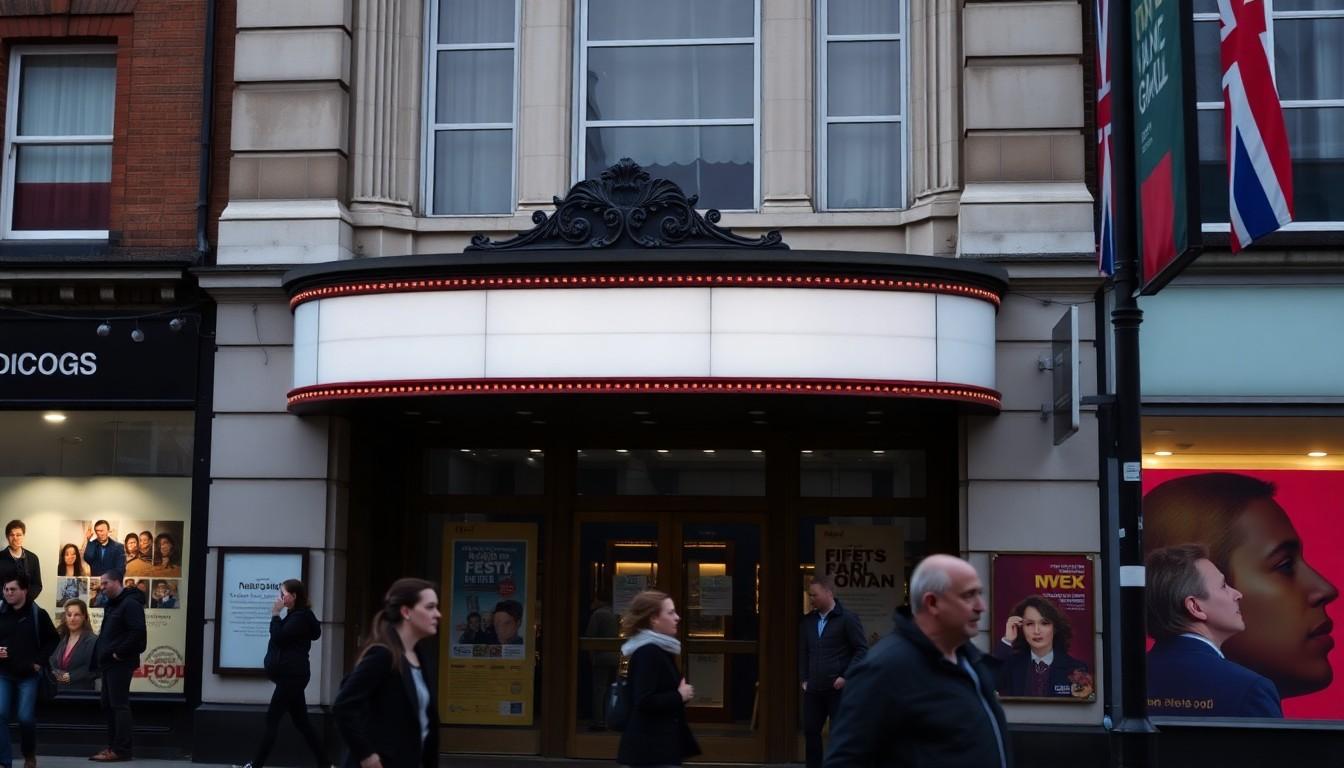
Film fans are heading to London this October for a particularly rich LGBTQ+ programme, with stories spanning gay romance, trans identity, artistic ambition and the AIDS crisis. The 70th BFI London Film Festival runs from 7 to 18 October 2026, giving audiences plenty to look forward to beyond its headline premieres.
Essential Takeaways
- A landmark year: The 70th BFI London Film Festival opens on 7 October and closes on 18 October 2026.
- A powerful opener: Andrew Scott leads Elsinore, about actor Ian Charleson and his battle with an AIDS-related illness.
- Queer love across generations: The Man I Love and Frank and Percy offer very different portraits of gay romance.
- Trans stories remain central: Sweet Milk Lake follows a young trans man returning to see his dying father.
- A programme with range: The selection moves from 1980s New York to Hampstead Heath, proving there isn't one single queer film story.
A landmark festival begins with a deeply personal story
The 2026 BFI London Film Festival has chosen an emotionally charged opening film. Elsinore, directed by Simon Stone, stars Andrew Scott as Ian Charleson, the acclaimed gay actor who prepared to play Hamlet at the National Theatre while living with an AIDS-related illness.
Charleson died in 1990, aged 40, but his story still carries a striking sense of immediacy. According to the BFI, the film explores the pressure of performance, illness and artistic ambition, all set against one of the most important periods in modern LGBTQ+ history. It's a dramatic way to begin a 70th anniversary edition. (Sources: BFI, Attitude)
Scott is also producing the film, with a screenplay by Stephen Beresford. That combination gives Elsinore some serious creative weight, while its subject adds an intimate human focus to the festival's celebratory opening. (Sources: BFI)
The AIDS crisis meets New York's creative scene
Ira Sachs returns to the world of New York with The Man I Love, a tender-looking drama about gay life in the 1980s. Rami Malek plays artist Jimmy George, alongside Tom Sturridge as his boyfriend Dennis.
The setting matters. This is a period when artistic freedom, sexual identity and community existed alongside the constant threat of the AIDS epidemic. The film appears to use that tension not simply as historical backdrop, but as a way to examine how people built relationships and found joy under extraordinary pressure. (Sources: BFI, Attitude)
Sachs has long been interested in the emotional weather of city life, and this sounds like a natural fit for his work. Expect a film that feels intimate rather than purely nostalgic, with romance carrying as much weight as the era's cultural detail. (Sources: BFI)
Older queer romance gets its moment
Not every LGBTQ+ story at the festival is about youth or first discovery. Frank and Percy, directed by Sean Mathias, places two older men at the centre of its love story.
Sir Ian McKellen and Roger Allam play strangers who meet while walking their dogs on Hampstead Heath. Their relationship begins as friendship before gradually becoming something more tender, offering a gentle portrait of companionship and later-life romance. It sounds warm, conversational and just a little bit nosy in the best possible way. (Sources: BFI, Attitude)
The supporting cast is equally eye-catching, with Stephen Fry, Joanna Lumley, Derek Jacobi, Ncuti Gatwa and Siân Phillips among the names attached. But the real draw is the central pairing, which puts emotional maturity and queer visibility firmly in the foreground. (Sources: BFI)
Trans identity takes centre stage in Sweet Milk Lake
Harvey Zielinski's Sweet Milk Lake follows Jake, a young trans man who returns to visit his estranged father, who is dying. When his father mistakes Jake for his cisgender twin brother, Jake decides not to correct him.
That premise creates an uncomfortable, emotionally complex situation without needing grand gestures. It raises questions about family memory, recognition and the painful compromises people sometimes make when time is running out. (Sources: BFI, Attitude)
The film is presented as part of a BFI Flare Special Presentation, linking the London Film Festival with the UK's leading LGBTQIA+ film event. The BFI's recent Flare programming has continued to broaden the range of queer cinema on offer, so this inclusion feels like part of a wider conversation rather than an isolated choice. (Sources: BFI Flare)
What this programme says about queer cinema now
Taken together, these films suggest a festival interested in breadth as much as visibility. There are stories about illness, desire, family, art and ageing, with very different generations and communities represented across the programme.
That variety is important because LGBTQ+ cinema works best when it refuses to become a single category. One film can be historically urgent, another quietly romantic, and another painfully domestic. Put them together and the result feels closer to real life, where identity is never just one plot point. (Sources: BFI, BFI Flare)
For audiences choosing what to see, the best approach may be to mix the obvious headline with something less familiar. Elsinore brings the festival's grand opening drama, while Frank and Percy and Sweet Milk Lake offer more intimate routes into the programme. (Sources: BFI)
The 70th BFI London Film Festival looks set to make queer stories a central part of its anniversary year, not a side note.
Explore the films that speak to you, and leave room for a surprise.
Source Reference Map
Story idea inspired by: [1]
Sources by paragraph:
- Paragraph 1: [2], [4]
- Paragraph 2: [3], [6]
- Paragraph 3: [3], [7]
- Paragraph 4: [2], [5]
- Paragraph 5: [2], [4]
- Paragraph 6: [4], [5]
- Paragraph 7: [2], [3]
- Paragraph 8: [2], [4]
- Paragraph 9: [2], [5]
- Paragraph 10: [4], [5]
- Paragraph 11: [2], [4]
- Paragraph 12: [2], [3]
- Paragraph 13: [2], [5]
- Paragraph 14: [2], [4]
- Paragraph 15: [2], [3]