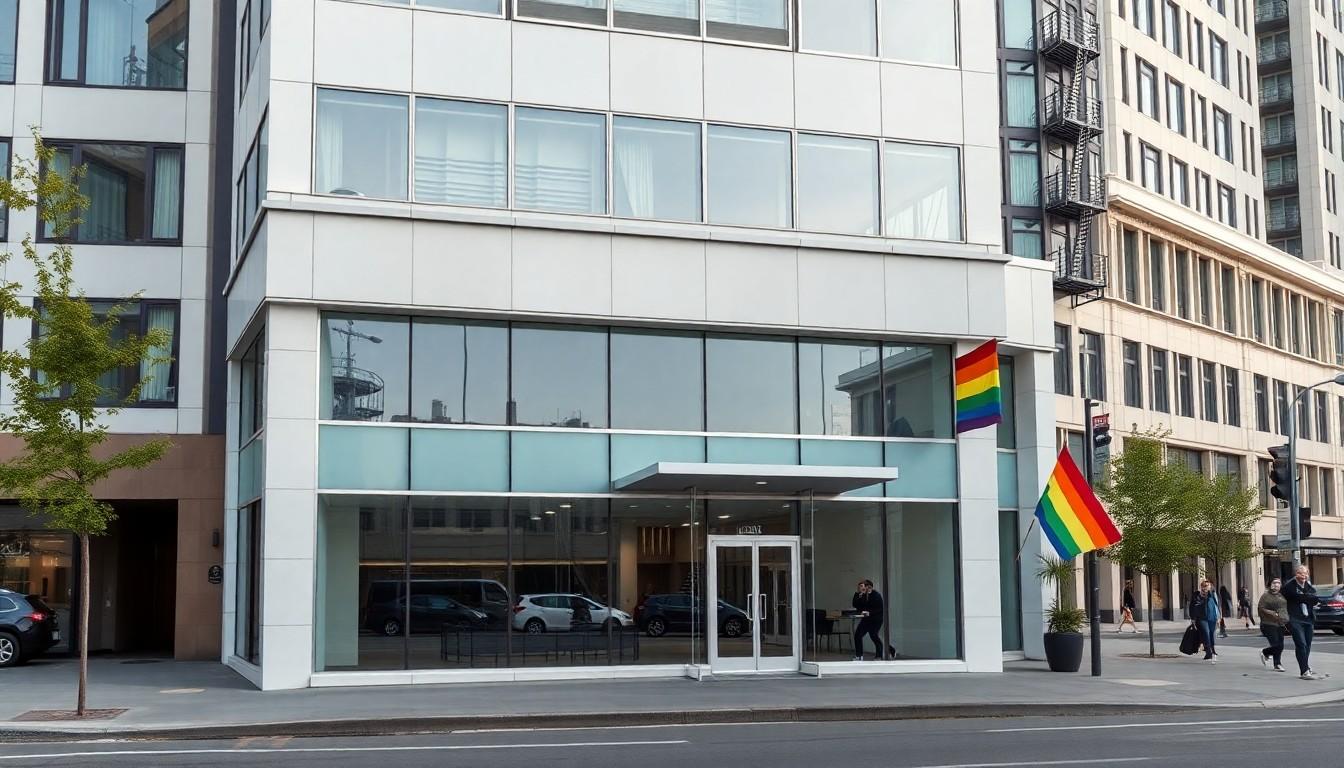
Advocates are warning that philanthropic support for trans rights is shrinking just as anti-LGBTQ+ legislation keeps growing across the US. The funding gap matters because community organisations are being asked to respond to a louder political assault with fewer resources, even as trans-led groups continue building campaigns, safety networks and spaces for collective care.
Essential Takeaways
- Funding has fallen: Trans and gender-nonconforming communities received just three cents of every $100 granted by US foundations in 2024.
- Legislative pressure is rising: The ACLU says it tracked 528 anti-LGBTQ+ bills in 2026, many targeting trans people.
- Public opinion is more nuanced: Broad opposition to discrimination coexists with sharper disagreement over sport and healthcare for trans young people.
- Advocates see solidarity as essential: Trans-led organisations are calling on other movements to include trans people in leadership and public campaigning.
- The scale matters: Even modest grants can help sustain legal support, organising, community spaces and emergency assistance.
The funding retreat is happening at the worst possible moment
The most striking part of the story isn't simply that donations have declined. It's that the retreat is unfolding while campaigners face an expanding stream of proposed restrictions, hostile messaging and legal challenges. That creates a particularly grim squeeze: more work, more urgency and less money to do it.
Shelby Chestnut, executive director of the Transgender Law Center, described the situation in an essay for Nonprofit Quarterly as a "near complete exodus" of philanthropy from the trans rights movement. The organisation describes itself as the largest national trans-led group in the US, giving Chestnut's assessment considerable weight. According to the centre, its work focuses on legal and political change led by trans communities themselves.
The numbers help explain why the warning has landed so heavily. Data from Funders for LGBTQ Issues, cited in the essay, shows that only three cents of every $100 donated by US foundations in 2024 went to transgender and gender-nonconforming communities, down from 3.5 cents the previous year. It sounds tiny because it is. A fraction of a fraction is a difficult base from which to defend rights nationwide.
Anti-LGBTQ+ legislation keeps piling up
Meanwhile, the policy environment is moving in the opposite direction. The ACLU says it tracked 528 anti-LGBTQ+ bills in 2026, with many focused on restricting the rights or participation of trans people. The organisation's tracker illustrates how quickly a handful of local proposals can become a national workload for legal teams and organisers.
That pressure doesn't stop when a bill fails. Groups still have to monitor amendments, brief lawmakers, support affected families, respond to public misinformation and prepare for the next legislative session. Campaigning can be repetitive, exhausting work, especially for smaller organisations whose staff are already stretched.
There is also a communications imbalance. In 2024, right-wing groups spent nearly $215 million on television advertising attacking trans people, according to AdImpact data cited in the original report. Philanthropy pulling back while opponents increase their visibility leaves community organisations trying to answer a well-funded megaphone with a much quieter one.
Why public opinion and donor behaviour don't match
The apparent contradiction is hard to miss. Americans may disagree about particular questions, especially trans participation in sport or healthcare for trans young people, but broad support for overt discrimination is not necessarily widespread. A Voss Research Strategy study cited by Chestnut found that only 35% of respondents agreed with a broadly worded statement arguing for policies to ensure transgender views and lifestyles do not harm society.
Chestnut links the gap between public sentiment and donor behaviour to the psychological idea of social proof. In uncertain situations, people often look to others for cues about what is acceptable or popular. That can make a loudly repeated position appear more mainstream than it really is, particularly when media coverage and political advertising keep circling the same talking points.
The result is a kind of manufactured caution. Funders may fear being seen as controversial, even when the wider public isn't demanding that they abandon trans communities. It’s a reminder that silence can look like consensus, and that retreat can unintentionally help create the impression that anti-trans politics is the only safe position.
What sustained support actually makes possible
Funding isn't just about large national campaigns or headline legal cases. It can pay for organisers, research, communications, local safety work, emergency support and the community spaces where people find practical help. Those quieter functions rarely attract attention, but they’re often what keeps a movement standing between major moments.
The Transgender Law Center's trans-led structure is important here. Its stated mission and organisational model place trans people at the centre of legal strategy and advocacy, rather than treating them solely as beneficiaries of outside decisions. That approach can make support more relevant, more accountable and better connected to the realities people are facing.
For donors, the practical lesson is to look beyond one-off visibility campaigns. Multi-year, flexible grants are generally more useful than tightly restricted money because organisations can respond as laws, threats and community needs change. Smaller supporters can also help by giving regularly, checking whether charities publish clear financial information and backing groups with strong local relationships.
Solidarity could change the balance
Chestnut's proposed answer is not for trans organisations to shoulder the crisis alone. They argue that other social movements should work alongside trans communities, include trans people in leadership and speak more clearly when trans rights are attacked. That matters politically, but it also matters psychologically: visible alliances challenge the idea that trans people are isolated.
There is a human cost to sustained underfunding that spreadsheets don't show. Organisers are asked to absorb grief, threats and uncertainty while maintaining services and making the case for their own importance. As Chestnut wrote, trans communities have continued to build power, protect one another and create spaces for both grief and joy, even when donations are scarce.
The outlook will depend partly on whether philanthropy treats trans rights as a temporary issue or a long-term democratic concern. Given the number of bills and the money being spent against trans people, the case for steady support is becoming harder to ignore.
It's a small slice of the funding pie, but it can decide whether vital community work survives.
Source Reference Map
Story idea inspired by: [1]
Sources by paragraph:
- Paragraph 1: [2], [3]
- Paragraph 2: [2], [3]
- Paragraph 3: [3], [4]
- Paragraph 4: [4], [5]
- Paragraph 5: [5], [6]
- Paragraph 6: [6], [7]
- Paragraph 7: [2], [3]
- Paragraph 8: [3], [4]
- Paragraph 9: [4], [5]
- Paragraph 10: [5], [6]
- Paragraph 11: [6], [7]
- Paragraph 12: [2], [3]
- Paragraph 13: [3], [4]
- Paragraph 14: [4], [5]
- Paragraph 15: [5], [6]
- Paragraph 16: [6], [7]
- Paragraph 17: [2], [3]
- Paragraph 18: [3], [4]
- Paragraph 19: [4], [5]
- Paragraph 20: [5], [6]
- Paragraph 21: [6], [7]