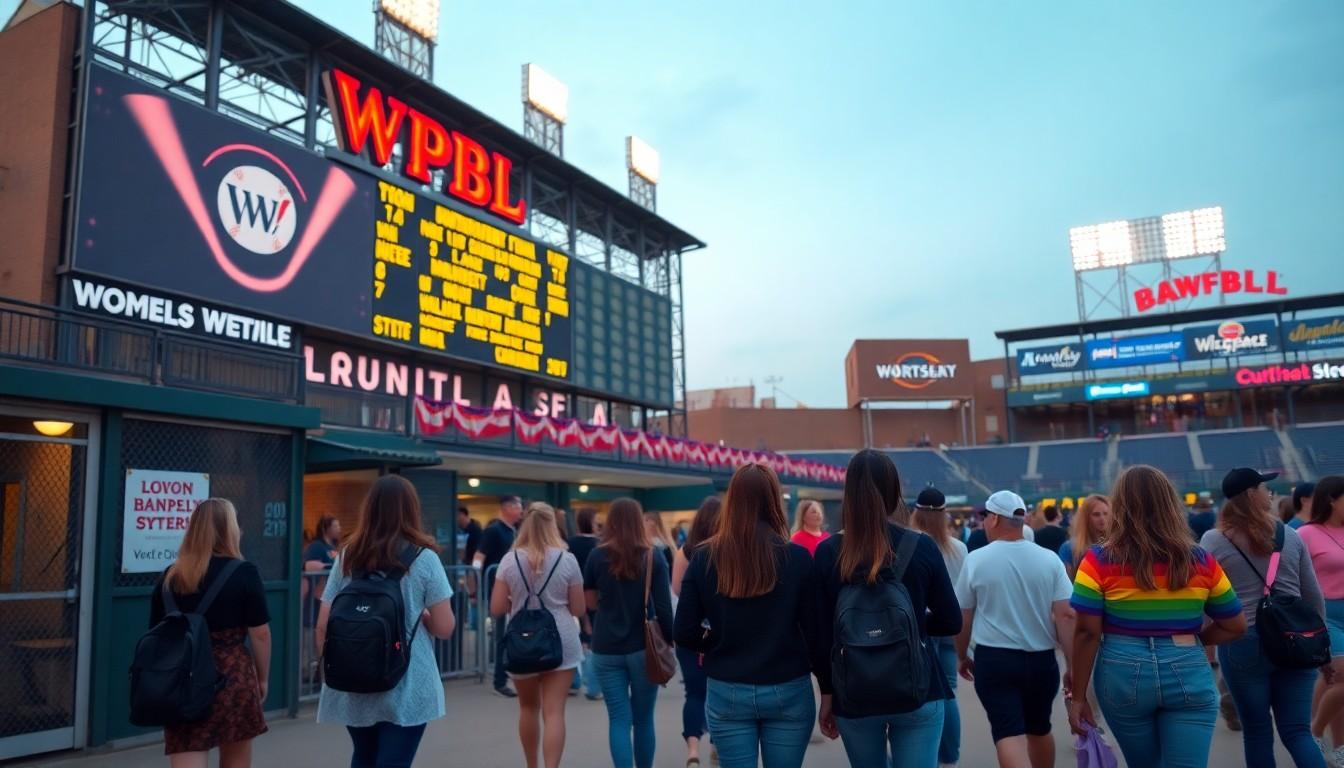
Fans are watching the Women’s Pro Baseball League’s first season with a little extra pride, thanks to a prominent Olivia Travel partnership in Springfield, Illinois. The deal links America’s newest women’s baseball competition with a long-standing LGBTQ+ travel brand, offering representation, community and a reminder of how closely queer women’s spaces and women’s sport have always been connected.
Essential Takeaways
- A visible partnership: Olivia Travel’s branding appears at the WPBL’s inaugural-season games in Springfield.
- A historic return: The league marks the arrival of mainstream professional women’s baseball in the US after a gap of nearly seven decades.
- Queer roots run deep: Lesbian bars and LGBTQ+ businesses have supported women’s teams through sponsorship, advertising and community events for generations.
- A changing market: Women’s sport is attracting major commercial investment, although smaller queer-led brands still have an important role.
- Representation matters: The WPBL’s openness about LGBTQ+ inclusion reflects how far the game has moved beyond the restrictive image imposed on earlier women players.
A small outfield advert with a big message
There’s something quietly powerful about seeing an LGBTQ+ travel company’s logo beside a professional sports team. In the WPBL, that message is hard to miss: Olivia Travel is not tucked away in a niche event programme, but displayed at the stadium, where fans, players and broadcasters can all see it.
The partnership arrives as women’s professional baseball returns to the American sporting landscape. The Associated Press described the new league as another major moment in a fragmented history, while coverage from them noted the excitement around a competition that gives women’s baseball a dedicated national platform.
For queer fans, the symbolism feels especially sharp. A league that openly welcomes LGBTQ+ women is being supported by a brand built around helping them travel, relax and find community. It’s not just advertising; it’s a public statement about who belongs in the stands and on the diamond.
Women’s baseball has always had a queer connection
The relationship between queer women and women’s sport didn’t begin with the WPBL. Historians have long documented how lesbian bars supported local softball and football teams, often paying for kit, advertising in programmes or giving players somewhere to gather after matches.
That history is easy to overlook because many earlier athletes had to stay hidden. Players in the All-American Girls Professional Baseball League were expected to present a carefully managed image, complete with skirts, make-up and rules about hairstyles. The cheerful, polished version of women’s baseball was designed partly to reassure audiences that its players didn’t challenge conventional ideas about femininity.
The difference today is striking. The WPBL can acknowledge queer players and supporters without treating their identities as a commercial threat. The league’s mascot draws on the story of Maybelle Blair, a former professional player who came out publicly in her nineties, adding an emotional thread between baseball’s past and its present.
Olivia Travel brings decades of sports support
Olivia began life in the 1970s as a record label for women artists before becoming a travel company focused on lesbian and queer women. According to Olivia’s own account, its trips are designed around shared experiences and a strong sense of community, rather than simply selling a standard holiday package.
The company has also backed prominent women athletes over the years, including Billie Jean King, Sheryl Swoopes and Diana Nyad. That makes the WPBL deal feel less like a sudden attempt to join the women’s sports boom and more like a continuation of a familiar strategy.
There’s a practical reason for the fit, too. Both brands are speaking to women who want to see themselves reflected in the spaces they choose, whether that’s a stadium, a cruise ship or a holiday destination. Olivia’s marketing leadership told Xtra that the partnership was an obvious match because both the league and the company create places where women can feel represented.
Why queer brands still matter in women’s sport
Women’s sport is now attracting attention from banks, technology companies, fashion labels and global advertisers. Forbes reported that the WPBL secured brand and media deals before its first pitch, showing how quickly interest is building around a new competition with a clear audience and a strong cultural story.
But mainstream investment can sometimes smooth away the communities that helped women’s sport survive in the first place. Industry commentary has suggested that some brands are moving money from high-profile Pride activity into women’s sport because it offers access to a valuable audience with less perceived reputational risk.
That shift brings opportunities, but it also raises an awkward question: will the biggest sponsors recognise the queer fans and athletes who have supported women’s sport for decades? The Olivia partnership offers a useful counterpoint. It puts an explicitly LGBTQ+ company at the centre of the conversation, rather than treating queer identity as something to be mentioned only during Pride month.
Could Subaru be next?
WPBL players have joked online about Subaru sponsoring the league, a reference to the car company’s long-standing association with lesbian customers. The gag has a serious edge, though, because players are reclaiming comments that were intended as homophobic digs and turning them into a request for real support.
It also captures the league’s unusually direct relationship with its audience. Fans aren’t just watching from a distance; they’re sharing jokes, attending games and helping create the atmosphere around the competition. Women’s sports bars and queer community venues have hosted watch parties and events, rebuilding some of the local networks once provided by lesbian bars.
The outlook is promising, but sponsorships still need to deliver more than visibility. The best partnerships will help players travel, earn, connect with supporters and build a stable professional future. For now, Olivia’s presence is a welcome reminder that inclusion can be both commercially smart and genuinely meaningful.
It’s a small logo with a long history behind it, and a hopeful future ahead.
Source Reference Map
Story idea inspired by: [1]
Sources by paragraph: