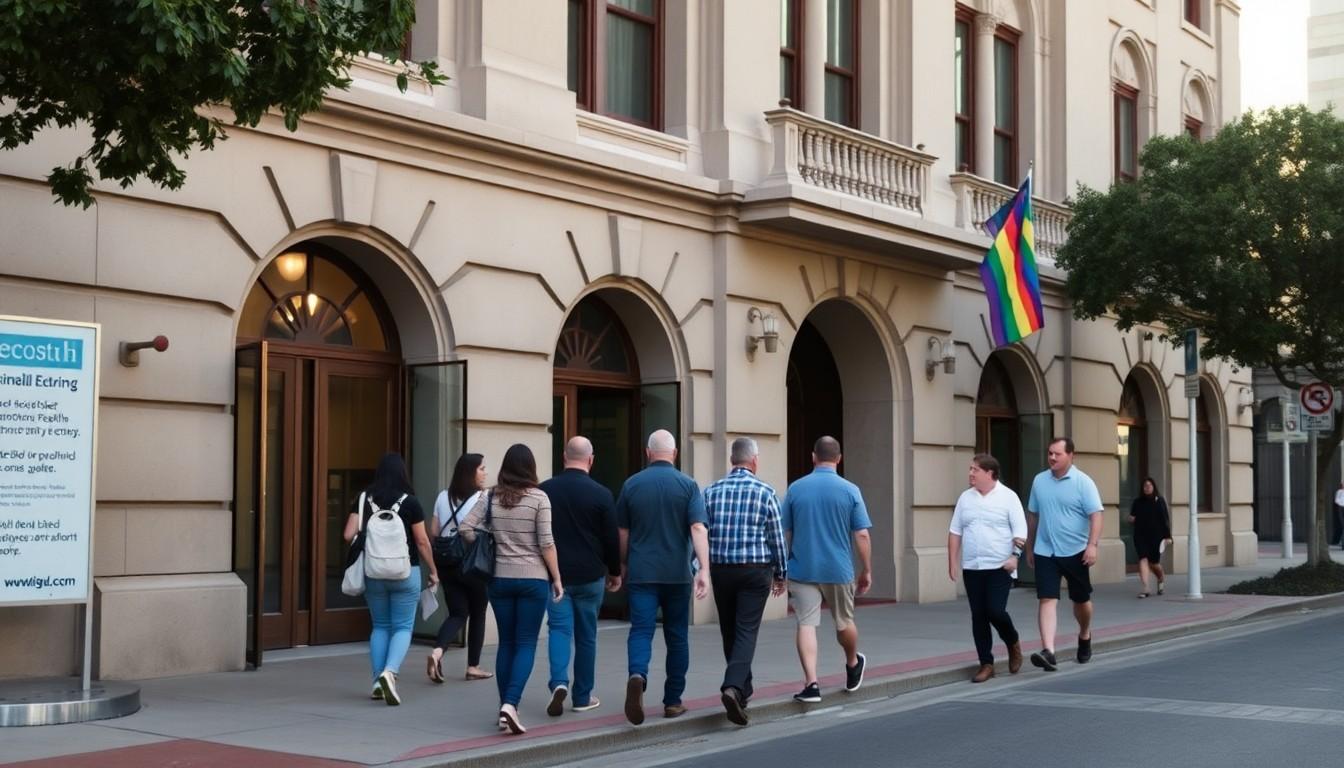
San Diego has scrapped an unused bathhouse ordinance rooted in the HIV/AIDS panic, marking a significant change in how LGBTQ+ health, safety and sexual behaviour are understood. The unanimous vote matters beyond the city: it shows why stigma-heavy laws can linger long after medical knowledge and community-led prevention have moved on.
Essential Takeaways
- Unanimous decision: San Diego City Council voted to remove the 1988 ordinance on 1 September.
- A crisis-era measure: The law was created during intense public fear around HIV transmission among gay and bisexual men.
- Not actively enforced: Officials said it had remained unused, but argued that its presence still sent a damaging message.
- Community care worked: LGBTQ+ organisations offered testing, education and referrals without judgement.
- Prevention has changed: HIV medication, condoms, testing and better access to healthcare now shape public-health efforts.
San Diego finally removes a law that had outlived its purpose
The ordinance may have been gathering dust, but its meaning was still hard to ignore. San Diego City Council voted unanimously to repeal the measure, which was introduced in 1988 and amended in 1991 as HIV/AIDS generated fear, misinformation and intense scrutiny of gay and bisexual men.
According to KPBS, the repeal came after an employee in Council President Joe LaCava's office found the provision while searching through the city's municipal code. It wasn't being used by police or code enforcement, yet officials felt that leaving it in place suggested an outdated and offensive view of LGBTQ+ people.
That distinction matters. Laws don't have to be actively enforced to influence how a community feels seen by its government. Removing one can be a modest administrative act, but also a clear public statement.
Why the original bathhouse rules were so controversial
The measure was designed to regulate bathhouses in an effort to restrict sexual activity and limit HIV transmission. At the time, however, prevention efforts were developing in the shadow of a health emergency and widespread stigma.
Reporting from KPBS noted that many gay and bisexual men had already begun changing their behaviour before the ordinance was passed. Some reduced the number of sexual partners, moved away from anonymous encounters and used condoms, while grassroots groups provided practical information and support.
Those community organisations often understood the reality better than officials writing broad restrictions. They could offer testing, safer-sex advice and referrals in places where people felt able to ask honest questions. That human connection is easy to overlook when public health becomes a matter of punishment.
Bathhouses were also places for information and care
The debate isn't simply about whether bathhouses should be regulated. It's about what happens when a venue associated with sex is treated only as a threat, rather than as a possible route to health information.
Public commenter Oxean Eddie Rey said bathhouses had played a role in providing education, testing and referrals during the AIDS crisis, as well as during later COVID-19 and mpox outbreaks. The point is practical: people are more likely to engage with prevention when services meet them where they are.
The San Diego LGBT Community Center has also stressed that stigma can discourage people from seeking HIV testing. By contrast, welcoming and non-judgemental services can make care feel safer and more manageable. Nobody enjoys being lectured when they're trying to protect their health.
Modern HIV prevention looks very different now
Today, HIV prevention includes condoms, regular testing and medicines that can prevent transmission. Public-health officials also recognise that poverty, unstable healthcare access and fear of discrimination can make these tools difficult to obtain.
The shift is especially important for people searching for accessible HIV prevention services, rather than simply being told to avoid certain spaces or behaviours. A law that focuses on restriction may look decisive, but it doesn't necessarily help someone get a test, prescription or trustworthy advice.
There is also a broader lesson here. Effective prevention tends to be specific, evidence-based and respectful. It helps people make informed choices, instead of assuming that shame will produce healthier outcomes.
San Diego joins a wider rethink of AIDS-era laws
San Diego's repeal follows similar efforts elsewhere. San Francisco removed its bathhouse ordinance in 2024, while Minneapolis repealed its own AIDS-era ban in June. Lawmakers in New York City are also working to overturn comparable legislation.
The Washington Post and Them reported on Minneapolis's decision as part of a wider reassessment of rules created during the early HIV pandemic. Meanwhile, San Francisco AIDS Foundation materials have highlighted how changing laws could allow bathhouses to return under a more modern public-health framework.
That doesn't mean every debate about sexual-health venues has disappeared. It does mean the conversation is becoming more grounded in evidence, consent, access and harm reduction. For LGBTQ+ communities that lived through years of suspicion, the symbolism of that change is considerable.
San Diego's vote won't erase the damage caused by past stigma, but it does remove one official reminder of it. As one chapter closes, the more useful question is how cities can make prevention easier to reach, easier to trust and less intimidating.
A law may be gone, but its lesson remains: health policy works better when people are treated with dignity.
Source Reference Map
Story idea inspired by: [1]
Sources by paragraph:
- Paragraph 1: [2], [4]
- Paragraph 2: [2], [5]
- Paragraph 3: [3], [6]
- Paragraph 4: [2], [7]
- Paragraph 5: [6], [7]
- Paragraph 6: [2], [6]
- Paragraph 7: [2], [3]
- Paragraph 8: [2], [6]
- Paragraph 9: [2], [5]
- Paragraph 10: [3], [6]
- Paragraph 11: [7], [6]
- Paragraph 12: [2], [3]
- Paragraph 13: [4], [5]
- Paragraph 14: [3], [7]
- Paragraph 15: [2], [6]