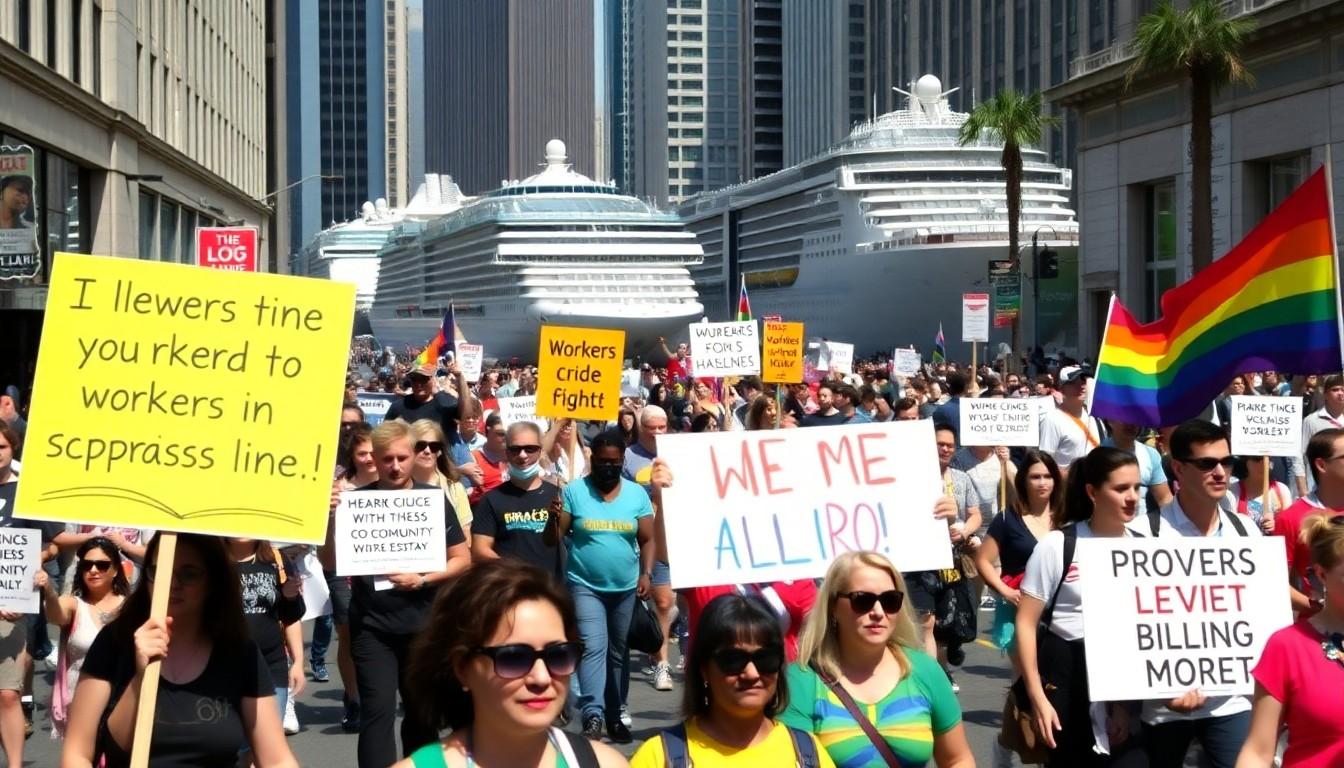
Shoppers and festival-goers still flock to colourful parades, but activists are pushing for Pride that prioritises people over profit. Across cities from Southampton to Manchester, campaigners and union members say who funds and leads Pride now matters as much as the glitter.
Essential Takeaways
- Corporate presence: Big firms like cruise lines and supermarkets often headline Pride, which supporters say looks flashy but feels hollow.
- Political bans: Some events restrict party campaigning in main areas, pushing politics to the edges while allowing corporate sponsorship front and centre.
- Grassroots energy: Trans-focused, union-led and community stages deliver explicitly political content and direct support.
- Practical choice: If you want protest over PR, follow the parade route and look for union floats, local activist stalls and community stages.
- Emotional cue: Many attendees feel uneasy when workers’ banners are sidelined; chants such as “Pride is a protest” still resonate.
Why corporate sponsorship leaves activists cold
Walking a Pride packed with branded floats can feel like a carnival, but for many activists the sheen doesn’t hide the problem: profits often run the show. Organisers accept sponsorship to cover costs, and sponsors want visibility. That trade-off can push political messaging aside and replace it with generic brand equality claims, which leaves some campaigners feeling used.
The outcome is predictable. According to festival FAQs and sponsorship guidelines, large events rely on private money to stage parades and stages. But attendees tell a different story: they want concrete demands, not corporate slogans. If you care about workers’ rights or trans protections, it’s worth checking who’s listed as a headline partner before you go.
Practical tip: scan the sponsor page and parade map online before you attend. If unions, community groups or explicit trans-focused platforms are visible, you’re likely to find more overt political content.
When politics is explicitly welcomed: Trans Pride and community stages
Some events carve out explicitly political space. Smaller or community-led Prides, and specific Trans Pride gatherings, lean into speeches, workshops and direct-action messaging. That’s where you’ll often find the nitty-gritty, legal briefings, solidarity networks and honest conversation about the threats facing LGBTQ+ people.
People who attended such gatherings say the atmosphere feels urgent and supportive, a contrast to corporate-led celebrations. These settings also give activists a platform to organise and recruit, which matters when legal and social rights feel precarious.
If you’re looking to engage, volunteer with local Trans Pride groups or show up early to community stages, where conversations and sign-ups happen in plain sight.
The push to put unions and youth at the front
In cities such as Manchester, there’s a growing argument that Pride should be led by trade unions, youth activists and community campaigners rather than headline brands. Supporters say unions bring organisational muscle and a focus on workers’ rights, which intersects with LGBTQ+ liberation, especially for those in precarious jobs.
Parade maps and private-sector engagement policies show how different events manage corporate involvement, and some activists are calling for those policies to change. The idea is simple: let workers and marginalised communities set the tone, and corporations can still support in the background without dominating the narrative.
How to act: look for union floats, meet-and-greets and leaflets. If organisers allow feedback, tell them you prefer community-led platforms at future events.
Bans on party campaigning: neutral or suppressive?
Some Pride organisers restrict political party involvement in main areas, a policy that’s meant to keep events broadly welcoming. In practice, it can mean that explicit political groups are relegated to peripheral spaces while well-funded corporate partners occupy centre stage.
That’s the contentious point for many activists who argue that Pride began as protest and should remain so. Organisers cite liability, sponsor agreements and inclusivity as reasons for restrictions, while critics say those reasons mask a sanitisation of the politics that birthed the movement.
If you represent a political or campaigning group, ask organisers about community stage access and permitted messaging. And if you’re an attendee who wants politics visible, vote with your feet toward the stages that host speeches and campaigning tables.
What this means going forward: choices for attendees and organisers
Pride events are evolving into different flavours, some festival-like and family-oriented, others fierce and political. Both have value, but the rise of corporate sponsorship means attendees will often need to pick which experience they want. For activists, the task is to push for clearer sponsorship rules, more union involvement and protected space for trans-led politics.
Expect more debate next season: organisers, unions, community groups and sponsors are already negotiating how Pride gets funded and framed. Meanwhile, for anyone who cares about rights over reputation, the easiest step is to support the events and stages that centre labour, trans voices and grassroots organising.
It's a small change that can make every Pride feel more like a protest again.
Source Reference Map
Story idea inspired by: [1]
Sources by paragraph: