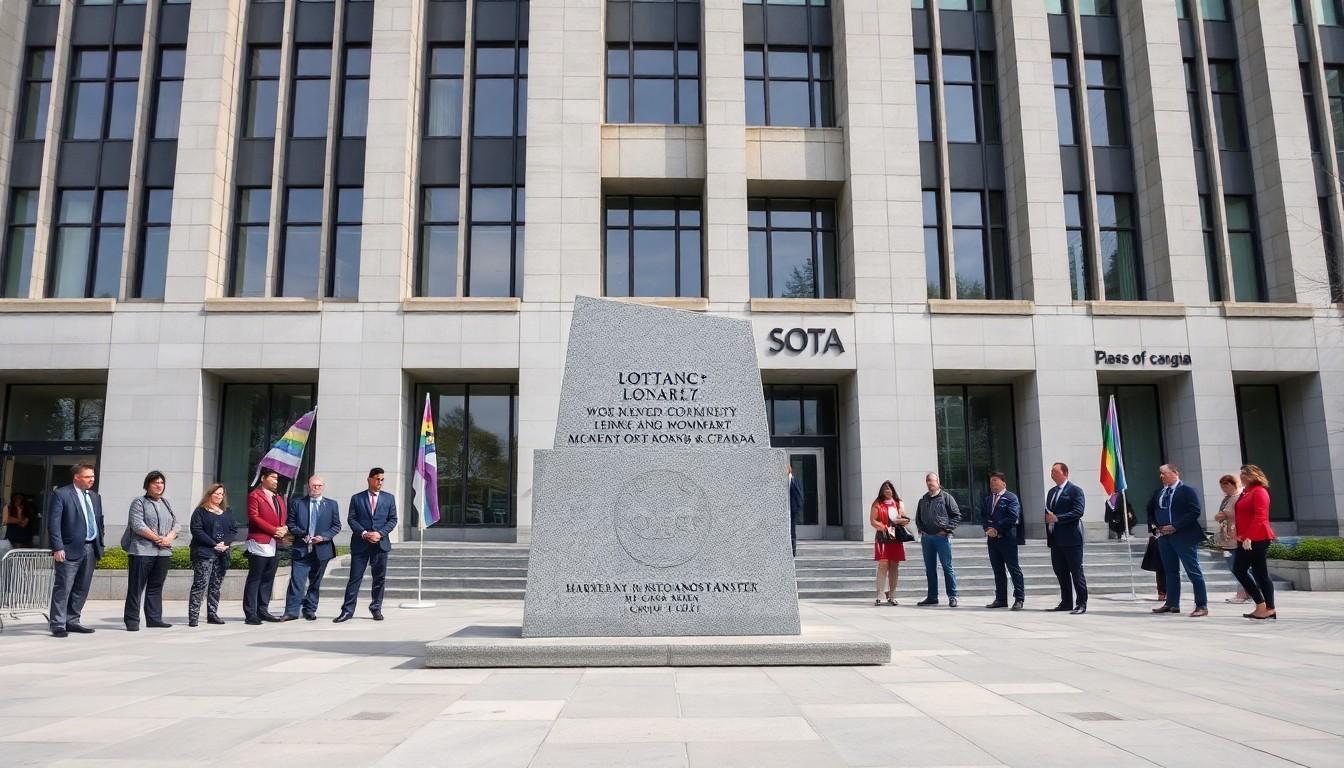
Shoppers and history buffs alike are stopping to look as Ottawa’s new national LGBTQ monument opens, marking a long-delayed public reckoning with persecution and memory; the Thunderhead installation on Wellington Street matters because it centres survivors, sparks debate about public space, and rewrites a part of Canada’s visual story.
Essential Takeaways
- New national landmark: The Thunderhead monument has opened on Wellington Street, near Parliament, as a national memorial to LGBTQ persecution and those affected.
- Design and feel: The piece is striking and tactile, intended to invite touch and reflection; visitors report a mix of solemnity and quiet hope.
- History reclaimed: Plinth plaques and interpretation panels foreground survivors’ stories and government-era purges, not abstract triumphalism.
- Public debate: The memorial’s placement and narratives have provoked discussion about what should sit in national civic space and whose stories get told.
- Visiting tips: Expect crowds at first; plan a weekday morning visit for quieter reflection and read the onsite material to understand context.
Why the Thunderhead is already being talked about
The monument’s opening felt both familiar and new , a heavy, textured work in stone and bronze that encourages close inspection and stillness. CityNews and local coverage emphasise that this is Ottawa’s most prominent public acknowledgement yet of federal-era persecution, and that tactile design invites visitors to linger. That sensory approach helps turn abstract policy into lived experience for passersby.
Backstory matters here: the site on Wellington Street was approved years ago and the project broke ground amid fanfare and community involvement. That long arc, from approval to construction to unveiling, reflects a slow national conversation about how public memory should reckon with past harms.
How the memorial frames a painful history
Instead of a celebratory, victory-focused narrative, the Thunderhead centres victims, survivors and the policies that targeted them. Reporting notes the memorial specifically commemorates state-sponsored purges and the people who suffered as a result.
That framing changes the tone of visits. Where some monuments aim to inspire, this one asks you to witness and to remember. For families and survivors, that can be quietly powerful; for casual tourists, it’s a prompt to learn more about a lesser-known chapter of Canadian history.
Placement on Wellington Street: symbolic and contentious
Putting the monument near Parliament gives it national prominence , a deliberate choice that underlines the government’s role in both harm and redress. Yet any national placement invites debate: should civic cores foreground difficult histories, and how do competing memorials coexist?
Local coverage captures those conversations. Some welcome the visibility as overdue recognition, others worry about crowding the precinct with too many competing narratives. Practically, the location makes the monument easy to include on a downtown walk, which helps integrate the lesson into everyday civic life.
What visitors say and how to experience it
Early reactions from community members describe a bittersweet mix: solemnity rounded by relief that stories are no longer invisible. The design’s textures and inscriptions encourage close, slow engagement, so bring time rather than treating it as a quick photo-op.
If you want quieter reflection, aim for weekday mornings or late afternoons. Read the interpretive panels and any digital links on site; they’ll give names, dates and context that are easy to miss if you only glance. Local guides and community groups are also planning walks and talks that add first-person perspectives.
Why this still matters beyond Ottawa
A national monument does more than mark a place , it signals what a country chooses to remember. In this case, the Thunderhead takes state responsibility seriously and leaves room for survivors’ voices to define the record. That’s valuable for justice work, education, and public memory.
Expect the site to become a focal point for anniversaries, vigils and school visits, and for debate to continue about how best to honour those affected. It’s a small but meaningful shift in how Canada publicly names its past.
It's a quiet, necessary marker , one that asks you to stop, listen and remember.
Source Reference Map
Story idea inspired by: [1]
Sources by paragraph: