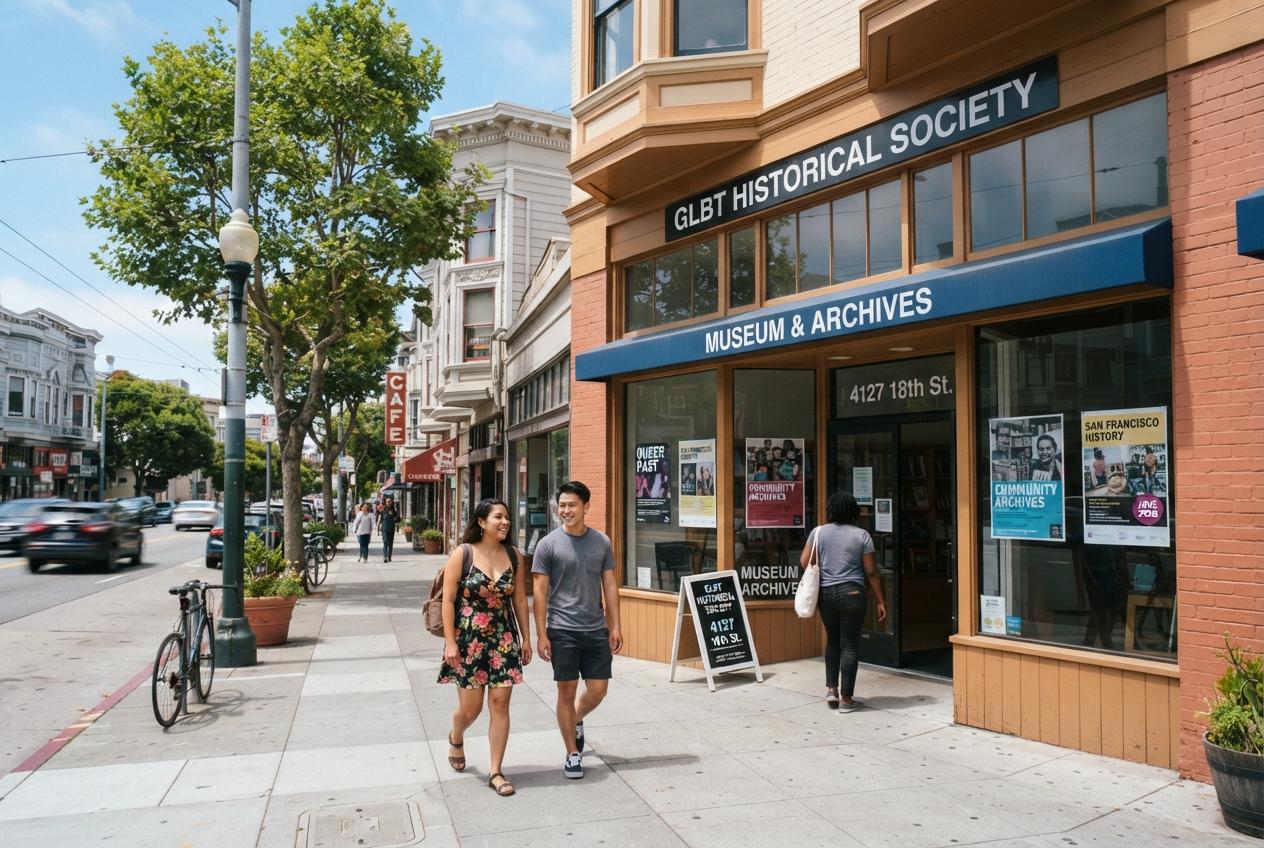
Travellers are rediscovering San Francisco as a living LGBTQ+ history book, from Harvey Milk Plaza and the GLBT Historical Society Museum to queer film, drag activism and legendary nightlife. With foggy mornings, lively neighbourhoods and stories around every corner, the city offers far more than a Pride weekend getaway.
Essential Takeaways
- Pack a warm layer: San Francisco's summer can feel surprisingly cool, misty and windy.
- Start in the Castro: Harvey Milk Plaza, historic bars and the GLBT Historical Society Museum create a powerful introduction to the city's queer past.
- Look beyond the landmarks: Mission Dolores Park, the Castro Theatre and local events connect history with today's LGBTQ+ community.
- Make time for the details: The museum's collections include political memorabilia, clothing, photographs and artefacts from decades of activism.
- Treat the trip as a neighbourhood journey: Queer history stretches from the Castro and Mission to SoMa and the waterfront.
San Francisco's queer history is hiding in plain sight
San Francisco's LGBTQ+ story doesn't feel tucked away in a single museum or memorial. It spills across pavements, bars, parks and theatres, giving even a short visit an emotional sense of place. The fog only adds to the atmosphere, softening the skyline before the city suddenly appears in bright afternoon light.
The Castro remains the obvious starting point. Harvey Milk Plaza anchors the neighbourhood, while nearby streets lead towards venues and community spaces that have helped make San Francisco a global queer landmark.
According to the GLBT Historical Society, its museum exists to preserve and share LGBTQ+ history through exhibitions, collections and public programmes. That mission matters because the city's past isn't merely nostalgic. It's a record of protest, organising, creativity and survival.
Why the GLBT Historical Society Museum belongs on your itinerary
The museum is compact, but its subject is enormous. Exhibits draw together personal belongings, campaign material, photographs, clothing and objects linked to LGBTQ+ political and cultural movements. The effect is intimate rather than overwhelming, with small details often carrying the greatest weight.
A campaign shirt, a camera or an everyday object can make history feel startlingly close. The GLBT Historical Society's official visitor information also makes clear that the museum is designed as an accessible public introduction to LGBTQ+ history, rather than a specialist archive meant only for researchers.
Its wider collections preserve material from many parts of queer life, including activism, art, nightlife and community organising. For visitors, that provides useful context before exploring the Castro itself. You leave with a better understanding of why the neighbourhood's streets and businesses matter.
From the rainbow flag to queer protest
San Francisco's symbolism is often colourful, but the stories behind it are complicated and political. Gilbert Baker's rainbow flag became one of the most recognisable emblems of LGBTQ+ pride, and surviving sections of the early flag have been treated as important pieces of community heritage.
The San Francisco International Airport Museum has highlighted Baker's work and the flag's legacy in dedicated exhibitions. Time also reported on Baker's role in creating the design and its evolution into an international symbol. It’s a reminder that familiar imagery can have a very local beginning.
The city’s queer history also includes direct action and irreverent performance. The Sisters of Perpetual Indulgence, founded in San Francisco in 1979, use drag, humour and religious parody to raise awareness and support charitable causes. Their work shows how activism here has often been theatrical, mischievous and impossible to ignore.
The Castro Theatre, parks and nightlife keep the story moving
History in San Francisco isn't confined to display cases. The Castro Theatre has long been a gathering place for LGBTQ+ audiences, while film festivals and live events continue to connect older traditions with new work. A visit during a festival can turn a historic venue into a particularly vivid part of the trip.
Mission Dolores Park offers another kind of cultural window. On a warm afternoon, its grassy slopes become a social meeting point for friends, activists, performers and visitors. The mood can shift from relaxed picnic to political conversation within a few steps, which is very San Francisco.
For evening plans, the Castro's established bars remain part of the experience, while SoMa offers a different atmosphere through leather venues, dance spaces and relaxed patios. Check opening times and event listings before travelling, especially around Pride, when queues can be long and popular venues fill quickly.
How to plan an LGBTQ+ history trip to San Francisco
Begin with the GLBT Historical Society Museum, then walk through the Castro and pause at Harvey Milk Plaza. That order gives the neighbourhood more meaning, rather than reducing it to a collection of photo stops. Allow extra time for exhibitions, as the personal stories are often more rewarding than a rushed circuit.
Wear comfortable shoes and bring a fleece or light waterproof jacket. San Francisco's weather can change quickly, and a bright morning doesn't guarantee a warm evening. Layers are the sensible choice, even if your starting point is sunny Los Angeles.
Build in space for food and unplanned discoveries. A brunch, a late drink or a detour through Mission Dolores Park can become the most memorable part of the day. And if you’re visiting during Pride or a film festival, book accommodation and restaurants early.
San Francisco's queer history is still being made, not simply preserved. That’s what gives the city its distinctive energy: the past is visible, but it never feels finished.
It's a city best explored slowly, warmly dressed and ready for a few surprises.
Source Reference Map
Story idea inspired by: [1]
Sources by paragraph:
- Paragraph 1: [2], [3]
- Paragraph 2: [2], [4]
- Paragraph 3: [3], [4]
- Paragraph 4: [2], [3]
- Paragraph 5: [2], [3]
- Paragraph 6: [3], [4]
- Paragraph 7: [6], [7]
- Paragraph 8: [5], [7]
- Paragraph 9: [5], [6]
- Paragraph 10: [3], [4]
- Paragraph 11: [2], [3]
- Paragraph 12: [3], [5]
- Paragraph 13: [2], [6]
- Paragraph 14: [3], [4]
- Paragraph 15: [2], [3]
- Paragraph 16: [5], [7]