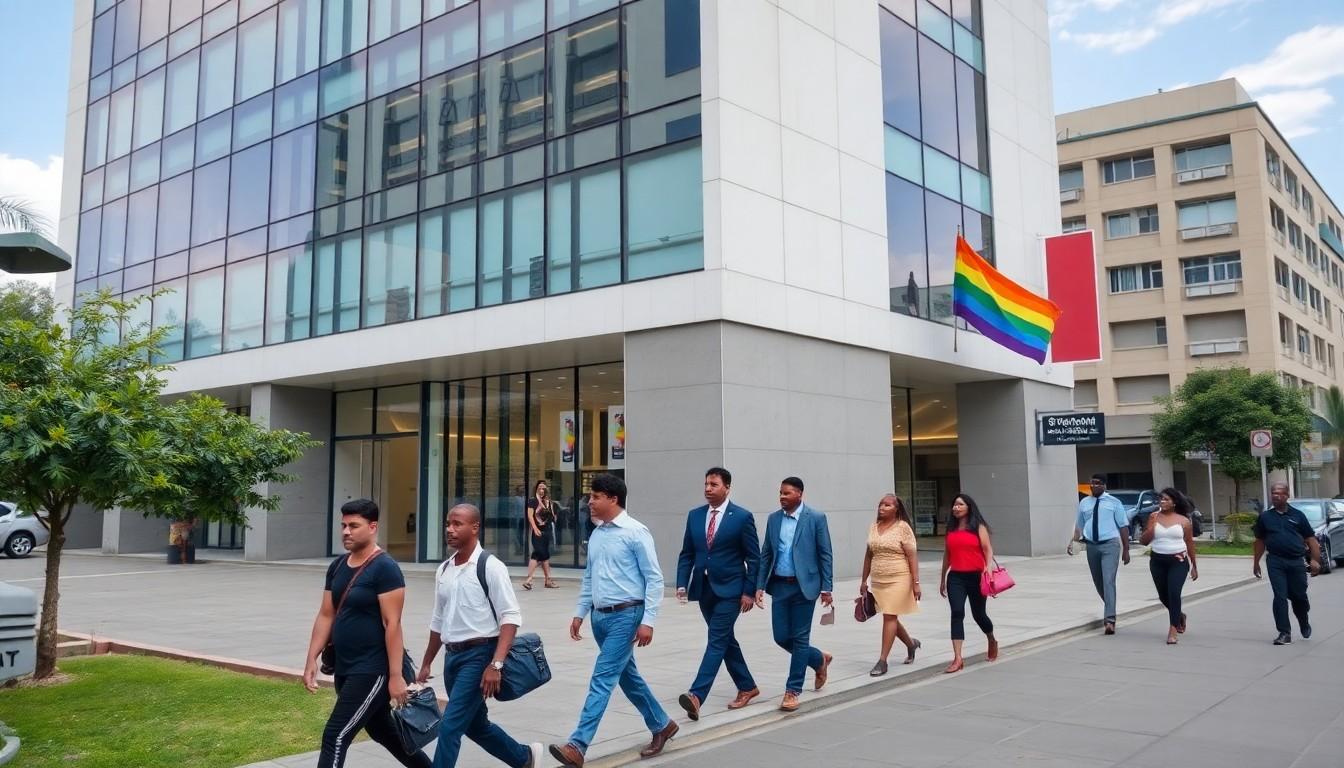
Shoppers, readers and rights advocates are waking up to a quieter struggle: LGBTQ+ Mozambicans live between a lack of criminalisation and persistent exclusion. This piece spotlights who’s affected, where discrimination shows up , schools, work, health and online , and why visibility alone hasn’t solved the problem.
Essential Takeaways
- Widespread school exclusion: Two-thirds of LGBTQ+ students report discrimination, contributing to bullying and dropouts.
- Economic precarity: Trans and LBQ women face unstable work, limited training and scarce funding for businesses.
- Partial health gains, persistent gaps: HIV-focused services include some trans people, but LBQ women remain largely invisible to health programmes.
- Digital double-edged sword: Social media helps organising and visibility but also exposes activists to harassment and surveillance.
- Systemic invisibility: Lack of criminalisation doesn’t equal protection; institutional silence, not law, often drives exclusion.
Schools: where silence teaches intolerance
Mozambique’s classrooms are meant to be neutral spaces, but for many LGBTQ+ young people they feel hostile and quiet in the wrong way , teachers aren’t trained, curricula skip sexual orientation and bullying goes unchallenged. According to reporting and surveys, about two-thirds of homosexual students face some form of discrimination in schools, and that’s a number that sticks in the throat. Educators and ministry materials often erase references to diversity, which normalises exclusion and pushes students out early.
This isn’t just about hurt feelings; it affects life chances. Young people who drop out lose access to skills and formal employment routes, reinforcing economic vulnerability later on. If schools offered basic training on human rights and inclusive classrooms, many of these knock-on harms could be reduced.
Work and income: fragile livelihoods, resilient communities
Employment for trans people and LBQ women is often irregular and insecure. Many end up in precarious jobs or informal work because formal employers rarely recognise or accommodate diverse gender identities or relationships. Community initiatives such as LBQ-led business support try to plug the gap, but they struggle with limited funding and management capacity.
Development and economic plans for Mozambique, according to IMF analysis, stress broader growth but rarely factor in the particular barriers facing marginalised groups. Practical advice for funders and policymakers is straightforward: support targeted vocational training, small-business mentoring, and flexible microfinance that understands seasonal and informal earning patterns.
Healthcare: small openings, big blind spots
Campaigns around HIV have raised the profile of trans communities in some health services, yet activists argue that public policy often reduces people to epidemiological categories rather than full citizens. For LBQ women, services are frequently missing altogether , sexual and reproductive health programming tends to overlook their specific needs, leaving violence against lesbian women misrecorded and under-addressed.
Health NGOs working in Mozambique report that many providers lack training in gender- and sexuality-sensitive care. A practical step here is low-cost training for frontline health workers and better data collection that distinguishes sexual orientation from general gender-based violence, so services can respond appropriately.
Digital life: organising, visibility and new dangers
Online platforms have become vital for queer organising , people share resources, document abuses and build solidarity across cities and provinces. But those same platforms can amplify threats: coordinated harassment, doxxing, and misinformation campaigns put activists at real risk. As Mozambique debates cybersecurity and digital governance, activists are calling for laws and policies that balance security with freedom of expression and privacy.
Digital safety tips are useful: anonymised accounts for organising, encrypted messaging for sensitive coordination, and community protocols to respond quickly to online attacks. Meanwhile, civic conversations about digital rights need to centre the experiences of those most exposed to online harm.
Beyond visibility: why recognition without rights isn’t enough
The paradox in Mozambique is sharp: absence of anti-LGBTQ laws can look like tolerance, but in practice institutions shrug, ignore or erase queer lives. The result is overlapping vulnerabilities , school exclusion, insecure income, inadequate healthcare and digital targeting , that feed on one another. Activists stress that citizenship means far more than not being criminalised; it means access to services, representation, and safety.
Looking ahead, inclusion will need cross-sector solutions: education reform, economic inclusion programmes, health-sector training, and digital-rights protections. That’s a tall order, but small, targeted changes , better teacher training, support for LBQ entrepreneurs, clearer health protocols, and digital safety resources , can make a real difference on the ground.
It's a small change that can make every day safer and more visible for LGBTQ+ Mozambicans.
Source Reference Map
Story idea inspired by: [1]
Sources by paragraph: