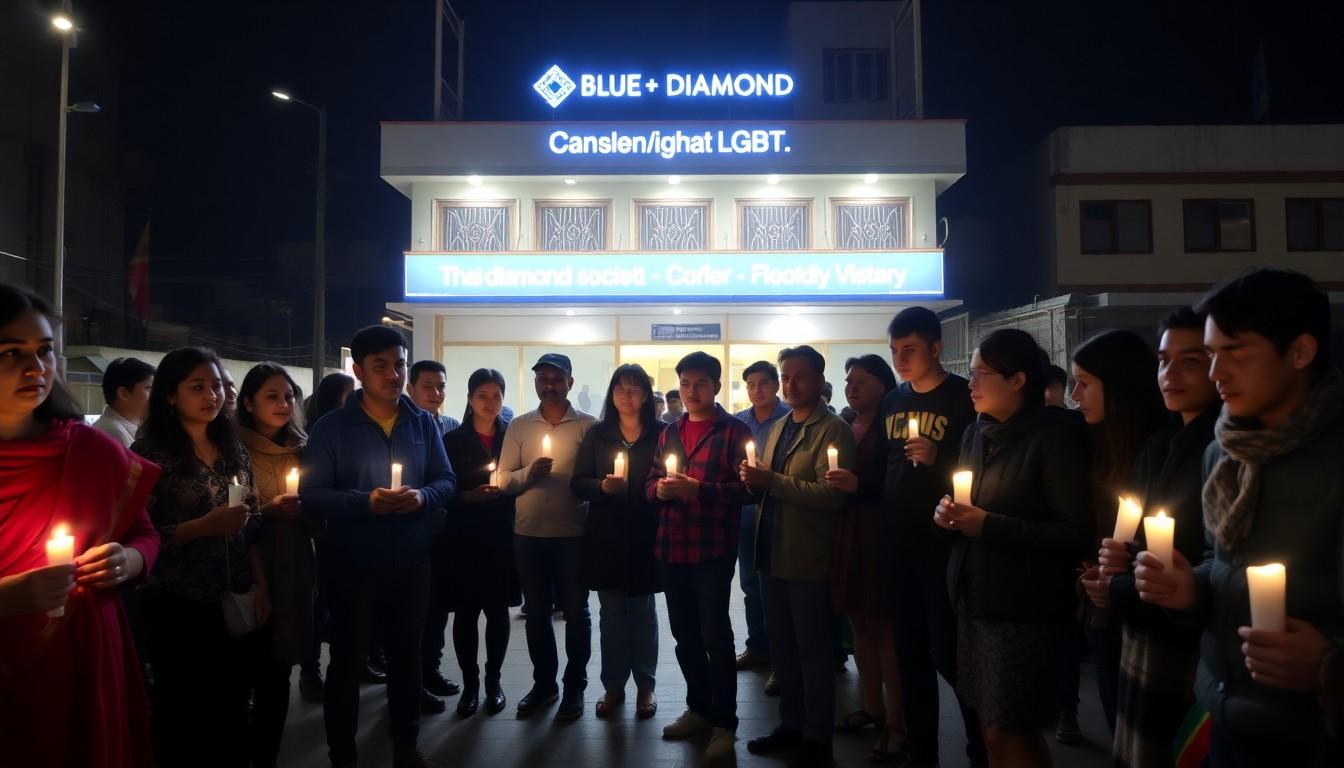
Observe a quieter, kinder Pride this season , Nepal’s Blue Diamond Society swapped bright banners for candles in Kathmandu, mourning flood victims and showing national solidarity while pledging relief funds; it matters because Pride can be both visible celebration and collective care.
Essential Takeaways
- Candlelit ceremony: Blue Diamond Society held a sombre vigil in Kathmandu instead of its usual Pride and Gai Jatra festivities, with candles and prayers for victims, the missing and grieving families.
- Community focus: The event honoured people from Nepal’s gender and sexual minority communities who died in the past year, as well as those lost in the floods.
- Relief pledge: Blue Diamond Society has pledged NPR 100,000 (about NZD $1,111) to the Prime Minister’s Disaster Relief Fund.
- Cultural blend: Gai Jatra’s traditional themes of mourning dovetailed with Pride’s visibility, shifting the day from celebration to solidarity.
- Emotional tone: The gathering emphasised support, care and national unity rather than parade-style festivity.
A quiet, candlelit Pride that felt like a hug
The strongest image from Kathmandu was simple and human: people standing close, holding candles that threw soft light onto rain-wet pavement. According to reporting from local groups and coverage in the international press, organisers chose a vigil to reflect the scale of destruction caused by the 26 August floods. The mood was mournful but resolute, a reminder that Pride can be tender as well as defiant.
Blue Diamond Society framed the decision as an act of solidarity rather than retreat. The group’s president, Umisha Pandey, told attendees and the media they wanted the LGBTQ+ community to stand “with our nation in this difficult hour.” That line echoes a wider pattern we’ve seen in recent disasters: minority groups often pivot public rituals toward communal support when their wider communities are suffering.
Why Gai Jatra and Pride made a natural fit for mourning
Gai Jatra is a Nepalese festival historically linked to remembrance and grief, so folding Pride into that context felt natural this year. Observers pointed out that Gai Jatra’s focus on honouring the dead allowed organisers to centre loss and remembrance while preserving cultural continuity. For many Nepalese queer people, the festival has long been an important public moment for visibility; this year visibility meant being present with the nation in sorrow.
That blending of traditions also underlines how cultural practices evolve. Rather than cancelling entirely, the community adapted the day’s tone , so the message read: we’re visible, and we feel alongside you.
Practical solidarity: cash pledged and hands ready to help
Beyond candles and words, Blue Diamond Society put money where its mouth is, pledging NPR 100,000 to the Prime Minister’s Disaster Relief Fund. That’s a tangible contribution and a signal that Pride organisations can mobilise resources quickly after crises. For readers wondering how to help, this is a useful prompt: reputable local groups often coordinate with national relief funds and can direct donations where they’re needed most.
If you’re considering supporting similar efforts, check that charities and relief funds are verified, ask where funds will be used, and if possible give to locally led organisations who understand the terrain and cultural needs.
Voices from the community: solidarity as an active practice
Activists at the vigil described the ceremony as both mourning and care. Bhumika Shrestha thanked members of the SOGIESC (sexual orientation, gender identity and expression, and sex characteristics) community for turning out and supporting each other. Those moments , people consoling one another, sharing food, offering shelter , are the unglamorous but vital side of activism that doesn’t always make headlines.
This is an important reminder: Pride retains its politics when it chooses compassion. Standing with the wider population in grief can strengthen bonds and challenge narratives that queer communities are separate or inward-facing.
What this shift means for Pride going forward
Events in Kathmandu suggest Pride isn’t fixed; it adapts to context. For festival organisers elsewhere, this year’s example shows how to balance remembrance with visibility, and how a scaled-back event can still carry deep meaning. Industry commentators and community leaders may debate the best approach, but the takeaway is clear: public commemorations can be reimagined without losing their purpose.
Expect more groups to think flexibly about dates, formats and fundraising in future , a modest parade, a vigil, or a hybrid event can all express solidarity while keeping safety and community needs at the forefront.
It’s a small change that can make every Pride feel more connected to the people it stands beside.
Source Reference Map
Story idea inspired by: [1]
Sources by paragraph: