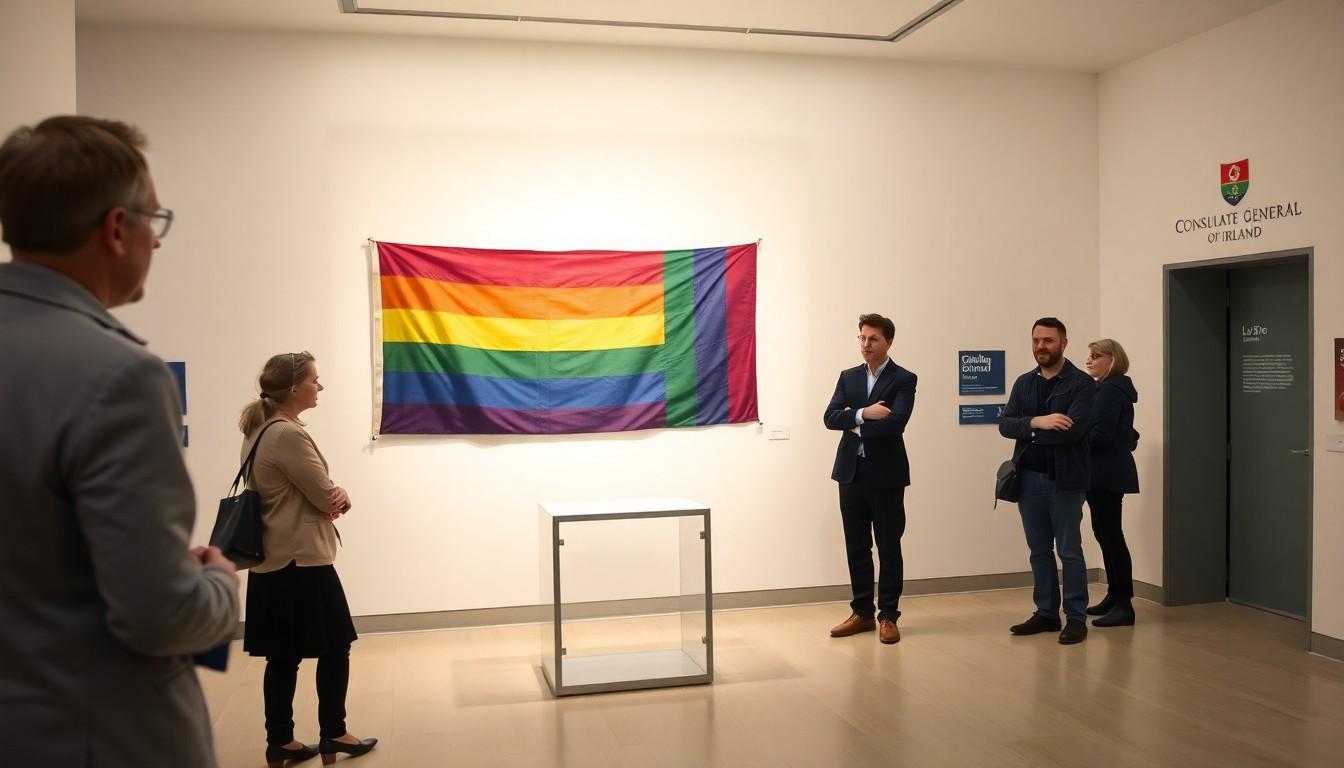
Celebrate a landmark cultural exchange as San Francisco’s original rainbow Pride flag crosses the Atlantic to Cork, Ireland , a joyful, visual symbol of LGBTQ+ history on a four‑month exhibition that spotlights activism, craft and an unlikely kinship between two cities.
Essential Takeaways
- Historic loan: The original Gilbert Baker rainbow flag has travelled from the GLBT Historical Society in San Francisco to Cork Public Museum for a four‑month exhibition.
- Sister‑city significance: Cork is San Francisco’s sister city, making it the first international stop outside the US to host the flag.
- Visible craftsmanship: The banner, created in 1978, carries hand‑stitched colour panels and a palpable sense of handmade pride.
- Community celebration: The send‑off in San Francisco brought consular staff, museum curators and local LGBTQ+ figures together for a ceremonial farewell.
- Practical note: If you’re planning a visit, expect a mix of museum interpretation and community events around the display while it’s in Cork.
Why this trip matters , a flag with skin and stitches
The original flag isn’t just a graphic; it’s a tactile, sewn object that smells faintly of fabric and history, and you can sense that when you stand near it. According to the GLBT Historical Society, Gilbert Baker hand‑made the first flags in 1978, using deliberately chosen colours and simple sewing techniques that gave the banner a warm, human quality. Seeing it in person is different from seeing the emblem on a screen , there’s weight and texture to the story.
This loan is the first time the piece has travelled internationally from its San Francisco home, so it’s more than a museum rotation. It’s a diplomatic and cultural moment, born from a memorandum of understanding between the GLBT Historical Society and Cork Public Museum that paved the way for the transfer and exhibition.
Cork and San Francisco , sister cities making sense
Cork becoming the first city outside the United States to display the original flag is a neat, symbolic stitch between places. Cork City Council highlighted the significance, noting the close civic relationship with San Francisco and the cultural resonance the flag holds for both cities.
It’s a partnership that turns municipal sisterhood into a people‑facing celebration. Locals in Cork and visitors alike get to see an object that helped define a movement, while San Francisco gets to send a piece of its civic soul across the sea.
The send‑off , community, ceremony and a bit of theatre
The farewell in San Francisco mixed officialdom with party energy; the Irish Consulate joined the GLBT Historical Society and mission neighbourhood regulars for a send‑off that was equal parts museum protocol and neighbourhood block party. Coverage from local outlets describes warm goodbyes and familiar faces, including museum staff and long‑time activists.
Events like this matter because they reframe museum objects as communal property. The travelling flag becomes an occasion for storytelling and for young people to meet elders who remember the first marches and the early days of Pride.
What you’ll see and what to expect in Cork
At Cork Public Museum the flag is presented with interpretation that places it in context , the creation by Gilbert Baker, its ascent as a global symbol, and the politics of visibility behind each stripe. Local press and museum notes promise events and panels while the flag is on display, so it’s worth checking museum listings if you plan to time your visit around a talk or community programme.
If you go, look for the small things: stitch patterns, fabric joins, and how conservators set up lighting and barriers. Those details tell you how institutions balance access with preservation.
Why it still matters today
Symbols change, but this object reminds us that many symbols began as craft and choice. The rainbow flag’s trip to Cork is a reminder that activism travels through relationships , between people, museums and cities , and that keeping history alive sometimes means moving treasured objects where they can spark new conversations.
It’s also a reminder to younger generations that icons have origins, and that stewardship , of flags, stories and rights , is a communal job.
It's a small transatlantic stitch that keeps the story of Pride alive and shared.
Source Reference Map
Story idea inspired by: [1]
Sources by paragraph: