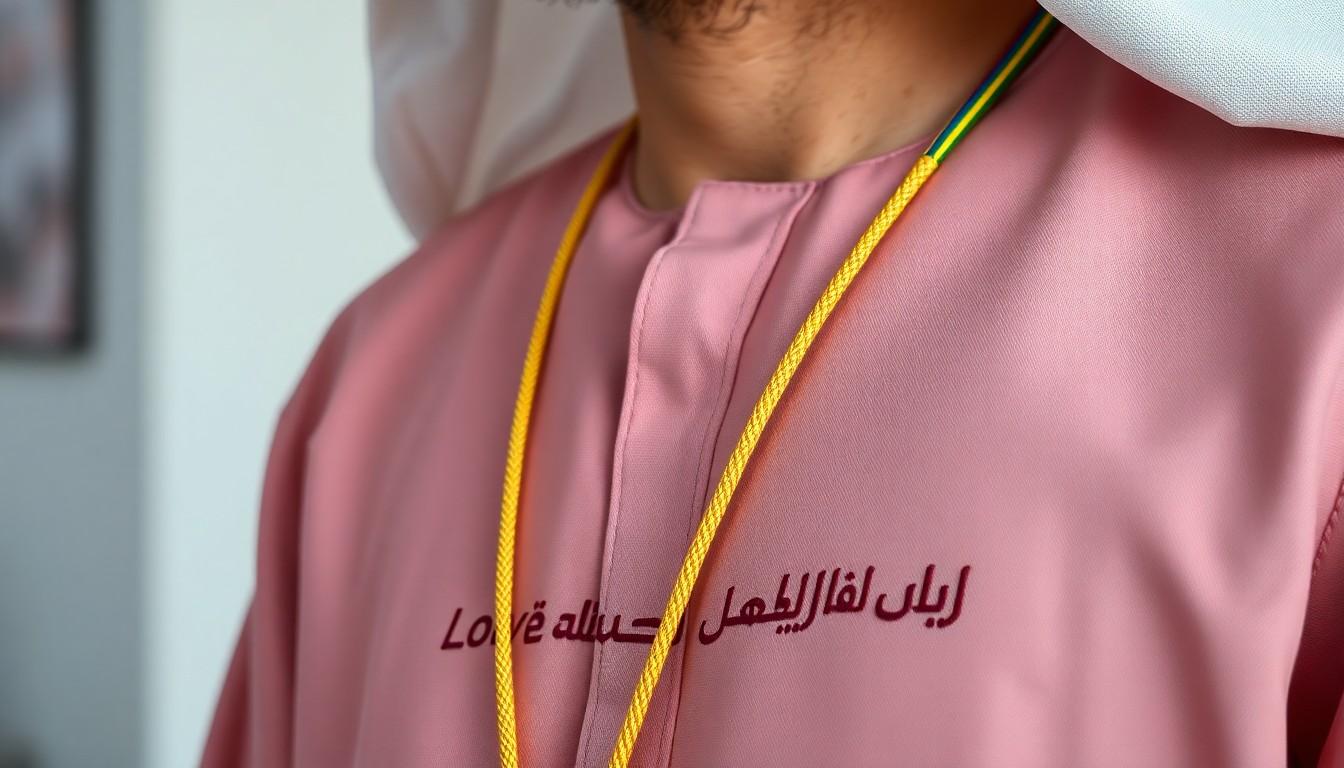
Shoppers and spectators alike noticed a quiet, vivid alteration to ceremonial dress at the 2026 FIFA World Cup , a custom Qatari bisht reworked to speak about identity. LMU costume professor Leon Wiebers collaborated with Qatari physician and LGBTQ+ activist Dr Nas Mohamed to honour tradition while amplifying a message of freedom and visibility on the global stage.
Essential Takeaways
- Bold visual choice: The bisht kept its formal black wool gauze but swapped the traditional gold cord for a rainbow one, signalling Pride while retaining ceremony.
- Thoughtful collaboration: Wiebers and Nas Mohamed worked through fittings and historical conversations to respect cultural symbolism while reinterpreting it.
- Wide impact: Nas’ wearing of the garment at the World Cup generated viral attention and international news reach, amplifying LGBTQ+ visibility.
- Activism by design: The project is framed as political activism, using dress as a communicative tool to challenge heteronormative structures.
- Craft details: Longtime collaborators helped construct the ensemble, which included wide-leg trousers and a corset-inspired top alongside the bisht.
A striking moment at the World Cup , soft fabric, louder message
The clearest piece of news is simple and sensory: a traditionally formal, black gauze bisht looked familiar until you noticed the rainbow cord and embroidered words in Arabic. According to LMU, that visual tweak made a huge difference , it read as celebration, challenge and conversation all at once. The garment’s quiet fabric and bright cord created a small jolt in stadiums and on social feeds, and it’s proof that clothing still talks loudest when it subverts expectations.
How respect and reinvention were balanced in the studio
Wiebers didn’t approach this as a gimmick. He and Dr Nas Mohamed spent time discussing the history and symbolism of Qatari dress, testing sketches and running fittings until the ensemble felt right. That back-and-forth matters: the goal was to engage with tradition thoughtfully, not to erase it. Practically, that meant sourcing a rare bolt of black wool gauze and bringing in trusted collaborators to build the trousers, corset-inspired top and the bisht itself.
What this means for fashion, identity and visibility
When a garment gets global attention, it can translate private identity into public dialogue. Nas’ appearance at the Cup went viral and drew international coverage that reached hundreds of millions, which shifted a personal act into a broader conversation about LGBTQ+ visibility in sport. Outlets and advocacy groups quickly picked up the story, framing the look as both a cultural statement and an act of solidarity. The lesson for designers is clear: respectful reinterpretation can amplify voices without flattening context.
Choosing symbolism carefully , three practical takeaways
If you’re a designer or someone thinking about adapting traditional dress, keep three things in mind. First, start with conversation: ask about history and meaning before you alter any element. Second, preserve structural cues that anchor the piece culturally so the reinterpretation reads as dialogue, not appropriation. Third, be ready for unexpected reach , a single appearance can go global, so plan for the social and safety implications for the wearer. These practical steps keep the work rooted and responsible.
Why this feels like political design, not fashion theatre
Wiebers frames the project as activism , and that’s not an empty claim. He sees daily life and identity as inherently political, and the ensemble was intended to question long-established, heteronormative structures through the language of dress. For many viewers, that made the bisht more than a costume; it became a visible claim to space and dignity. Whether you love or debate the approach, it’s a reminder that clothing still carries power to shift perceptions.
It's a small change in cloth that made a big difference on a global stage.
Source Reference Map
Story idea inspired by: [1]
Sources by paragraph: