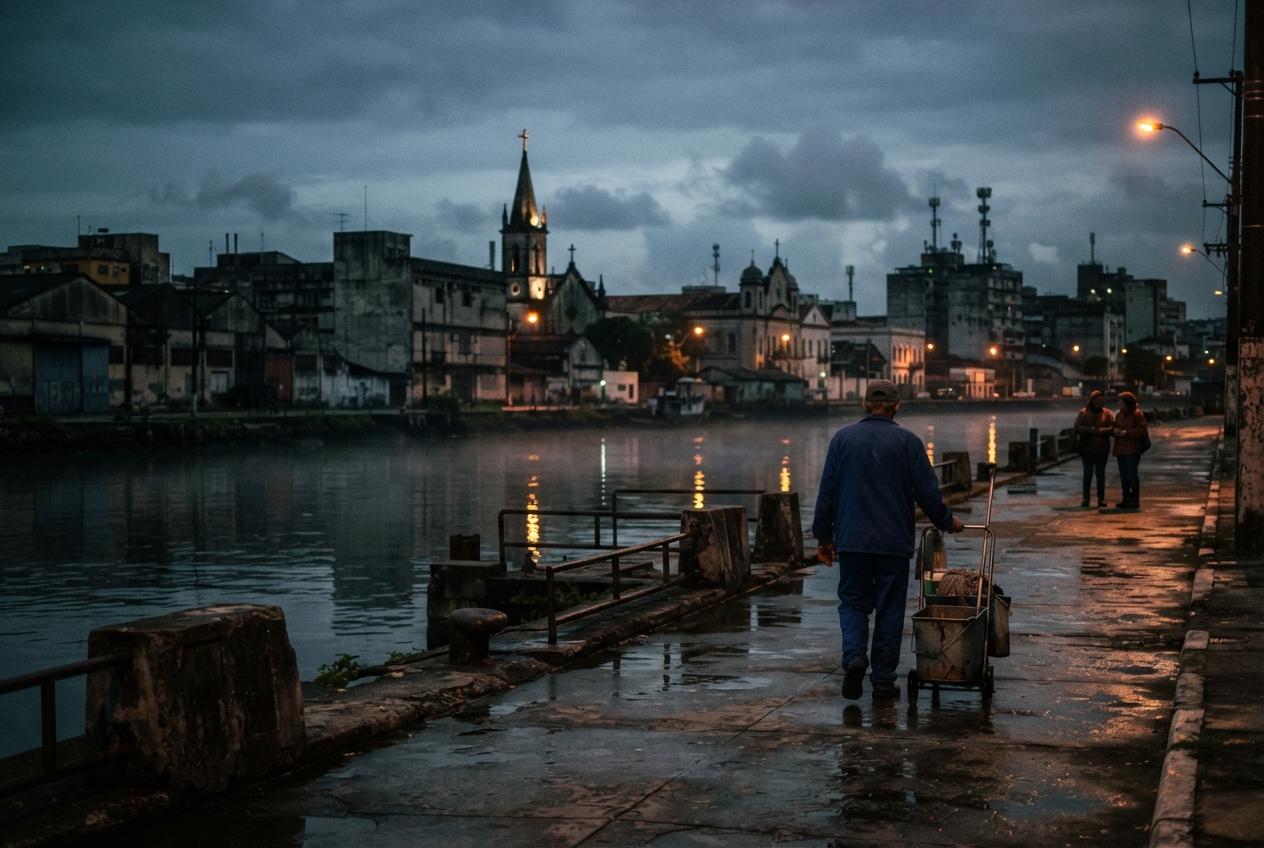
Shoppers of cinema are turning to intimate festival hits like The Riverbank, a Locarno-premiering queer thriller from Brazil that mixes mangrove noir and the politics of religion; it matters because it asks who gets to belong, who gets policed, and how desire survives under pressure.
- Bold visual palette: neon-fluorescent interiors clash with blue-black mangrove nights, giving the film a sleek, moody look.
- Strong sense of place: the mangrove operates as queer geography , muddy, amphibious and liminal , rather than mere backdrop.
- Human stakes: the lead, a janitor named Izaquiel, feels both economically vulnerable and emotionally complex, making the politics personal.
- Slow-burn tension: pacing is deliberate; atmosphere builds suspense more than action, so expect mood over nonstop thrills.
- Emotional payoff: the film refuses straightforward revenge, favouring intimacy and survival as forms of resistance.
Opening hook: a mangrove becomes a character, not just scenery
The Riverbank opens with the sensory contrast of a filthy daytime job and the eerie, amphibious hush of the mangroves at night, and you can almost feel the slick mud underfoot. Directors Enock Carvalho and Matheus Farias use the estuary as more than setting; it’s a political and psychological terrain where queer encounters are both clandestine and vital. The result is a noir-tinged mood piece that lingers on atmosphere as much as plot.
How the story folds labour, religion and desire together
Izaquiel, played with quiet vulnerability by Caique Copque, scrubs floors by day and slips into secret riverbank trysts by night. When homophobic violence forces him into the orbit of a religious community, the narrative tightens into a study of how faith and the far right can try to administer bodies and intimacy. The filmmakers trace how surveillance and moral policing migrate from the pulpit into everyday life, making the stakes feel immediate and unnervingly familiar.
Style notes: neon, noir and careful echoes of Pernambuco cinema
The film’s cinematography often pairs fluorescent interiors with riverine nocturnes, a visual echo of recent Pernambuco works that interrogate religion and power. That shared aesthetic reads less like imitation and more like a regional conversation about how the right reshapes social norms. The Riverbank’s budget is modest, so the action centres on a few dominant spaces , supermarket, pastor’s compound, mangrove , but the compressed canvas sharpens focus and mood.
Where it shifts , from social drama into thriller and back again
At first the film resembles a social drama, documenting exclusion and survival, but a slow-burn transformation turns it into a thriller of class and identity. Yet Carvalho and Farias avoid the easy catharsis of explosive revenge; the film’s climactic logic privileges intimacy and endurance over mirroring the brutality of persecutors. That moral choice gives the story a quieter, and in some ways nastier, moral clarity.
Practical viewing tips and who will like it
This is a patient film , expect long takes, atmospheric pauses and character revelations that arrive slowly. If you prefer plot-heavy thrillers, it might feel languid; if you relish mood, queer worldbuilding and political subtext, it’s likely to stick with you. Watch with headphones to catch the sound design that contrasts mangrove hush with fluorescent hum, and look out for performance details in Izaquiel’s small gestures: they carry the film’s emotional weight.
It's a small change in perspective that makes every frame feel charged: The Riverbank turns hidden desire into a form of survival.
Source Reference Map
Story idea inspired by: [1]
Sources by paragraph: