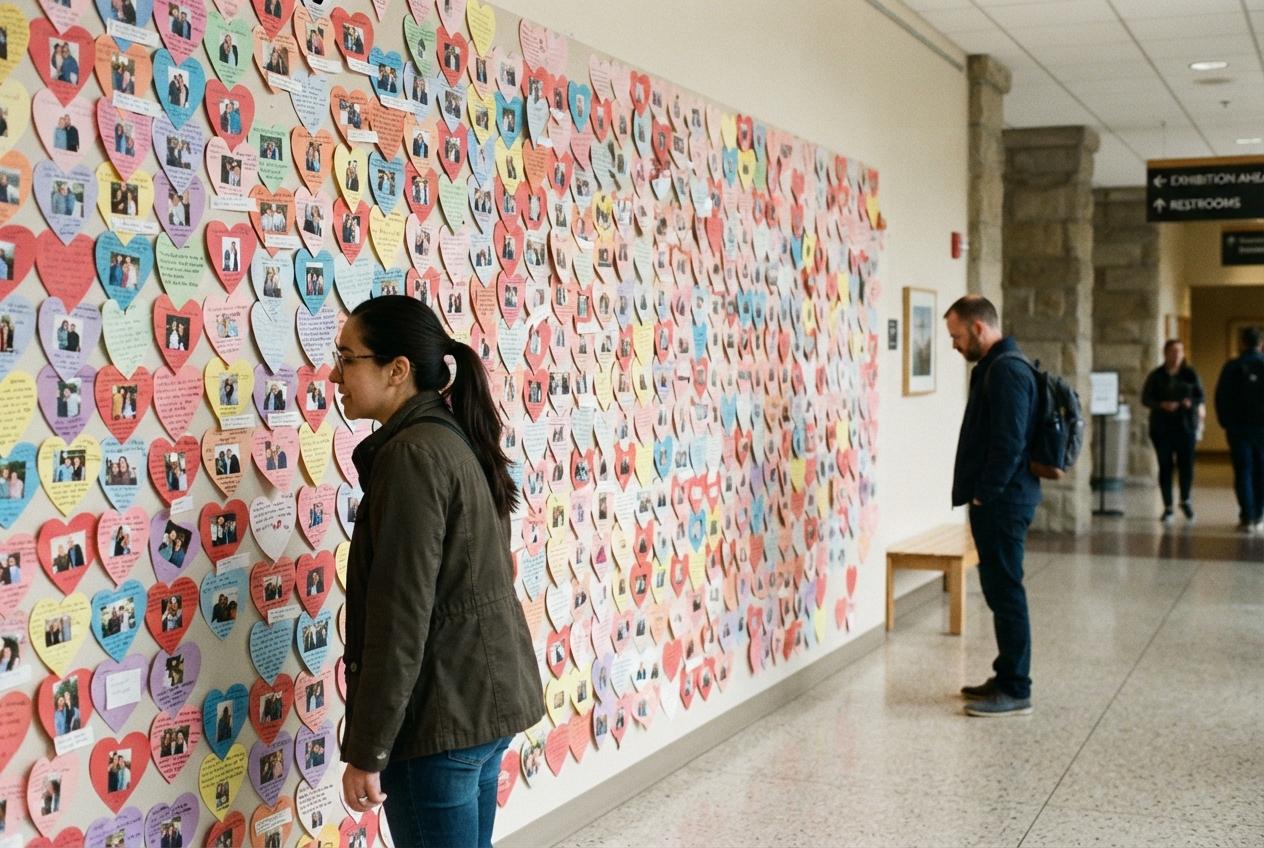
Walking into a room lined with thousands of paper hearts, you feel the warmth before you read a single message , the Growing Wall of Love is turning tiny, homemade tokens into a big, visual chorus of LGBTQ+ lives and allies, and it’s popping up from churches to World Pride halls because visibility still matters.
Essential takeaways
- Simple format, big impact: Thousands of small paper hearts, each with a photo and message, create an instantly visual and emotional installation.
- Globally diverse: Contributors come from over 120 countries , including places where LGBTQ+ people face criminalisation , giving the wall a quiet but powerful reach.
- Accessible participation: People can join in person at pop-ups or send photos and notes digitally; the project is free to participate in.
- Community and healing: Many notes are short and joyful, but others hold stories of pain, hope and refuge , visitors often react emotionally.
- Volunteer-run and growth-minded: Creator Jarko De Witte van Leeuwen aims to expand to major Pride events but needs funding and organisational partners.
A tiny heart that packs a punch
The first thing you notice is how unassuming it looks: paper hearts strung into garlands, colourful and almost childlike, but their combined effect is anything but small. According to organisers, visitors often stop and get drawn in by the softness of the display , it disarms people and turns curiosity into conversation. The tactile, handmade quality helps the project play well in busy festival halls and quieter church spaces alike.
The project began as a personal idea and quickly scaled when people realised the format made it easy to share a face and a short message. The creator wanted something that "radiates love," and that intent shows: the wall reads like a mosaic of everyday intimacy rather than a polished campaign piece.
Why a grassroots wall works where speeches don’t
At big conferences and government gatherings, policy debates can feel distant. The Growing Wall of Love changes the scale: it brings individual stories into rooms filled with officials, activists and journalists. High-profile participants , including national leaders who’ve sat at craft tables to add their hearts , lend visibility, while ordinary people leave messages that often cut straight to the human cost of prejudice.
This kind of project works because it sidesteps jargon. It doesn’t ask for a manifesto; it invites a photo and a line. That makes it potent in places where speaking openly is dangerous , a symbolic lifeline for contributors from countries that criminalise LGBTQ+ identities.
From churches to Pride stages , unexpected venues that matter
You wouldn’t automatically picture religious buildings as exhibition spaces for queer art, but the wall has appeared in churches, city halls and theatres , even a pop-up at Amsterdam’s Westerkerk during World Pride. That mix of venues is deliberate: it challenges stereotypes and opens dialogue where resistance often lives.
Organisers say the reaction inside churches has been mostly positive, with hundreds creating hearts at single exhibits. That kind of crossover matters for changing hearts and minds; it’s a softer, relational way of pushing for acceptance that complements legal and political advocacy.
How to take part, and what to consider before sending your heart
Participation is open and free , people can create hearts in person or email photos and messages. If you’re thinking of joining, pick an image and a short line that feels honest: it might be a joyful shout-out, a quiet memory, or a message to a future self. Keep safety in mind if you’re from a place where visibility could be risky; organisers have made special allowances for contributors in hostile environments, such as giving them larger hearts as a symbol of solidarity.
For event planners, the wall is a low-cost, high-emotion attraction that encourages engagement. If you want it at your Pride or community festival, expect to help with logistics and consider fundraising support , the project is volunteer-run and the founder invests significant unpaid hours each year.
What’s next , from Amsterdam to Cape Town and beyond
The creator hopes to bring the wall to major Pride cities, including Cape Town for World Pride 2028, and has had talks with organisers in New York and San Francisco. Expansion will depend on sponsorship or philanthropic backing; until then, the project will continue to hop between intimate pop-ups and larger events.
The bigger picture here is simple: collective acts of tenderness can be political in the best sense. A wall made of paper hearts keeps growing because people want to be seen and to see one another.
It's a small change that can make every story feel more visible.
Source Reference Map
Story idea inspired by: [1]
Sources by paragraph: