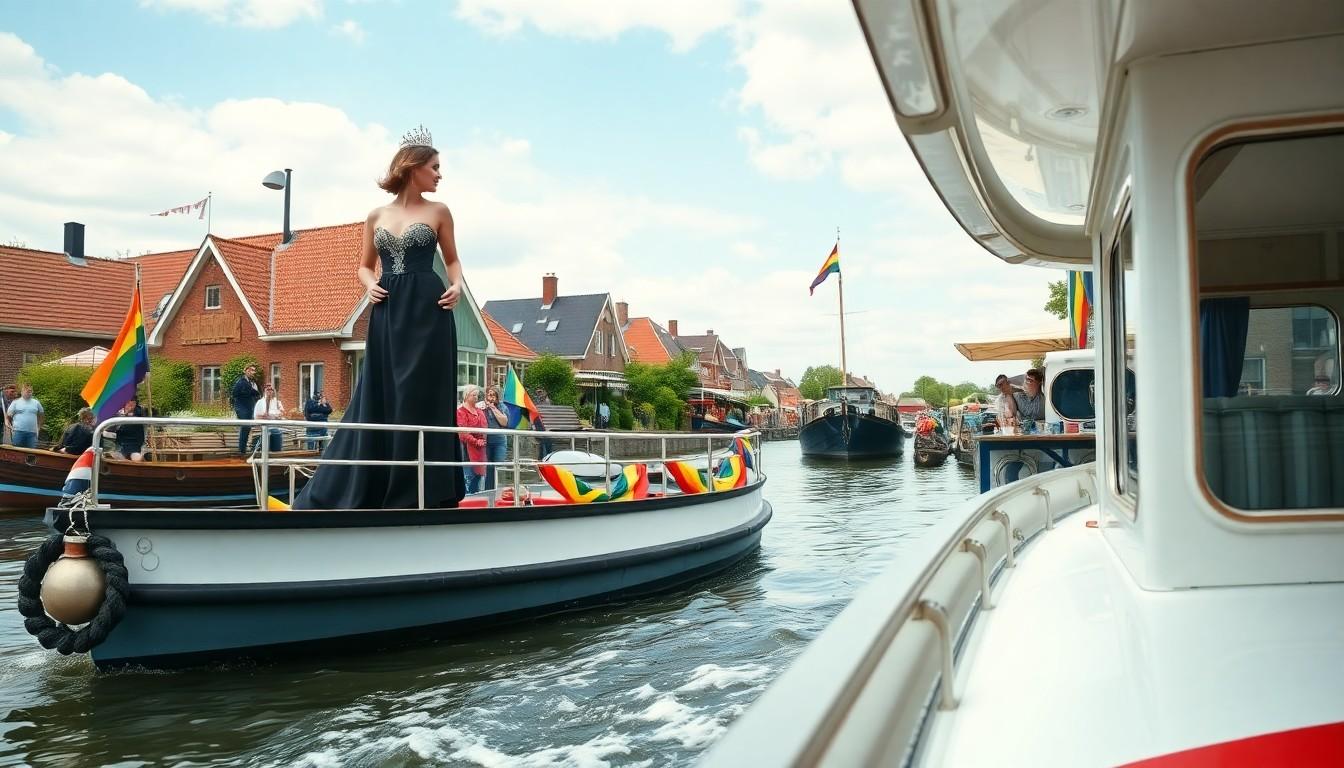
Watchers on the quay had mixed feelings as a Pride-flagged tjalk slipped out of sight; residents, organisers and a handful of brave voyagers showed why inclusion in local festivals still matters. This account explores who pushed for the Pride-boat at Zierikzee’s traditional Havendagen, why it proved controversial, and what unfolded on the water.
Essential Takeaways
- Local tradition clashed with inclusion: organisers worried a Pride presence might affect core Havendagen rituals and mood.
- Compromise reached: the Pride-boat sailed outside the official programme and kept a low profile, but it did sail.
- Small but meaningful turnout: about 35 participants on the Vrijbuiter, greeted by a few supporters and some critics on shore.
- Emotional impact: non-binary and LGBTQ+ attendees described acceptance and relief after the voyage.
- Community friction visible: hostile social-media posts and an employee leaving a café after a rainbow flag were reported.
A quiet morning, a colourful mast , what actually happened
Rain set the scene in Zierikzee as the Havendagen reached its climax, a sensory mix of salt air, damp jackets and the thump of distant drums. The annual ritual , fetching Neptunus from the Oosterschelde and crowning the new mosselprinses , carries a lot of local pride and a predictable script. This year it carried an extra thread: a planned Pride-boat inspired by a national initiative, which prompted debate before anyone even cast off.
The Pride idea began as part of a broader ‘Pride in mijn dorp’ push, and was brought to the Havendagen by a local advocate. According to local reports, the festival committee feared that a high-profile Pride presence could polarise visitors and change the focus from the mosselvisserij that anchors the event. So they ruled the boat out of the official programme , then a compromise was found and the Vrijbuiter sailed quietly.
Why organisers hesitated , tradition versus attention
Organisers framed their hesitation as protection of tradition; they told local outlets they worried core elements of the Havendagen could be affected. That line echoes a common tension in community festivals: how to evolve without feeling hijacked. Some harbour operators and skippers reportedly opposed the idea outright, and the committee’s statement mentioned potential consequences for “essential parts and traditions.”
But the issue wasn’t simply a procedural one. Social media amplified hostility quickly, with abusive posts and ridicule aimed at the idea of visible Pride at a family event. The committee said they didn’t want those online storms to overshadow a festival that many rely on for income and identity, which helps explain their caution.
On the water: small turnout, big feelings
When the Vrijbuiter raised its rainbow flags and slipped out into the Oosterschelde, only a modest crowd watched from the quay. About 35 people boarded the 23-metre tjalk, and within minutes they were out of sight and away from the rowdy commentary online. For bystanders it may have looked like a tiny parade, but for participants it was meaningful.
Young people who’d never dared to wear make-up or a wig in public described crying with relief at the acceptance they found on board. Organisers acknowledged they’d kept a low profile , hardly the spectacle some feared , but the emotional payoff for attendees was significant. That dissonance between visual scale and personal impact is worth noting for any town considering similar gestures.
Voices ashore: warmth, worry and the mayor’s take
Reactions on land ranged from bemused support to thinly veiled hostility. A local café owner who performs as a drag queen shared how a rainbow flag once cost him an employee, and recounted slurs yelled by teenagers. Others at the quay shrugged: some enjoyed the singing and dancing and felt the event was bigger than a single disagreement.
The mayor struck a conciliatory note, pointing out the inherent theatricality of the Havendagen itself , Neptunus in a dress , and saying he didn’t quite understand the fuss. He also expressed regret about the abuse competitors faced online, while stressing the municipality would stay out of the festival’s internal decisions. That public stance helped calm things, but not enough to erase the episode from local memory.
What the compromise means for future festivals
Organisers and activists both walked away with lessons. The Pride-boat showed you can include alternative groups without upending tradition, but it also exposed how fragile local acceptance sometimes is. The initiator was proud of getting the boat out, though she admitted the visibility wasn’t what she’d hoped and suggested a rethink about timing for future Havendagen.
If other towns want to follow Zierikzee’s small experiment, practical tips emerge: consult early with committee members and skippers, set clear boundaries about how participation fits into the programme, and prepare for a social‑media backlash. Above all, make space for the emotional dimension , for some passengers, one quiet sail can be quietly transformative.
It's a small change that can make every harbour festival a little more welcoming.
Source Reference Map
Story idea inspired by: [1]
Sources by paragraph: