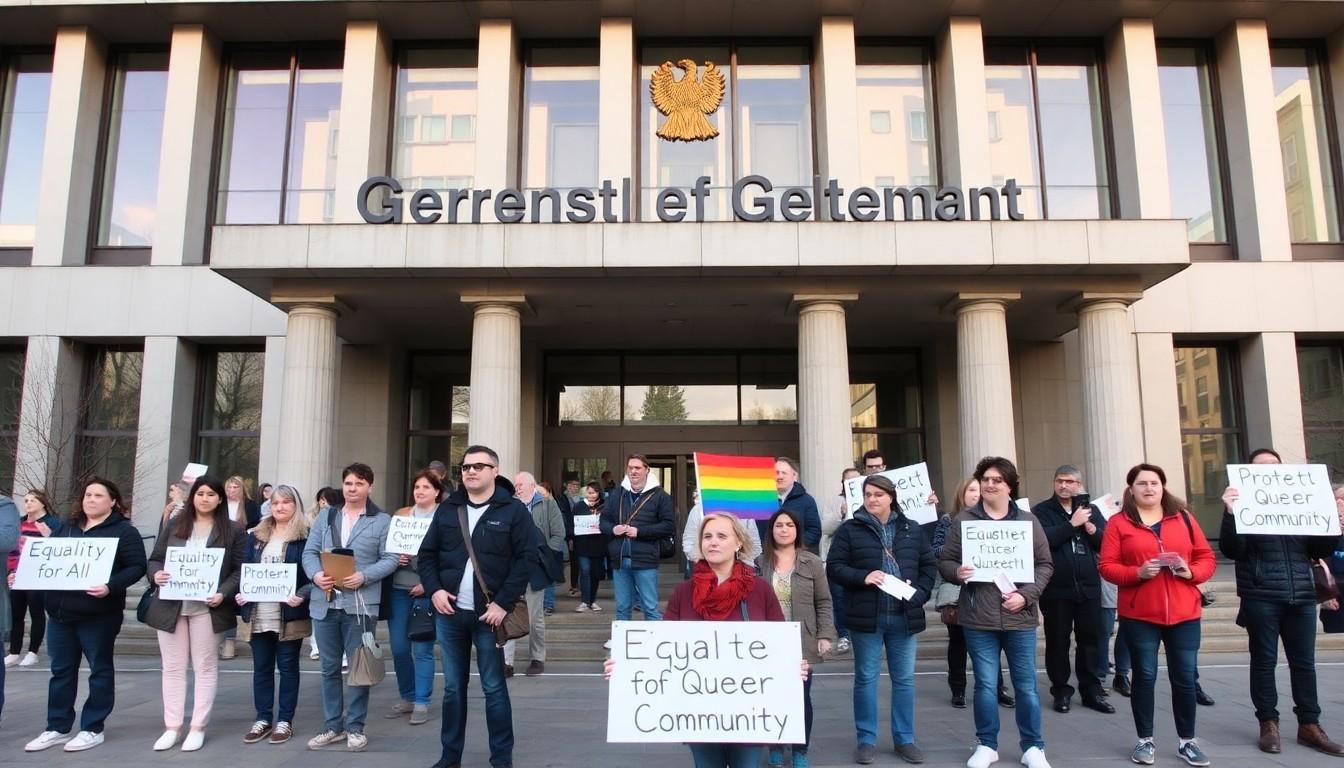
Shifts are underway in Berlin after the Islamist attack near Christopher Street Day; Justice Minister Stefanie Hubig wants Article 3 expanded to ban discrimination based on sexual identity, a move supporters say would give queer people clearer legal protection and signal the state’s commitment to their safety.
Essential Takeaways
- New constitutional push: Justice Minister Stefanie Hubig proposes amending Article 3 to explicitly forbid discrimination for sexual identity, putting protection into the Grundgesetz.
- Political debate brewing: The idea has allies in some states and cautious resistance in parts of the Union; federal talks are ongoing.
- Security angle: The proposal follows the Islamist CSD attack in Berlin and comes alongside plans to tighten information-sharing between police and prosecutors.
- Youth justice tweak: Hubig wants to keep juvenile sentencing intact but tighten "Vorbewährung" rules where public safety is at stake.
- Public mood: Calls for increased CSD security and symbolic legal protections are rising as communities seek reassurance.
Why the constitution, and why now?
Rewriting constitutional text is a bold step, and the push follows a traumatic moment: the Islamist attack at the edge of Berlin’s Christopher Street Day made clear that queer people can be both symbolically and physically targeted. According to reporting, Justice Minister Stefanie Hubig argues it’s logical to add sexual identity to the list of protected characteristics in Article 3, so discrimination would be plainly unlawful at the highest legal level. That’s both symbolic , it says who we are as a society , and practical, because constitutions shape laws and court decisions down the line.
The idea landed as part of a broader government response that mixes security measures and legal reform. Policymakers say that amending the Grundgesetz would take time and require cross-party buy-in, so discussions are already under way in coalition talks. For anyone worried about performative gestures, the key test will be whether a constitutional change is followed by concrete laws and better enforcement.
What would actually change for queer people?
At present Article 3 bans discrimination for things like origin, language, religion and political views. Adding sexual identity would make unequal treatment on those grounds explicitly unconstitutional. That matters for schools, workplaces, public services and courts, where fights over subtle forms of exclusion sometimes hinge on interpretation rather than clear legal text.
Experts and advocacy groups point out this is more than a sticker on the front page of the law: constitutional wording influences lower-court rulings and administrative practice. Practically, it could strengthen litigation chances, sharpen anti-discrimination policy and give authorities firmer grounds to act when threats escalate. For everyday life it won’t resolve all injustices, but it raises the legal floor.
Security fixes and the information gap
Hubig isn’t only talking rights; she’s also talking intelligence. She’s discussed with Interior Minister Alexander Dobrindt possible tweaks to how security agencies share information with prosecutors, because gaps can blunt criminal justice responses. The Berlin attack , labelled an Islamist terrorist incident by officials , highlighted failures where predictive signals weren’t acted on or shared in time.
That said, civil liberties advocates will watch closely: improved information flow needs legal clarity and oversight, especially where juvenile cases and radicalisation are involved. Hubig proposes keeping the youth justice framework but making "Vorbewährung" , a kind of pre-probation assessment , conditional on clear public-safety criteria. The balance is delicate: too lax and risks remain, too draconian and you risk criminalising young people who might be rehabilitated.
Politics: who’s for it and who’s not?
Politically, the move has some encouraging signs but is by no means settled. Some state governments already back explicit protection for sexual identity, and the chancellor publicly reassured the queer community after the attack. Still, there are reservations in parts of the Union, meaning a constitutional amendment will need negotiation and compromise.
That gives opponents leverage to argue about wording, scope and downstream consequences. Supporters, however, can point to a growing European trend to recognise sexual orientation and identity explicitly in rights frameworks , and to the immediate need to signal that the state protects its minorities.
What to watch next and practical takeaways
Watch for the language of any proposal: a precise definition of "sexual identity" and how it intersects with sex, gender and orientation will matter in courts. Also follow legislative proposals on information-sharing and any pilot changes to juvenile sentencing rules.
If you’re an employer, teacher or community organiser, now is a sensible time to review anti-discrimination policies, staff training and event security plans. For queer people and allies, legal change is reassuring, but concrete safety measures at public events and clear reporting channels remain essential.
It's a weighty constitutional conversation, but one that could make everyday life quieter and safer for many.
Source Reference Map
Story idea inspired by: [1]
Sources by paragraph: