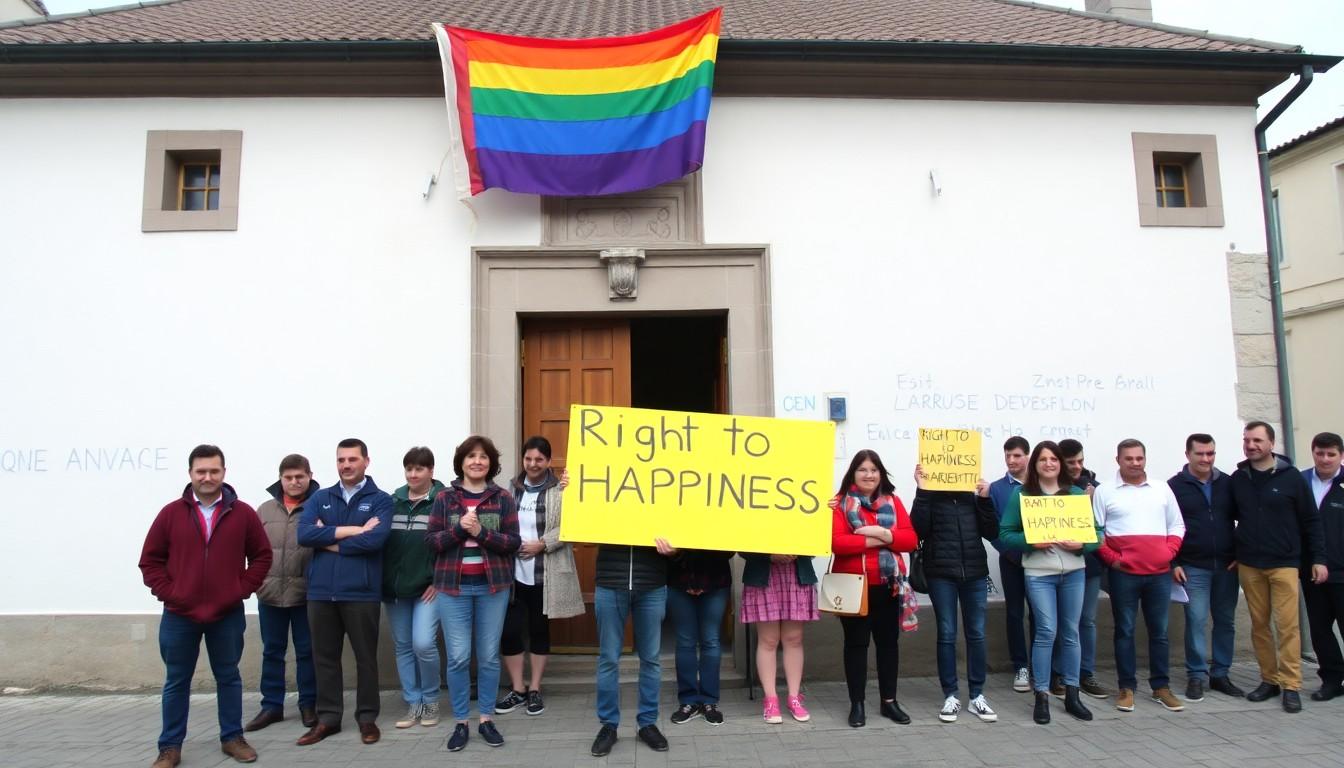
Shoppers at Asti Pride got more than music and flags , they heard a quiet, powerful witness. Il Pozzo di Sicar, a Catholic LGBTQ+ group from Turin, addressed the crowd about faith, identity and the simple, political act of wanting to be happy and seen. This matters because it bridges church, street and law.
Essential Takeaways
- Public presence: Il Pozzo di Sicar spoke from the main stage at Asti Pride, showing faith groups are now visible at secular LGBTQ+ festivals.
- Community first: The group formed a monthly table of diverse ages and identities where members pray, talk and support each other.
- Concrete happiness: For them, happiness means loving openly, receiving the Eucharist without shame and legal recognition of families.
- A call to remember: The speech honoured Mirko and his mother, victims of a homophobic murder, linking personal grief to wider safety concerns.
- An invitation: They ended by offering their space to believers who feel alone, stressing visibility and welcome.
A stage, a microphone and the ordinary heroism of saying “I belong”
Il Pozzo di Sicar stood on Asti’s main stage and turned a festival theme , “The Right to Happiness” , into a lived testimony that sounded both intimate and defiant. You could almost hear the soft rustle of the crowd as people absorbed the idea that happiness can be a struggle as well as a celebration. According to Asti Pride listings, the festival is a hub for regional LGBTQ+ organising, and inviting a faith group to address the crowd signals a subtle shift in who gets to speak at Pride. For anyone wondering whether prayer and Pride can coincide, this moment answered that question plainly: they can.
How a small group became a visible community
Il Pozzo di Sicar began as a handful of people meeting to talk, pray and share meals; over time that monthly table grew into a steady, intergenerational community. The group describes itself as made up of gay, lesbian, bisexual, transgender, nonbinary people and allies, both Catholics and other Christians. That mix matters: it’s not just pastoral support but mutual life-making , couples with decades together alongside single people , which gives their message weight. Their experience shows the quiet work of community-building can turn private consolation into public witness.
What “the right to happiness” looks like in practice
They didn’t speak only in abstractions. For Il Pozzo di Sicar, happiness means practical things: loving without hiding, receiving the Eucharist without condemnation, and having relationships legally recognised. Those are the everyday freedoms that change how people move through homes, parishes and workplaces. If you’re choosing where to volunteer or whom to vote for, this is the kind of lived testimony that brings policy debates into human terms. The group’s framing turns an emotive slogan into specific demands.
Grief, memory and why visibility can save lives
The speech stopped to remember Mirko and his mother, killed in an apparent act of homophobic violence, a reminder that visibility carries risk as well as hope. Coverage in national outlets has traced the case and public reactions, and Il Pozzo di Sicar used the moment to reclaim Mirko’s story as one of claiming happiness rather than shame. That move felt both political and pastoral: a public memorial at Pride insists that these tragedies are not private family matters but matters of public safety and social culture.
Why this matters for faith communities and Pride organisers
Inviting Christian LGBTQ+ voices onto Pride stages is a practical step toward inclusion that challenges both secular and ecclesial assumptions. It offers reassurance to people who feel split between faith and identity, and it nudges churches to reckon with members who live at that intersection. Organisers who widen their platform help normalise faith-positive queer lives, and faith groups who take Pride seriously make theological claims about belonging in a very public way. If you’re part of a parish or an activist collective, the lesson is simple: show up, listen and make space.
It's a small change that can make every prayer and parade a bit more inclusive.
Source Reference Map
Story idea inspired by: [1]
Sources by paragraph: