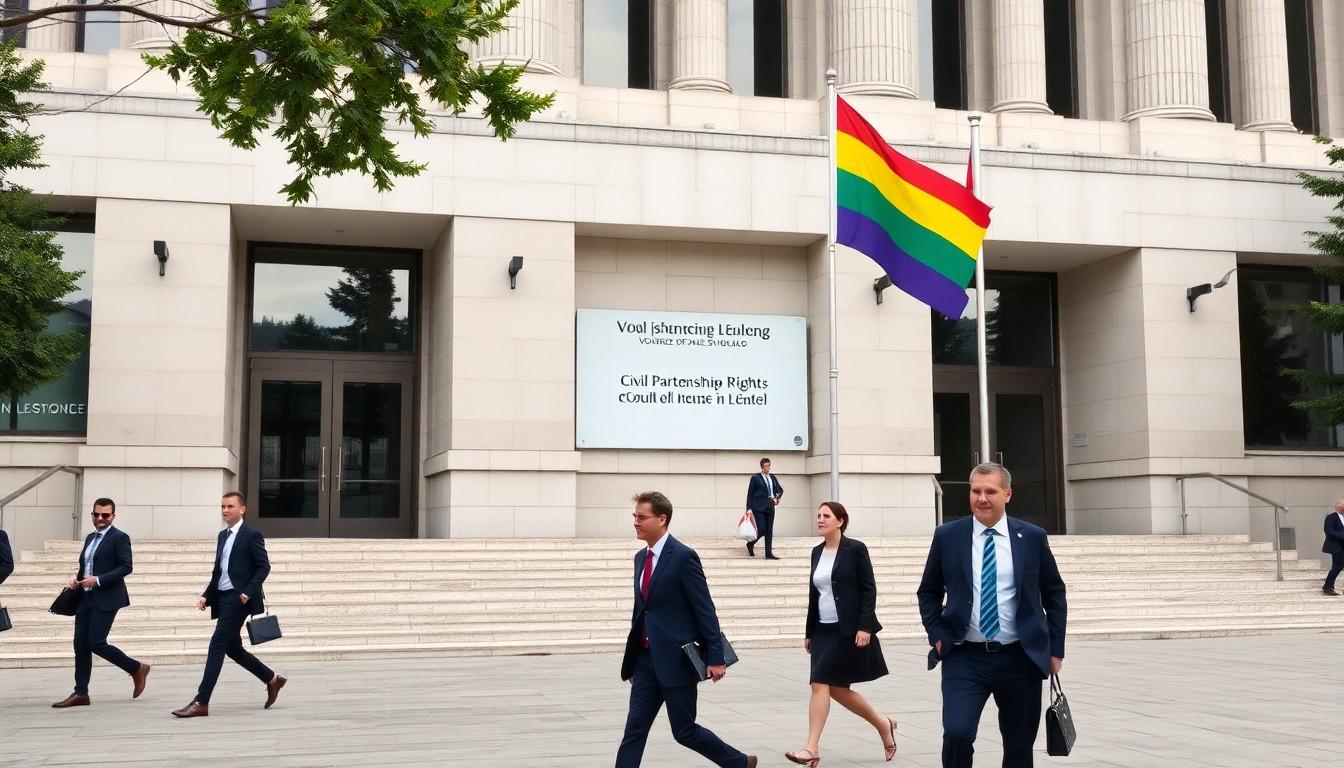
Shoppers for change are turning their attention to Romania’s stalled civil partnership debate, as MozaiQ and advocates say a simple legal fix would protect families now left in legal limbo. It matters because it affects hospital visits, property and everyday responsibilities for hundreds of thousands of couples.
Essential Takeaways
- Legal gap: Romania currently lacks civil partnership recognition, leaving many cohabiting couples without basic protections.
- Practical paradox: Organisations point out it’s inconsistent to impose obligations without granting corresponding rights.
- Widespread support: Civil society and petitions show broad public backing for a clear legal framework.
- Ready solution: Activists say a civil partnership law already exists in draft form and would align Romania with most European states.
- Everyday impact: Recognition would help with hospital access, inheritance and financial declarations, and reduce bureaucratic uncertainty.
Why MozaiQ’s reaction landed with a sting
MozaiQ’s blunt line , that it’s “the height of irony” for the state to demand responsibility while denying rights , summed up a common frustration: a relationship can be morally obvious but legally invisible, and that feels unfair. The group highlighted how the Constitutional Court’s reasoning about a vague amendment inadvertently exposed a broader issue: there’s no legal definition the state can use to attach rights or duties to non-married couples.
Backstory: MozaiQ responded after the Constitutional Court assessed an amendment to the integrity law and flagged that lawmakers used unclear wording to try to bind partners with reporting obligations. Their point is simple: you can’t reasonably give someone duties if the law won’t acknowledge their status.
Practical takeaway: For couples, the absence of a recognised partnership can mean being excluded from hospital visits, inheritance rights or other day-to-day protections. That’s why activists see this moment as an opportunity, not just a legal puzzle.
The paradox of duties without rights , a human cost
There’s an obvious human picture behind legal jargon: someone rushed to hospital while their partner is stopped at the door because the law won’t call them family. MozaiQ’s communications director painted it vividly, saying it’s absurd for a partner to be accountable on paper but powerless in practice.
Context: The Constitutional Court’s finding focused on technical vagueness, but campaigners say this technicality exposes a policy failure. If the state wants to attach obligations to partners, it should first recognise partnered relationships clearly.
Advice: If you’re in an unrecognised partnership, make practical arrangements now , power of attorney, medical proxies and wills , while advocating for legislative change that would make such workarounds unnecessary.
There’s support and momentum across society
Campaigners aren’t lone voices. Petitions and advocacy efforts show hundreds of thousands of citizens backing legal recognition, and multiple NGOs have urged parliament to adopt a civil partnership law. The argument is straightforward: most European countries already use civil partnerships to protect diverse family forms, leaving only a handful of states without such rules.
Trend note: Public petitions and coalition letters have been increasingly visible in recent years, pushing lawmakers to respond rather than letting the issue fizzle.
Practical insight: Lawmakers often respond to visible, sustained public pressure. If you care about this change, supporting existing campaigns or contacting your representative can matter.
The legal road ahead , ready measures and precedents
MozaiQ reminded readers that a civil partnership bill is already on parliamentary desks and that there are relevant court decisions in European human rights institutions that point toward recognition. The Constitutional Court’s recent decision actually narrows the technical obstacles by clarifying what’s missing: a clear legal definition.
Legal context: European court rulings and earlier domestic constitutional decisions have nudged the debate toward recognising non-marital families; campaigners now argue Romania merely needs to adopt a tried-and-tested model.
Practical point: A well-drafted civil partnership law would be concise, focused on everyday protections , hospital access, inheritance, healthcare decisions , and relatively simple compared with full marriage reform.
What this means for everyday couples , now and next
For the roughly 360,000 unmarried couples cited by MozaiQ, the stakes are practical and immediate. Recognition doesn’t just change paperwork; it changes whether partners can support one another in crisis, manage shared assets, or be considered next of kin.
Outlook: Activists frame the court’s finding as good news because it points to a clear fix rather than an intractable moral debate. If parliament acts, Romania would join the majority of European countries that already offer this pragmatic protection.
Final line It’s a small legal change that would make everyday life easier for many families , and one that, advocates argue, Romania can and should put in place now.
Source Reference Map
Story idea inspired by: [1]
Sources by paragraph: