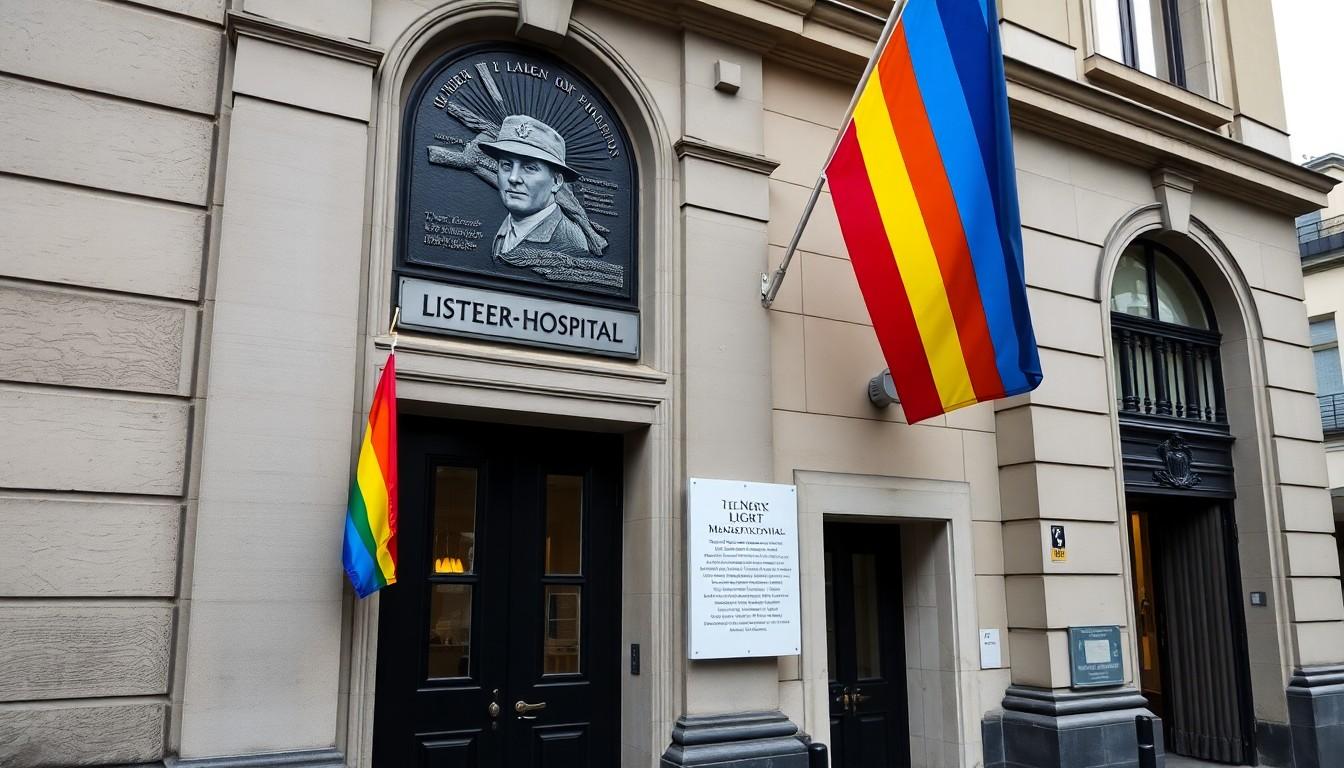
Shoppers and commuters now pass a quiet new marker outside Berlin’s Am Urban hospital , a small but powerful memorial to Dora Richter, the Czech-born pioneer of surgical gender transition whose life rewrites parts of 20th-century medical and queer history. Activists say the plaque helps anchor transgender people in the city’s century-long story.
Essential Takeaways
- Historic first: Dora Richter is recognised as the first known person to undergo full surgical gender-affirming treatment in the 1920s and 1930s, including vaginoplasty.
- Local roots: Richter was born in 1892 in Ryžovna (now in the Karlovy Vary region) and later lived and worked in Berlin before returning to Czechoslovakia.
- Protected memory: The plaque stands in front of the Am Urban hospital, where Richter had surgery, and was installed by queer activists mindful of recent threats to LGBT+ events.
- Durable gesture: Organisers picked an easily replaceable material for the plaque to signal they’ll repair or replace it should vandalism occur.
- Continuing relevance: The memorial is presented not just as history but as a counter to narratives that dismiss transgender people as a new trend.
Why a small plaque matters in a big city
Berlin has a knack for visible history, and this new plaque fits that tradition. The memorial sits where Richter underwent key procedures, and the location gives the story an immediate, sensory feel , you can almost picture the city’s streets she walked a century ago. According to Homolulu Berlin, activists wanted a public reminder that transgender lives have long been part of urban life.
The decision to commemorate Richter now also has a political edge. Organisers told reporters they were conscious of recent attacks on LGBT+ gatherings in the city, and that visibility can be both protective and provocative. That tension , hope mixed with caution , is part of why the plaque feels urgent rather than merely symbolic.
Dora Richter: from Krušné hory to Berlin’s clinics
Richter’s life reads like a cross-border saga. Born Rudolf Richter in 1892 in the Ore Mountains, she later joined travelling theatre troupes and worked in Berlin as a waitress, before coming under the care of sexologist Magnus Hirschfeld. Hirschfeld’s institute became a rare space for medical and social experimentation, and Richter’s surgeries in the 1920s and early 1930s place her at the centre of that pioneering work.
Her story also underlines how fluid identity and paperwork could be even then: Czechoslovak authorities recognised Richter as female in 1934 and amended church records accordingly. This bureaucratic recognition, alongside medical intervention, made her a rare early example of legal and surgical transition.
Flight, survival and quiet later years
The rise of Nazism forced Richter to leave Germany; she returned to Czechoslovakia and later survived the Second World War back in Ryžovna, working on lace-making to earn a living. After the post-war expulsions she settled in Bavaria and died in 1966. Her later life was far from the clinics and debates of Berlin, but it reminds us that many pioneers lived ordinary, precarious lives after making history.
Historians and queer researchers point out that Richter also helped others emigrate and survive, showing networks of mutual aid that often get overlooked in grand narratives. That social dimension is exactly what activists highlighted when unveiling the plaque.
How this memorial fits wider conversations about remembrance
The Dora Richter plaque sits alongside other moves to broaden public memory , from plaques for previously overlooked figures to monuments that challenge national myths. Activists argue that recognising transgender histories resists the idea that such identities are modern fashions or foreign imports.
There’s also a practical angle: the group responsible chose a material that’s easy to replace, because they expect pushback and want to demonstrate persistence rather than vulnerability. It’s a small tactical choice that says as much about resilience as the inscription itself.
What this means for everyday visibility and safety
Public markers do more than name a person. They invite curiosity, debate and sometimes protection: visible histories remind passers-by that queer lives have roots and continuity. For families, younger trans people and older survivors, the plaque can be a quiet reassurance , a civic nod that says you belong in the city’s story.
If you visit, treat it like a moment to reflect rather than a tourist stop; these small acts of recognition help shift everyday attitudes over time.
It's a small change that can make every memory a little harder to erase.
Source Reference Map
Story idea inspired by: [1]
Sources by paragraph: