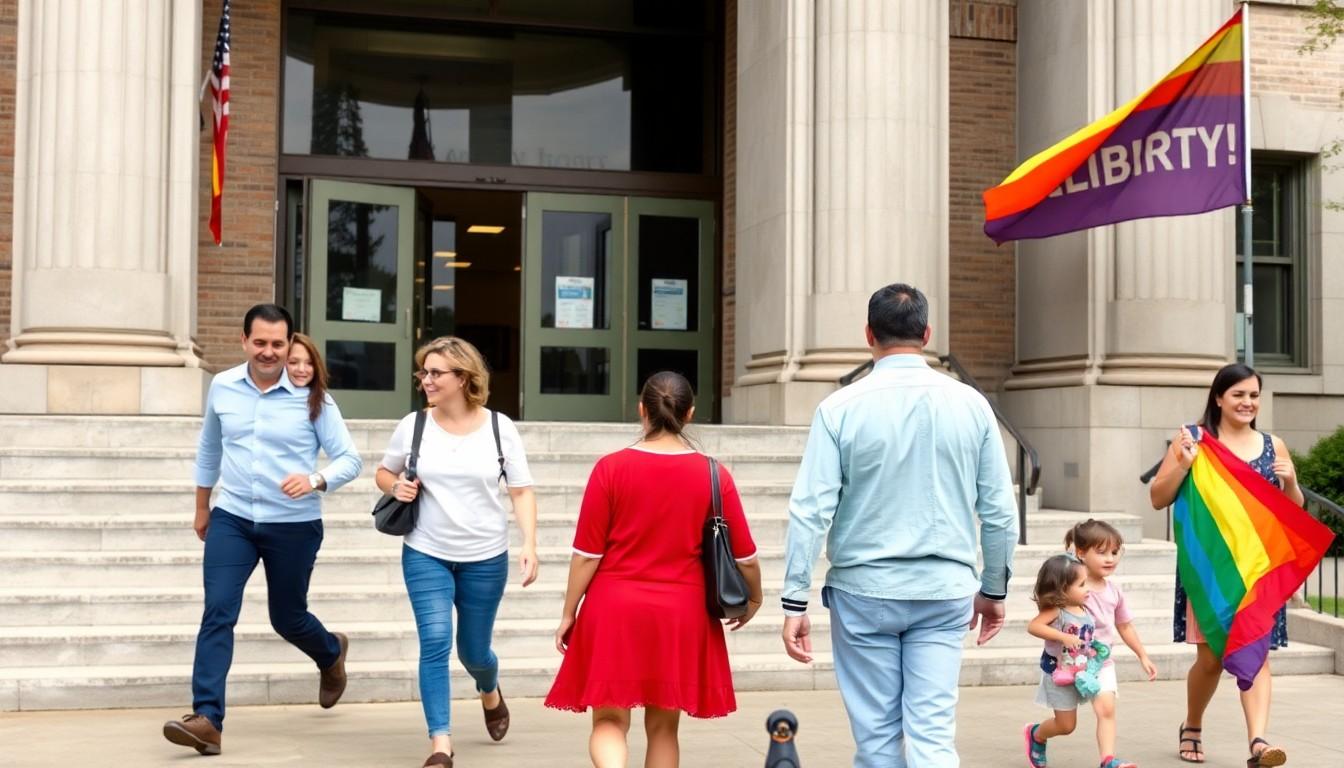
Shoppers and neighbours are pushing back: families, libraries and community groups are fighting recent attempts to shame LGBTQ parents and censor children’s books, and the backlash shows why visibility matters for kids and communities. Here’s what happened, why it matters, and practical ways to respond.
Essential Takeaways
- What happened: Billboards and public officials have recently targeted LGBTQ families and library story times, prompting community campaigns and local defence efforts.
- Visible harm: Public shaming, like billboards saying “No child has two dads”, is emotionally damaging and exclusionary, while library events offer voluntary, calm exposure to diverse family types.
- Local politics: Missouri officials threatened to cut funding over a rainbow story time, showing how cultural disputes can move quickly into budget decisions.
- Community reactions: Neighbours and activists have organised counters, fundraisers, and supportive events that feel warm, visible and resilient.
- Practical tip: If you want to help, donate to your local library, attend inclusive events, or organise a reading , small, steady acts have real impact.
Outrage in public space , why billboards sting more than you’d think
Billboards are blunt instruments; they blast a single message into a neighbourhood and stick in people’s minds. When an organisation uses rainbow-coloured lettering to tell children their parents don’t exist, the effect is sharp and personal , it’s not an argument so much as a public erasure. LGBTQ Nation reported one such campaign recently, and the community response showed how ugly and intimate that harm can feel. These messages are designed to provoke, but they also mobilise allies, and that’s exactly what’s happened in a few places.
Backstory: the billboard tactic has roots in culture wars that prize visibility and spectacle. Trends: opponents of LGBTQ visibility increasingly favour outdoor, attention-grabbing media rather than private complaints. Practical insight: if you see one of these billboards in your area, photograph it and check whether a local group is organising a response; donating to counter-campaigns or attending supportive events helps change the conversation.
Libraries as the new frontline , why a rainbow story time matters
A children’s reading hour with picture books about diverse families is quiet, voluntary and meant to reassure kids who already exist in those families. Yet Missouri officials publicly threatened to withhold library funding after a “rainbow story time” featured books about two dads and a young drag performer. The St. Louis Business Journal covered the threats, and the decision to weaponise public funding shows how small community programmes can become political flashpoints.
Context: libraries have long been safe spaces for exploratory learning, not indoctrination. Trend: we’re seeing a pattern where showing LGBTQ people in children’s media is miscast as “sexualising” , a claim that doesn’t hold up under scrutiny. Practical insight: supporters can protect programming by joining library boards, speaking at council meetings, and contributing to civic budgets; visible local support matters when officials weigh cuts.
The hypocrisy is obvious , who is really protecting children?
There’s a striking double standard when critics rail against books and story times while allowing public campaigns that shame families to run unchecked. That contrast became clear as communities compared billboard campaigns with the quiet library event many officials criticised. The political theatre of saying you’re “protecting kids” from visibility, while permitting or even promoting denialist billboards, tells you more about the critics’ strategy than it does about children’s welfare.
Backstory: objections to LGBTQ representation in schools and libraries stretch back decades, but the modern tactic mixes moral panic language with budget threats. Trends: strategic use of words like “grooming” aims to provoke fear; communities are learning to call that out. Practical insight: ask officials to show the evidence behind censorship claims and demand transparent criteria for any funding decisions.
How communities are fighting back , creative and practical examples
Across several towns, neighbours have responded with donations, counter-billboards, inclusive events and social media campaigns. LGBTQ Nation covered creative community responses that turned hateful stunts into fundraising and awareness opportunities. That energy matters: it replaces a sense of helplessness with something concrete and hopeful.
Practical ideas: host a family reading, organise a bake sale for the library, set up a book drive with inclusive titles, or volunteer to help at story times. Even showing up at a council meeting to support your library can shift the balance when funding is on the line.
What parents and caregivers can do right now
If you’re a parent, teacher or neighbour worried about the message your child might pick up, simple, steady steps work best. Read diverse books at home, talk about families in plain language, and visit local events so children see inclusion as normal. If your local library faces political pressure, reach out, ask how to help, and consider small donations or time.
Outlook: these disputes aren’t only political theatre; they affect children’s sense of safety and belonging. But communities that choose quiet persistence , reading, giving, attending , tend to win the longer game.
It’s a small change that can make every story time and every street feel a bit safer.
Source Reference Map
Story idea inspired by: [1]
Sources by paragraph: