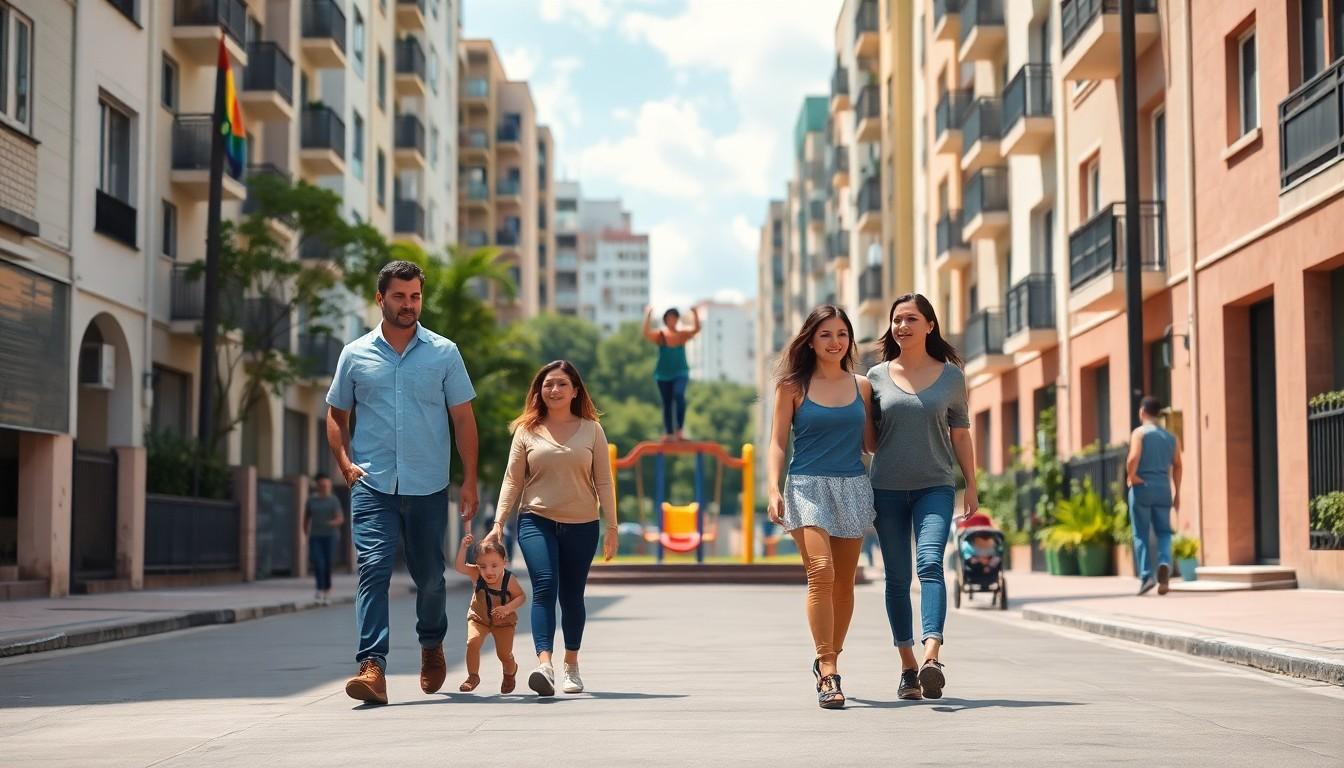
Shoppers of life plans are increasingly thinking beyond borders: a new Ecuador study finds LGB adults who want children more often imagine raising them abroad than heterosexual counterparts, with Spain, the US and Canada topping wish-lists , a signal about rights, safety and opportunity that matters to parents-to-be.
Essential takeaways
- Clear pattern: LGB participants in the Ecuador survey were more likely to prefer living in another country when imagining future parenthood than heterosexual participants.
- Top destinations named: Spain, the United States and Canada were the most commonly named preferred countries among those who favoured leaving Ecuador.
- Shared reasons: Better opportunities, quality of life and safety drove foreign preferences across groups; proximity to family and cultural roots anchored those who wanted to stay.
- Sexuality-specific concern: A subset of LGB respondents explicitly cited restrictive social attitudes or limited recognition of same-gender-parent families as a reason to imagine parenting abroad.
- Not a migration plan: These responses reflect imagined conditions rather than concrete migration intentions, and practical barriers (money, paperwork, support) may block relocation.
Opening hook: A striking difference in where people picture parenthood
Imagine planning a baby and picturing where they’ll go to school, who will babysit and whether their family will be accepted , for many Ecuadorians who want children, those images include other countries, especially among lesbian, gay and bisexual adults. The study’s mix of numbers and short survey comments captures that uneasy, sometimes wistful feeling: home has warmth, but elsewhere looks safer or more enabling.
How the research reached this conclusion
Researchers ran an online mixed-methods survey of 184 childless cisgender adults in Ecuador who said they want children, comparing 71 LGB and 113 heterosexual respondents. Quantitatively, over half of LGB participants preferred another country for future parenthood versus under a third of heterosexuals , a statistically robust result even after adjusting for age, gender, education, work and income. Qualitatively, free-text replies explained why: better jobs and services, safety, social acceptance, or simply family ties kept others anchored.
What people said , family, identity, opportunity
Those who wanted to stay emphasised family proximity and cultural roots: grandparents, everyday help, the sense that raising kids “where we are” preserves language and tradition. Those imagining life abroad talked about schooling, health, security and the chance to build a family with fewer legal or social barriers. The most frequently named foreign options , Spain, the US and Canada , reflect perceptions of economic stability and progressive norms, even if reality can be more complicated.
Why sexuality matters for some, and why it doesn’t for others
Many reasons for preferring another country were shared across sexual orientations, but only LGB respondents named prejudice, legal obstacles and fear about children’s treatment as explicit drivers. That doesn’t mean every LGB person wants to leave , plenty imagine parenthood at home , but for a meaningful minority, expectations about acceptance shape where they envision raising a family. The study stresses this is about perceived opportunity structures rather than proof that migration is required.
Practical takeaways for anyone thinking about parenting and relocation
If you’re weighing where to have children, mind the four practical lenses people used in the study:
- Emotional support: proximity to relatives for childcare and everyday life matters more than abstract policy for many people.
- Legal and health access: check the local rules on parental recognition, adoption and assisted reproduction before committing.
- Economic feasibility: migration is costly and needs permissions, jobs and networks , imagining another country isn’t the same as being able to move there.
- Social climate: perceived acceptance can make a place feel safe or hostile; if that’s decisive, look for local community groups, legal advice and peer networks before planning big moves.
What this means for policy and future research
The findings suggest that improving the material and social conditions for family formation at home , clearer parental rights, anti-discrimination measures, accessible reproductive services , could make staying a real option rather than a compromise. Researchers note the limits: online sampling overrepresents digitally connected urban people, answers were short, and the question measured preference not action. Future work should follow people over time to see who actually moves, why, and how families fare after relocation.
It's a small but important reminder: where people imagine raising children reveals more than preferences , it reveals what a society still needs to do to let families flourish, in place or abroad.
Source Reference Map
Story idea inspired by: [1]
Sources by paragraph:
- Paragraph 1: ,
- Paragraph 2: ,
- Paragraph 3: ,
- Paragraph 4: ,
- Paragraph 5: ,
- Paragraph 6: ,
- Paragraph 7: ,