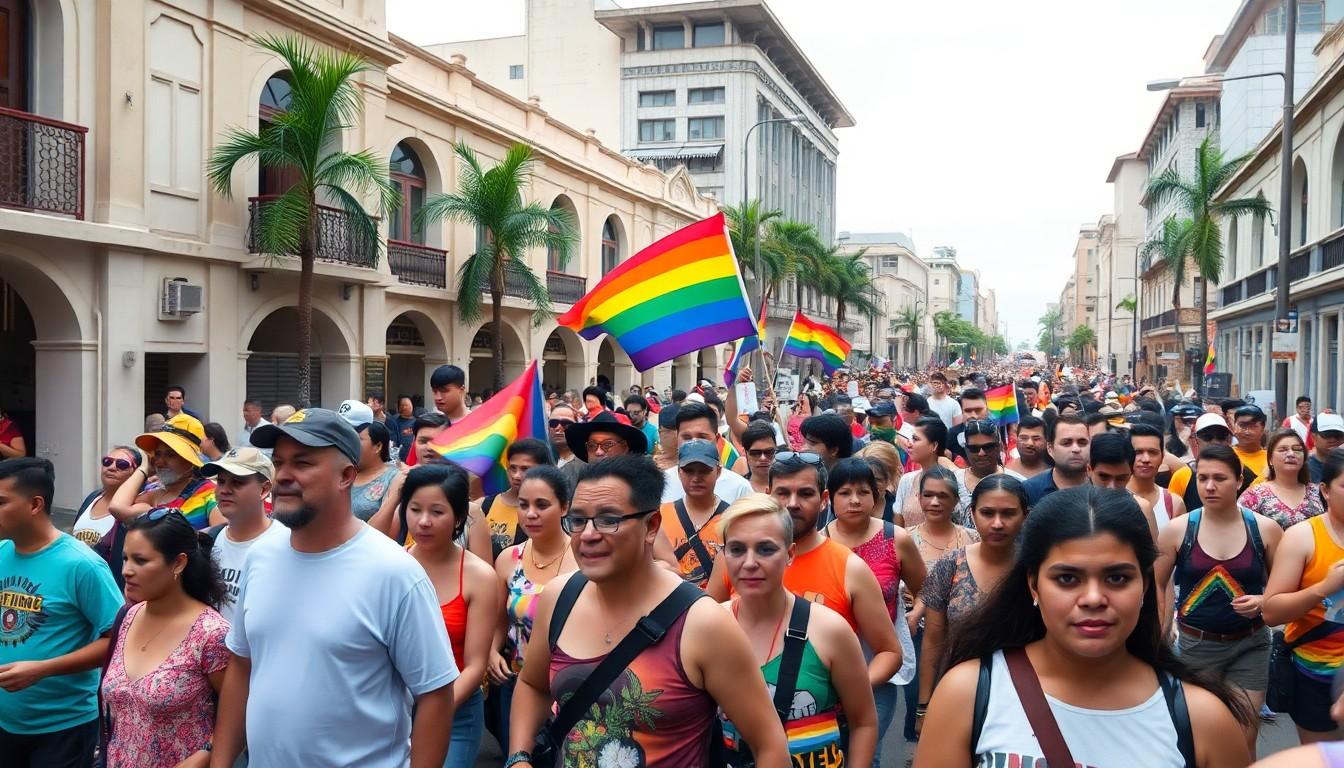
Shoppers and partygoers will flock to Salvador: the 23rd Parada do Orgulho LGBT+ Bahia lands on 6 September, the eve of Brazil’s Independence holiday, promising music, protest and a message about health and dignity that aims to resonate across the North and Northeast. Here’s what to know, who’s involved and how the city could benefit.
Essential Takeaways
- When and where: The parade starts at Farol da Barra on 6 September, with the official cortejo leaving at 15:00 along the Barra/Ondina circuit; programming opens from 11:00.
- Theme and tone: “Vergonha adoece. Orgulho cura!” frames the event as both celebration and public-health statement, focusing on stigma’s harm and collective care.
- Scale and impact: Organisers expect thousands of participants, about 10 trios elétricos, and an estimated economic injection of at least R$18m into Salvador in a single day.
- Honouring history: The event will pay tribute to Luiz Mott and marks the GGB’s legacy as Latin America’s oldest gay-rights organisation.
- Practical vibe: Expect drag stages, music, political speeches and a mix of festivity and resistance, good for tourists, locals and campaigners alike.
A big public party with a pointed message
The lively opening of the Parada is designed to feel like a festival while carrying a sharper public-health argument. Organised by the Grupo Gay da Bahia, the day begins with the Palco da Diversidade at Farol da Barra and moves into a colourful cortejo along the beachfront circuit. The sensory picture is immediate: bright costumes, loud music and that electric mix of joy and protest.
The theme, “Vergonha adoece. Orgulho cura!”, flips the script on decades of medicalised stigma and argues that hiding harms people’s wellbeing. Organisers are pushing the idea that occupying public space is itself a form of collective care, and that visibility can be therapeutic.
Why this matters for Salvador’s economy and culture
This isn’t just a parade for insiders; previous editions have shown a measurable tourism lift. A past study by the State’s tourism body found participants stayed roughly 5.5 nights and spent nearly R$941 each on average. Multiply that by thousands of visitors and you can see how the R$18m estimate for 2026 becomes plausible.
Local businesses, hotels and hospitality tend to benefit, so the Parada sits at the intersection of culture, civic life and commerce. Expect restaurants and bars around Barra and Ondina to be particularly busy.
History, honours and intergenerational memory
The Grupo Gay da Bahia has been running the Parada since 1980 and the 2026 edition includes a tribute to Luiz Mott, marking his 80th year and celebrating his four-decade fight for LGBTQIAPN+ rights. That continuity matters: organisers argue the parade is a ritual of resistance and a site for passing organising know-how between generations.
They’ve also filed for formal recognition of the Parada as intangible cultural heritage in Salvador, arguing that it has inspired more than 60 neighbourhood walks and become a sustained civic tradition.
Health, manifesto and the politics of visibility
Alongside the music, the GGB launched a manifesto titled “Orgulho e Saúde Coletiva – Uma Narrativa de Cura”, which maps gaps in public health services for LGBTQIAPN+ people and calls for better state responses. The narrative reframes health as dignity and community support, not merely the absence of disease.
If you care about policy, this edition is as much an advocacy event as a street party. Expect speeches, calls for greater access to services, and a visible push to change how health systems treat queer communities.
Practical tips for attending and understanding the day
Arrive early if you want a good spot near the Palco da Diversidade; programming starts at 11:00 and the cortejo leaves at 15:00. Pack water, wear sun protection and head for public transport where possible, the Barra/Ondina circuit gets crowded. If you’re a visitor, check local listings for nearby events and consider booking accommodation early: past editions indicate high demand.
For activists and allies, bring a clear plan if you want to join volunteering or advocacy efforts; the GGB posts resources and the full manifesto on its site for those who want to dig deeper.
It's a small change that can make every public celebration feel safer and more meaningful.
Source Reference Map
Story idea inspired by: [1]
Sources by paragraph: