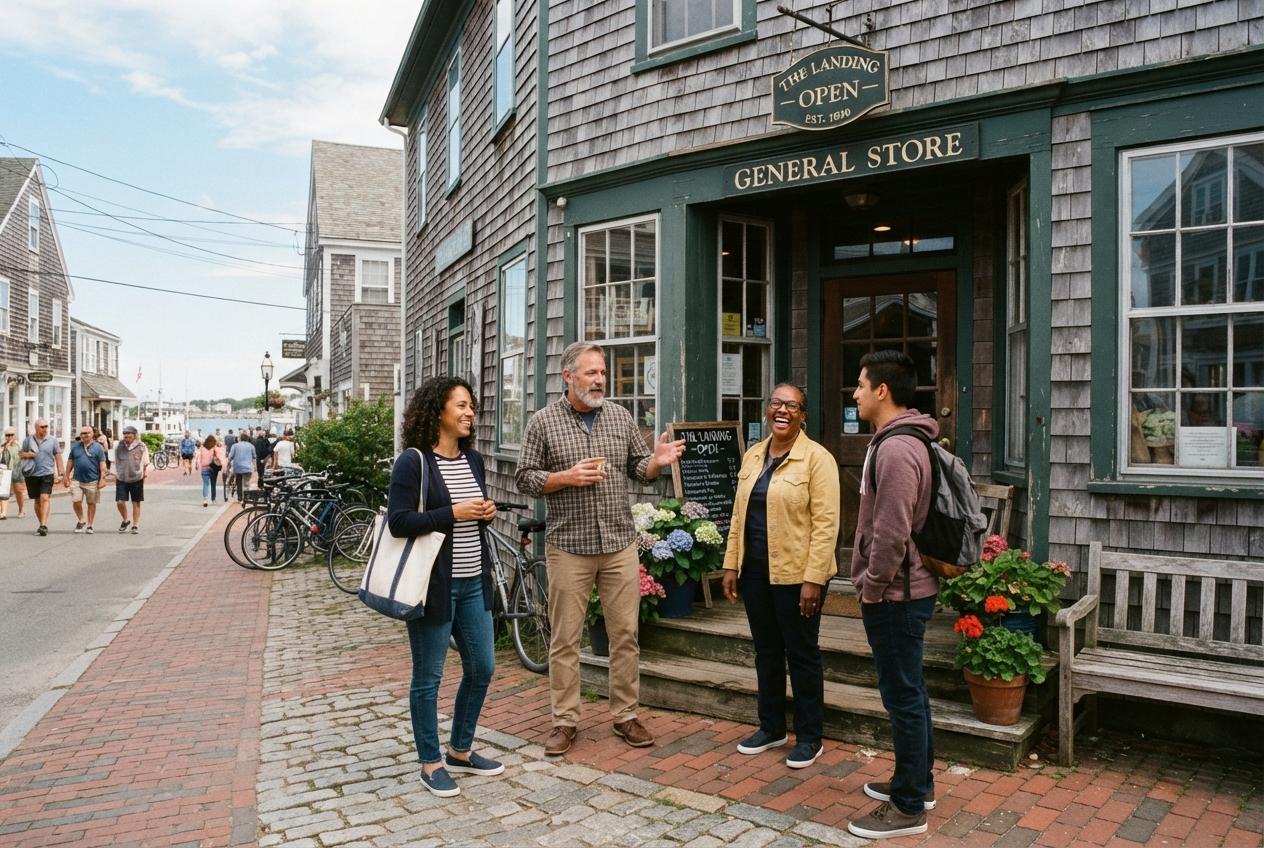
Discovering Provincetown’s mix of dunes, artists and queer life: a seaside town in Massachusetts that reinvented itself from fishing village to one of America’s most beloved LGBTQ+ destinations, and why that history still matters to visitors and locals alike.
Essential Takeaways
- Long history: Provincetown traces human habitation back to the Wampanoag and Nauset peoples, then became the Mayflower’s first landing site and later a Portuguese fishing community.
- Artists revived the town: After the Portland Gale of 1898, Charles Hawthorne’s art school helped pivot the economy toward an artistic colony with a “creative” atmosphere.
- Early queer visibility: By the 1920s Provincetown had an identifiable LGBTQ+ presence, helped by theatrical innovators like the Provincetown Players.
- Community resilience: The town organised mutual aid during the AIDS crisis and reformed policing after the 1990 Spiritus Riot, shaping a safer civic culture.
- Contemporary magnet: Provincetown now hosts major queer events, has a high share of same-sex households, and welcomes international LGBTQ+ artists and families.
How a storm nudged a fishing town into an art colony
The Portland Gale of 1898 wrecked boats and livelihoods, and the town needed a new lifeline, one that smelled of salt and boiled clams rather than fish markets. Artist Charles Hawthorne saw that lifeline and opened the Cape Cod School of Art in 1899, bringing students, instructors and paying guests to stay in local homes. According to local histories, that influx supplied much‑needed income and slowly rewired Provincetown’s identity. Over time the place became less solely maritime and more a creative retreat that attracted painters, writers and performers from New York and beyond. If you’re choosing when to visit, spring and early summer still feel quiet and painterly; high summer is when the town’s theatrical and festival energy kicks in.
Theatre, experimentation and the first queer networks
Provincetown’s theatrical experiments mattered as much to its queer community as to American drama. The Provincetown Players staged early Eugene O’Neill works and turned the town into a testing ground for new performance. That creative openness helped normalise people who didn’t fit conventional boxes in other parts of the country. Cultural reporting and museum pieces note how the mix of artists, intellectuals and seasonal visitors created a social tolerance that became contagious. For visitors, seeing the town’s small theatres and reading plaques on sites where plays premiered gives a tangible sense of how culture and acceptance grew together.
From hidden lives to visible community: midcentury growth
By midcentury, Provincetown’s queer presence was more than rumours and private networks. Local papers and businesses began to reflect that reality, and nightlife catered to LGBTQ+ patrons with venues such as Weathering Heights offering a safe social space. Creative heavyweights , poets, photographers and filmmakers , settled or summered in town, further normalising queer lives. As National Geographic and local commissions highlight, this visibility was never guaranteed; it grew from decades of people choosing Provincetown as a refuge. If you’re exploring the town’s queer history, hit the local archives and galleries: they’re full of personal stories that make the history feel lived-in.
Crisis, care and political change during the AIDS years
The arrival of AIDS in the 1980s devastated communities nationwide, yet Provincetown’s response showed its strength. Neighbour-led organisations, including support groups founded in the early 1980s, provided care and advocacy at a time when many faced stigma and isolation. The town’s communal networks, friends, artists and activists, became lifelines. Reporting on the period emphasises both loss and the activist energy that followed, with local organisers pushing for better services and more compassionate public responses. For anyone interested in queer public health history, Provincetown is a microcosm of grief turned into solidarity.
Protest, reform and a reputation as the “gayest town in America”
Tensions with authorities surfaced repeatedly, notably during the Spiritus Riot in 1990, when arrests and harassment sparked community protests and led to police reforms. Those confrontations, and the reforms that followed, show how civic life adapted to the needs of residents. With Massachusetts legalising same-sex marriage in 2004, Provincetown quickly became a top wedding destination, and census counts later showed a high proportion of same-sex households. Today the town’s calendar, bear weeks, Carnival, Family Week, reflects a robust civic culture that’s both celebratory and rooted in decades of struggle. If you’re planning a visit, check event schedules: they map the town’s social rhythms.
A global, evolving queer arts scene
Provincetown has also become a global stage, inviting LGBTQ+ artists and activists from abroad and expanding the town’s cultural vocabulary. Recent festival programming and magazine reporting highlight how artists from places with very different political climates come to Provincetown to collaborate and showcase work. That international exchange keeps the town fresh and politically engaged while preserving local traditions. For locals and visitors alike, the mix of international voices and home-grown history makes Provincetown feel both welcoming and politically alive.
It's a small place with a big story, one of creativity, refuge and community that keeps reinventing itself.
Source Reference Map
Story idea inspired by: [1]
Sources by paragraph: