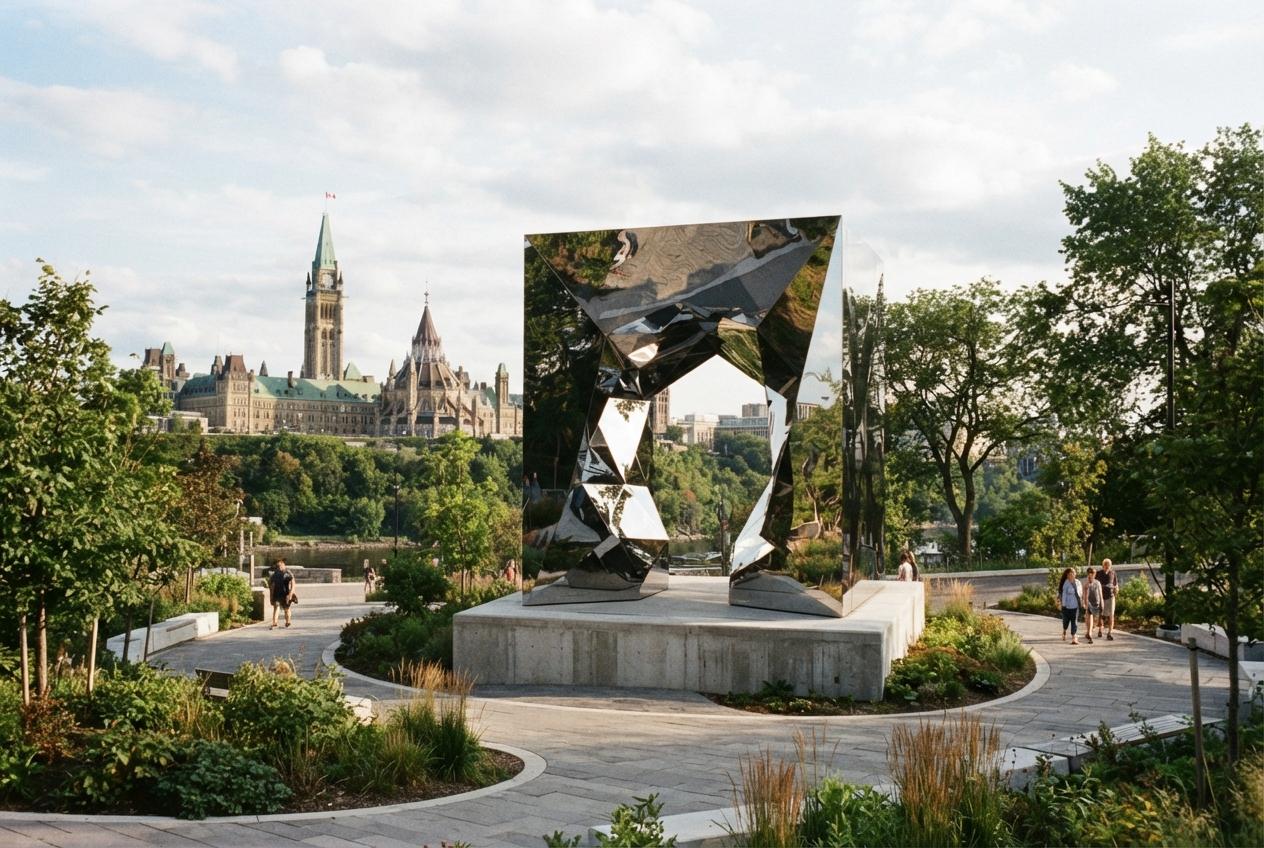
Shoppers of history and visitors alike are flocking to Ottawa’s newest landmark , Thunderhead , a striking 2SLGBTQI+ national monument that translates a painful past into a mirrored, living celebration. It matters because it reclaims a government‑marked landscape and turns surveillance into space for reflection, healing and joy.
Essential Takeaways
- Bold design: Thunderhead is a 30‑foot cylindrical monument with a mirrored interior that fractures visitors’ reflections into thousands of fragments, creating an immersive, communal experience.
- Deep roots: The project responds directly to the history of the LGBT Purge and is funded through the 2018 class action settlement for survivors.
- Layered landscape: Surrounding features , Tribute Basin, Narrative Walls, Healing Circle and Fruit Orchard , form a sequence from recognition to celebration, with sensory elements like a medicinal garden and fruit trees.
- Durable build: Makers used iterative 3D modelling and Glass Fibre Reinforced Concrete panels to handle Ottawa’s freeze‑thaw climate, while the mirrored mosaics deliver visual impact.
- Open to all: Located in the Monument District near Parliament, Thunderhead is designed for protests, performances, quiet reflection and community rites.
A striking centrepiece that makes you feel seen
Step inside and the first thing you notice is yourself multiplied , tiny shards of mirror catching movement like raindrops on a window. According to Public City Architecture, the monument’s core idea is not the concrete cylinder but the mirrored void inside it, where visitors become reflected fragments of a shared story. That tactile, slightly dizzying sensation is meant to transform the abstract history of the LGBT Purge into a personal encounter with resilience and renewal.
The design team deliberately pushed the emotional buttons: thunder and storms as cleansing forces, disco ball as queer joy. Liz Wreford, the lead architect, told officials the aim was to build an experience rather than simply an object. It’s an approach that turns monument visiting into participation, and it’s hard not to feel both small and proudly visible in equal measure.
How memory, culture and craft were woven together
Thunderhead was conceived as more than a single sculpture; it’s an entire park that walks you through history to healing. The Narrative Walls recount the purge, the Tribute Basin repurposes red map markers into a ring around a young red maple, and the Healing Circle holds thirteen stones picked by Two‑Spirit community members from every province and territory. Those details make the place specific and rooted, not a generic token.
The site also brings Indigenous teachings into the narrative , the Thunderers as storm‑bringing beings who cleanse the land , and pairs those ideas with activist symbols like a disco ball. The result feels intentionally layered: an object that honours loss while insisting on future celebration.
Engineering a cloud out of concrete and mirror
Translating a cloud into a buildable structure presented real technical puzzles. Lead architect Peter Sampson explained the team’s pivot from trying to sculpt a cloud to making absence its subject, then lining the interior with thousands of hand‑cut, mirror‑backed glass mosaic tiles. To survive Ottawa winters, Public City used iterative 3D‑printed digital modelling and Glass Fibre Reinforced Concrete (GFRC) panels so the monument sits comfortably in its steep riverfront site.
From a practical perspective, that combination means the installation is meant to last and remain visually striking across seasons. If you’re visiting in winter, expect a different, quieter light; in summer, the mirrored fragments will play with sun and shadow and the scent of the Fruit Orchard nearby.
Why location and funding matter , and how the site reclaims space
Placement was political by design. Thunderhead sits in Canada’s Monument District, near Parliament and on riverfront land once surveyed and marked to monitor queer gathering places. Where archival maps showed red dots of surveillance, the monument establishes a new, affirmative dot that declares presence rather than control. That reclamation is core to the project’s message.
Funding also tells an important story: the monument was paid for by proceeds from the historic 2018 class action settlement won by survivors of the LGBT Purge. That financial and moral backing ties Thunderhead directly to the community it commemorates and gives survivors a stake in how the story is told going forward.
Visiting, using and caring for the space
Thunderhead is open to all and intentionally versatile. It’s been designed to host protests and performances, intimate rites and quiet reflection. The surrounding park moves visitors through a narrative arc , from recognition and remembrance at the Narrative Walls to ceremony in the Healing Circle and joy in the Fruit Orchard , so plan for time: this isn’t a quick photo stop.
For organisers and visitors, practical tips are simple: arrive prepared for changing weather, linger in the medicinal garden and check the monument’s schedule for events. Local stewards and community groups will likely use the space widely, so expect civic life to fold around the site in lively, sometimes unexpected ways.
It’s a small change that offers a big welcome: a place for sorrow, celebration and stubborn joy.
Source Reference Map
Story idea inspired by: [1]
Sources by paragraph: