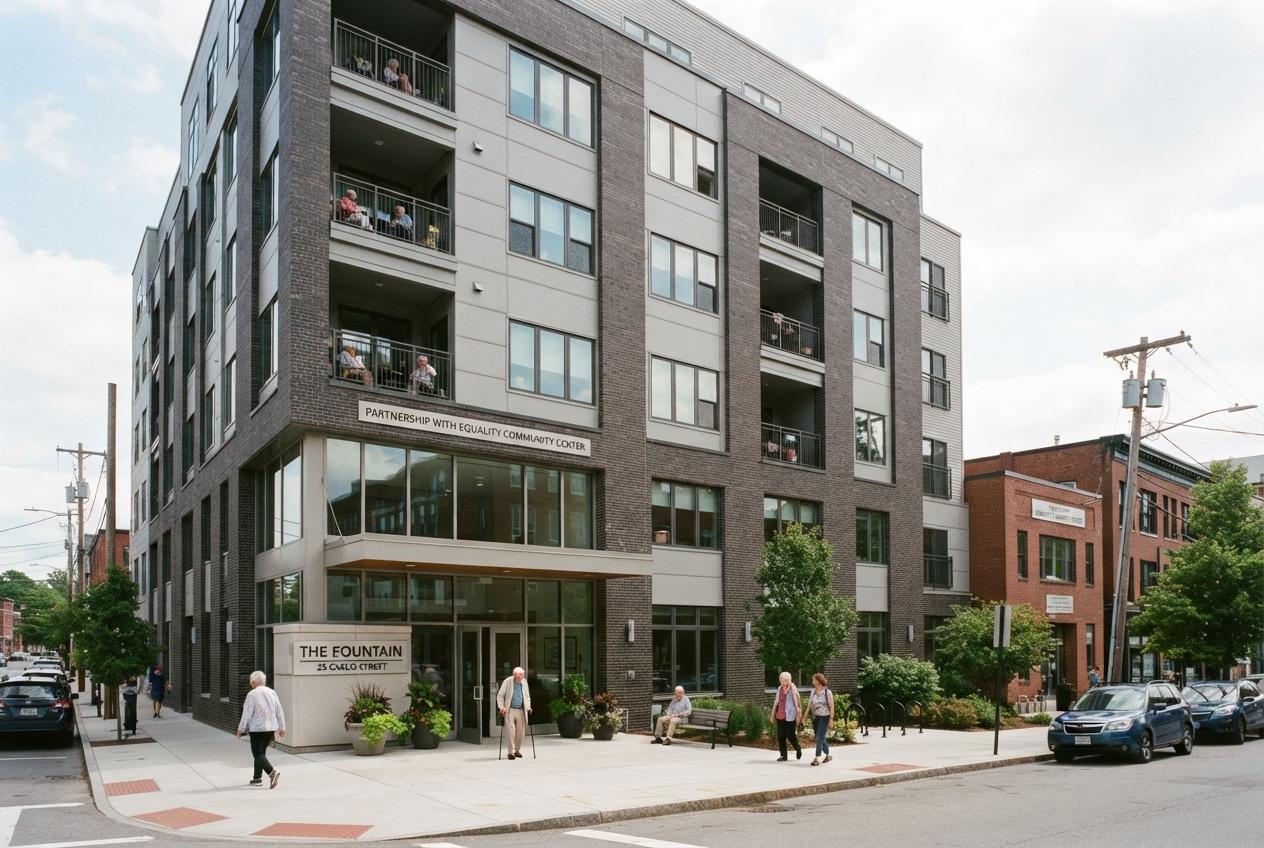
Shoppers and city-watchers are noticing a fresh, purpose-built community for older Mainers , Equality Commons opened in downtown Portland to offer 54 affordable apartments for people 55+ with wraparound services and programming that welcome LGBTQ+ residents, creating a livelier, safer option for ageing in place.
Essential Takeaways
- Location and size: Equality Commons sits at 25 Casco Street next to the Equality Community Center and includes 54 units in a five-storey building.
- Unit mix and accessibility: The development offers 12 efficiency, 34 one-bedroom, and eight two-bedroom apartments; 19 units are accessible and built with mobility in mind.
- Affordability split: About 60% of units are reserved for households at 50% or less of the area median income, the rest for households up to 60% AMI.
- Integrated services: Residents can access healthcare navigation, transport links and social programmes through an adjacent LGBTQ+ community centre.
- Inclusive by design: Housing is open to eligible older adults of all backgrounds, with specific supports for LGBTQ+ elders.
A civic win: why Equality Commons feels different
Portland’s new building feels deliberately welcoming the moment you spot it beside the Equality Community Center, and that adjacency matters. The project isn’t just apartments; it’s an attempt to stitch housing and services together so older residents , many of whom are LGBTQ+ , don’t have to invent community from scratch. According to local reporting, the development aims to reduce isolation and simplify access to healthcare and transport, which is a quiet but profound change for older urban residents.
This approach echoes a growing trend: cities pairing seniors’ housing with community centres that understand the distinct needs of LGBTQ+ elders. It’s practical and emotional: people get help with appointments and bills, yes, but they also gain social spaces where they don’t have to explain who they are.
The layout: small homes, accessible design, big intent
Equality Commons’ 54 units are mostly one-bedrooms, with a handful of efficiencies and two-bedroom flats , the sort of mix that suits singles, couples, and those needing an extra room for a carer or storage. Nineteen accessible units show designers thought about mobility and ageing needs early on.
If you’re choosing a home here, consider the unit type against your lifestyle: efficiencies suit low-maintenance living, one-bedrooms are great for independence, and two-bedrooms give flexibility. Watch for details like grab bars, step-free entries, and the layout of kitchens and bathrooms when you tour.
Affordability and eligibility: who this helps
The apartments are income-restricted, with roughly 60% set for households at or below 50% of area median income and the remainder for households up to 60% AMI. That’s a typical structure for affordable housing developments and means rents will be significantly lower than market rates , a real relief for seniors on fixed incomes.
Applications and eligibility often hinge on income documentation and local residency rules. If you’re interested, start by contacting the property manager or the neighbouring community centre to learn timelines, required paperwork, and waiting-list details.
Why the LGBTQ+ partnership matters
Equality Community Center’s executive director highlighted the novelty of this co-location: it’s one of the few times an affordable senior housing complex has been built directly alongside an LGBTQ+ community hub. That matters because services that recognise the histories and needs of LGBTQ+ older adults are still rare.
Other cities have tried similar models , community-linked housing projects and centres that prioritise older LGBTQ+ residents can be found in places from Oakland to Los Angeles and New York. The idea is simple: pairing homes with culturally competent programmes reduces loneliness and improves outcomes, whether that’s mental health, safer access to care, or just more regular social contact.
Practical tips for prospective residents and families
- Tour both the building and the community centre so you can see programming and meet staff. Look for activities you’d actually use.
- Ask about on-site or partnered healthcare support, transport services and how accessible emergency systems are.
- Check the length and rules of waiting lists early , affordable housing often requires patience and paperwork.
- If you identify as LGBTQ+, ask what specific supports or groups exist and how privacy and safety are managed.
- Consider unit size against likely needs; a slightly larger unit can make space for visiting family or carers.
It's a small but welcome shift in how cities think about ageing: housing plus culture, care and community.
Source Reference Map
Story idea inspired by: [1]
Sources by paragraph: