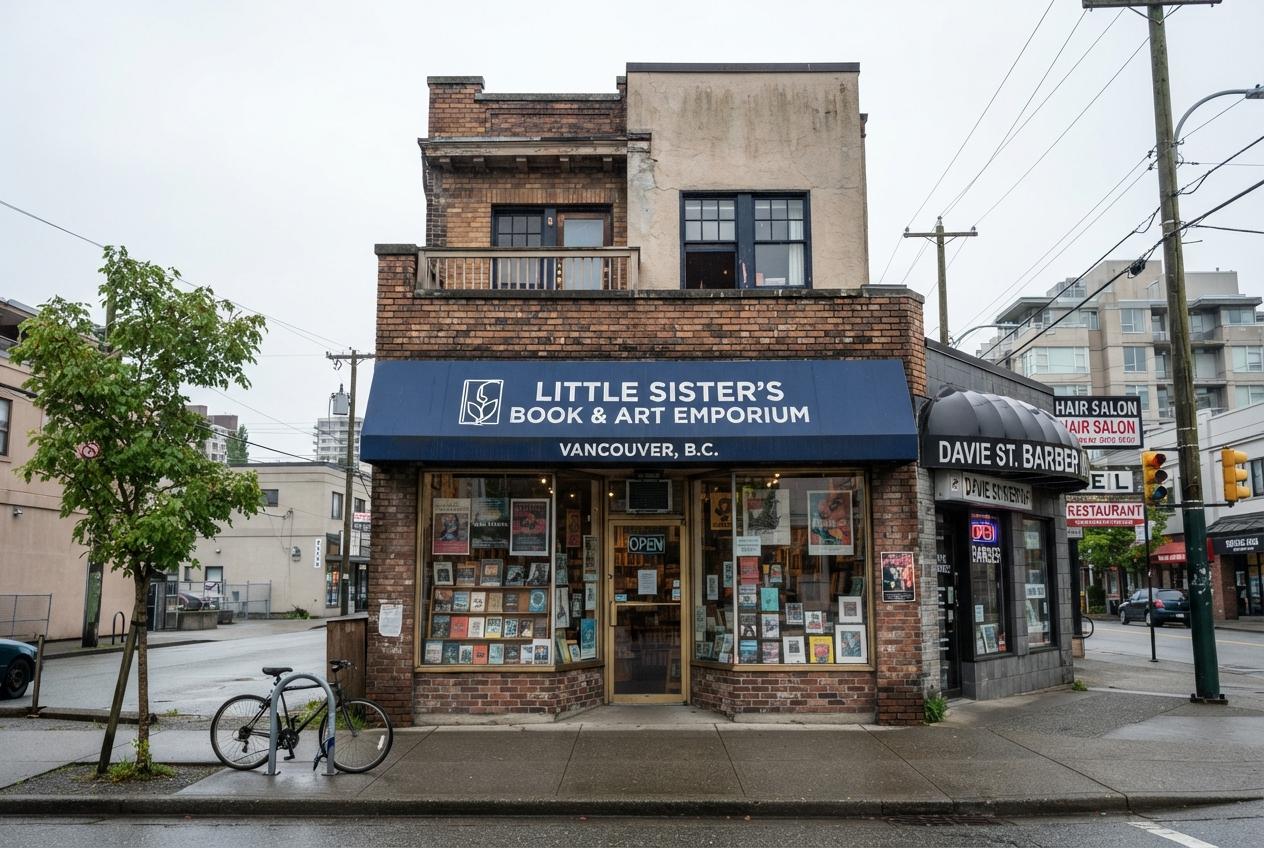
Shoppers are heading to Davie Village for an evening of hidden history as storyteller Glenn Tkach presents Queer Confidential: Six True Stories of Queer Vancouver Before 1950 at historic Little Sister’s Book & Art Emporium on 27 August , a lively, archival-driven night that matters to anyone curious about the city’s queer past.
Essential Takeaways
- Event details: Queer Confidential runs Thursday 27 August, talk at 7:00pm, Little Sister’s Book & Art Emporium, Davie Village; tickets online and capacity is limited to 40.
- What to expect: Six true, researched narratives drawn from archives, trial transcripts and court records, spotlighting Two-Spirit, racialized and other queer voices.
- Perks on the night: 10% off in-store with an active ticket, till open and shelves browsable until 10:00pm , perfect for browsing after the talk.
- Host and vibe: Presented by Glenn Tkach of The Pink Hat, known for the Really Gay History Tour , intimate, evocative storytelling with a community feel.
An intimate evening that brings forgotten voices into view
There’s something quietly electric about hearing local history in the place where it matters. Little Sister’s, tucked on Davie Street in the West End, will host Glenn Tkach as he reads six stories uncovered in dusty archives and court records , tales of scandal, defiance and survival that predate 1950. The room is small and the sound is human; expect a warm, immediate atmosphere where a single line can land like a revelation.
Tkach has spent years pulling these narratives together, and he tells them with the kind of detail that makes names, places and small gestures stick. According to his presentation notes, these stories centre Two-Spirit and racialized queer lives that official histories often overlooked or erased. It’s history that feels close, sometimes sharp, but always human.
Why Little Sister’s is the right home for this work
Little Sister’s is more than a shop; it’s a landmark in Vancouver’s queer cultural life. The bookstore made headlines historically for fights over censorship and has long been a gathering place for queer readers and activists. Under new owner Parmjot Gill the emporium continues to function as a community hub , books, clothing and conversation all under one queer roof.
Hosting a show like Queer Confidential here isn’t just practical, it’s symbolic: stories about the people who shaped this neighbourhood being told in the neighbourhood itself. It’s a small reminder that places hold memory, and that booksellers and storytellers both keep it alive.
What makes these stories different from a history lecture
This isn’t a dry academic recap; it’s live storytelling built from archival work. Tkach’s approach is theatrical without sacrificing rigor. He weaves trial transcripts, court records and newspaper clippings into narratives that highlight the voices otherwise muted by time. That blend gives the evening a texture that reads like documentary theatre.
If you’ve been to his Really Gay History Tour, you’ll know he has a knack for spotlighting the intimate detail that makes a past person feel present: the smell of a perfume, the hush in a theatre, the click of a doorknob. For newcomers, expect history to arrive in human scale and sometimes in surprising colours.
Practical tips for a smooth night out
Seats are limited to around 40, so book ahead online if you want to go. Bring cash or card for the small in-store discount , with a ticket you get 10% off purchases and the till stays open until 10pm, so there’s time to pick up a souvenir or a recommended read. The venue is on Davie Street, easily reached by transit or a short walk if you’re in the West End.
If accessibility or seating needs matter, check with the organisers in advance; small venues can be cosy but may require a heads-up to accommodate specific needs. And bring someone who likes to talk about what you’ve heard afterwards , the post-show chat over a drink and a book is part of the evening’s charm.
Why this series matters and what’s next
Queer Confidential is the first in a planned series of live storytelling events at Little Sister’s, signalling a push to make archival queer history public and performative. By centring stories that predate commonly taught queer histories, the series widens the frame on who belonged to this place and when.
Tkach’s work also nudges a broader conversation: how cities remember marginalised lives, which records survive, and who is given space to tell these tales now. For audience members, it’s a chance to hear, reflect and perhaps rethink familiar neighbourhood narratives.
It’s a small change that can make every story feel a little closer.
Source Reference Map
Story idea inspired by: [1]
Sources by paragraph: