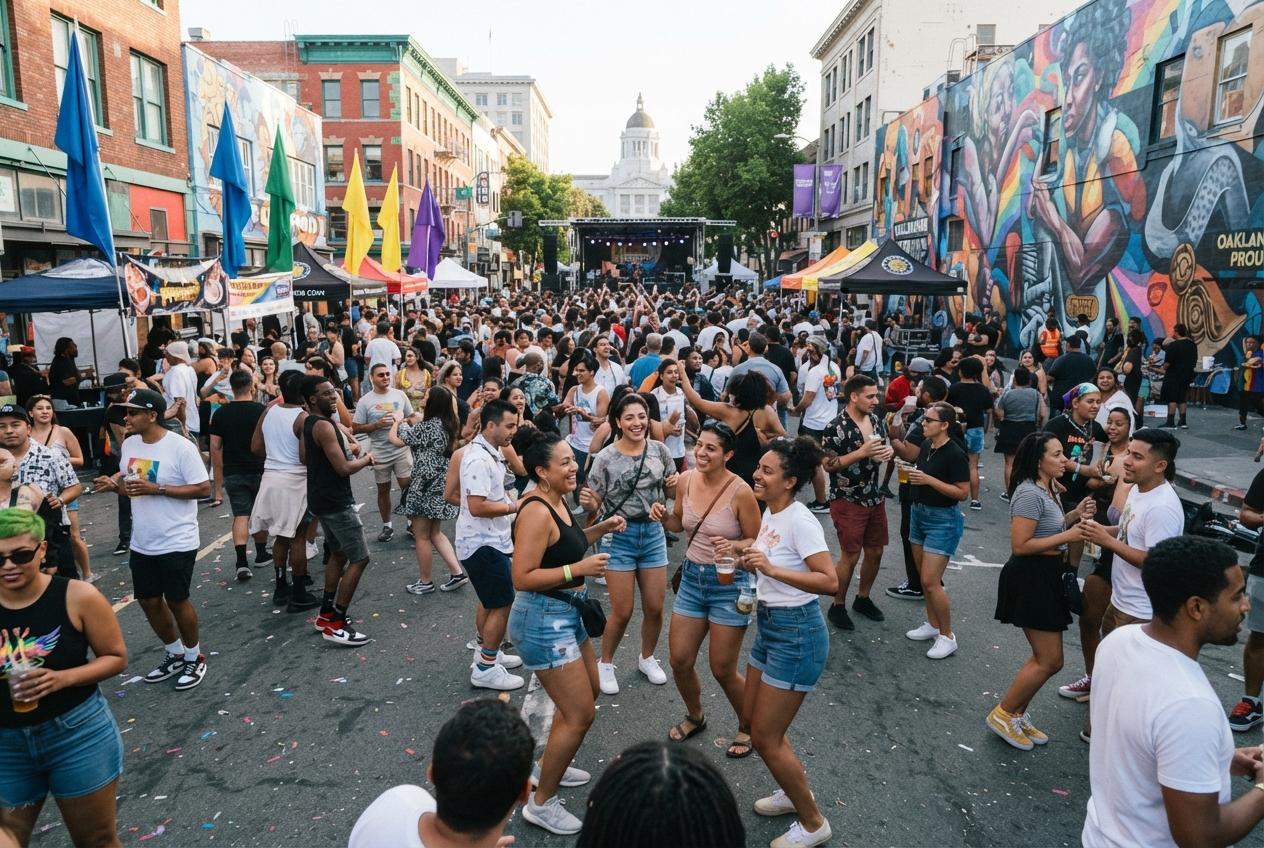
Shoppers, neighbours, artists and families keep flocking to Oakland Pride because it’s bigger than a parade , it’s a city-sized declaration of love, creativity and resilience. From Main Stage performances to community stalls, Oakland Pride celebrates belonging with art, music and inclusive energy that matters now more than ever.
Essential Takeaways
- Big, open-hearted event: Oakland Pride is a large, community-driven festival with a Main Stage, parade and resource village.
- Art first: The celebration foregrounds live music, performance and public art, creating a lively, visual atmosphere.
- Community support: Local groups use Pride to connect people with services and advocacy, not just entertainment.
- Resilience and joy: In a time of political pressure, Pride serves as both celebration and visible resistance.
- Family-friendly vibe: The event draws queer people, allies, elders and young families, making it feel intergenerational and warm.
Why Oakland Pride feels different , a city that dances to its own beat
Oakland wears its creativity on its sleeve, and Pride is where that style shines brightest. The festival blends street-party energy with an arts-first sensibility, so you get both booming live sets and spontaneous performances that make the sidewalks feel like stages. According to the official festival organisers, the Main Stage is a cornerstone of the weekend and attracts headline acts alongside local talent.
That mix of big-name draws and homegrown artists gives the parade a tactile, joyful quality , think bright costumes, percussionists, and electric violinists rather than a purely commercial spectacle. If you’re choosing which Pride to attend, know this: Oakland prioritises heart and expression, so you’re as likely to be moved as you are entertained.
How Pride became a hub for community care and resources
Beyond music and colour, Oakland Pride doubles as a civic space where non-profits, health providers and advocacy groups meet people where they are. Local listings show a dedicated resource village and dozens of community stalls. That practical side matters: for many attendees Pride is how they find support, learn about services, or plug into volunteer networks.
Organisers have intentionally kept that civic element central, because visibility without support can feel hollow. If you’re volunteering or tabling, pack sturdy banners and clear leaflets , the flow of people is steady and curious, and you want your message to cut through.
The performances: intimacy amid big stages
Oakland’s Main Stage manages a neat trick , it feels grand without being distant. Artists who play there often mix polished production with improvisational moments, which makes sets feel immediate and communal. Performers report that the crowd’s energy is electric and responsive, a point organisers highlight when curating lineups.
For first-time performers or audience members, expect variety: DJs, percussion ensembles, singer-songwriters, and theatrical bits. If you want the best vantage, arrive early for a front-row spot, or hang back and enjoy the plaza for a quieter, people-watching experience.
Navigating Pride: practical tips and what to pack
Oakland Pride is an all-day affair, so come prepared. Wear comfortable shoes, bring sun protection and a refillable water bottle , hydration stations are often available but queues form. If you plan to visit resource stalls, bring copies of ID or referral notes if you’ll be seeking services.
Families and newer attendees should know there are quieter zones and accessible pathways; organisers publish accessibility maps on the festival site. If you’re bringing a stroller or mobility device, check the entry points and arrive with a bit of extra time to get through security and screenings.
Why Pride matters now , a reminder that joy can be radical
Pride in Oakland is as much about feeling good as it is about staying vigilant. With LGBTQ+ rights and safe spaces under pressure in parts of the country, public celebrations serve an activist purpose: they normalise queer presence and build community power. The way people dance, hug, and express themselves at Pride isn’t just festive , it’s a statement.
So when you stand in that crowd and feel the music lift you, recognise that moment as both personal and political. It’s proof that visibility and joy still change the conversation.
It's a small change that can make every Pride moment safer and more joyful.
Source Reference Map
Story idea inspired by: [1]
Sources by paragraph: