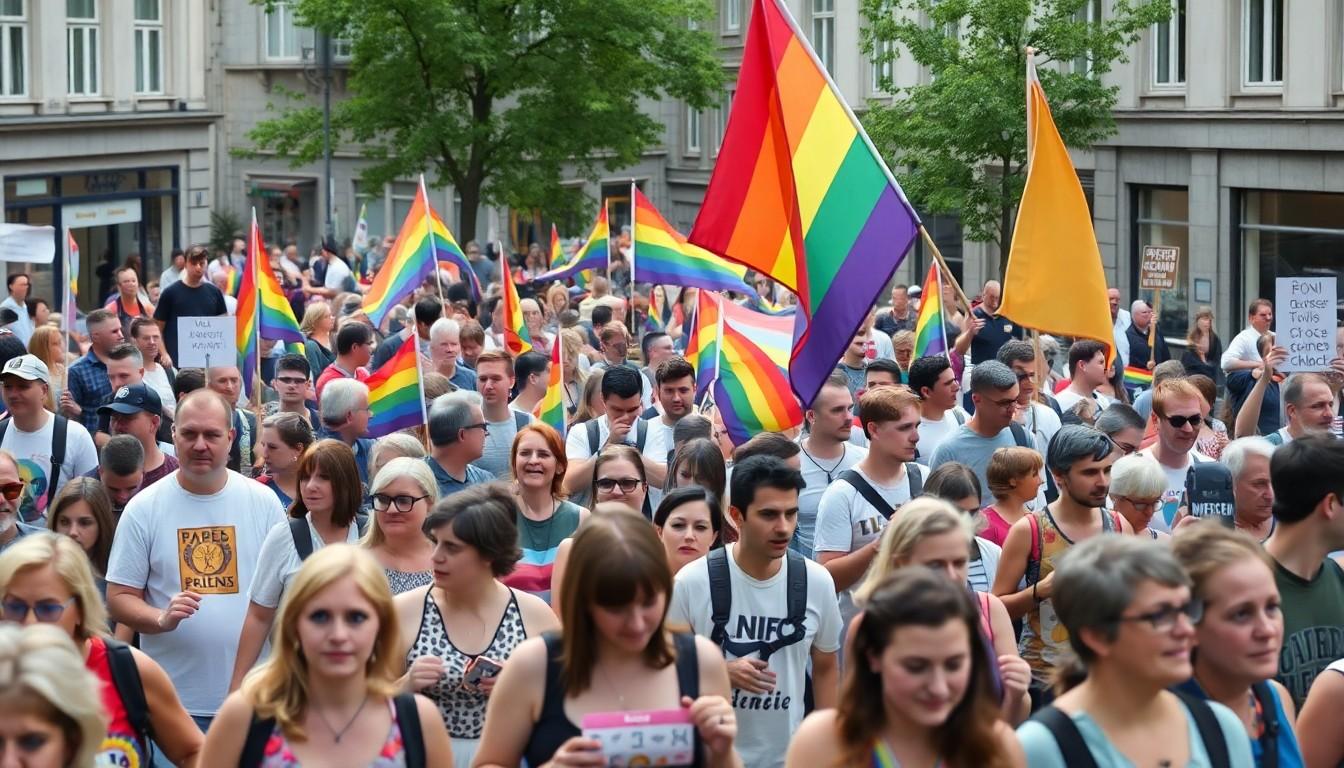
Watch as small-town Pride Walks draw lively crowds, rainbow flags and even vocal dissenters , here’s who showed up, what happened, and why these neighbourhood marches still matter for lhbtiq+ visibility.
Essential Takeaways
- Crowd size: Around 250 people marched in the Kamper Pride Walk, similar to last year, with colourful flags, banners and costumes.
- Confrontation, not violence: A group of evangelists used megaphones to call out attendees, but the mood stayed spirited rather than hostile.
- Visible solidarity: Participants answered jeers with chants, music and waving flags, keeping energy high and inclusive.
- Local dynamics matter: Organisers adjusted plans on the spot , a sit-in and route through the Oudestraat went ahead after organisers and the council assessed space.
- Personal stakes: Costumed participants and local activists framed the event as both protest and celebration, asserting identity and belonging.
How a small Pride Walk became a noisy, colourful statement
The strongest image from Kampen was simple: rainbow flags fluttering past a line of evangelists with a pair of loudspeakers, voices competing but few sparks of conflict. According to local reporting, about 250 people set off after a sit-in on the city bridge and wound through the centre, carrying banners and playing upbeat tracks. The scene felt lively and a little defiant, with songs and cheers pushing back against calls of disapproval.
Organisers say the walk’s tone was always meant to be celebratory and visible, not confrontational. Still, when the evangelists started shouting Bible-based objections, participants replied with a mix of humour, kindness and firm pride , waving flags or shouting “love your neighbour” back through a megaphone. It was a reminder that even small marches can draw loud opposition, and that visibility itself is often the point.
Why organisers decided to change the route at the last minute
The walk originally had restrictions because of a busy local festival, and the mayor had warned about crowding. But when organisers and municipal staff assessed the streets in real time, they decided there was enough room to take the Oudestraat and press on. That spontaneity matters: it shows organisers balancing safety with a determination to be seen.
Shaylee Hamminga, one of the organisers, admitted she’d been nervous about possible disruption from protesters, but said the turnout and spirit eased concerns. The decision to press on illustrates a practical truth for community events: flexible planning beats cancellations when conditions allow, and being visible can itself defuse tension.
Costumes, characters and why visibility still makes a difference
One memorable marcher went by the stage name Miss Diva Shania, complete with a platinum wig and bright yellow dress. Performers and regular folks alike treated the walk as both protest and party, saying they felt affirmed simply by taking up space. As one participant put it, the event underlined that queer people are part of the town’s fabric.
Personal presence matters. For many attendees, walking a familiar high street in drag or with a rainbow flag isn’t about spectacle so much as claiming everyday belonging. That’s the quiet power of local Pride events: they normalise difference one street at a time.
Dealing with hecklers: keep calm, stay visible, don’t engage
When you expect pushback, preparation helps. Organisers and participants in Kampen chose not to get drawn into debate with the evangelists, reasoning that arguing would escalate tensions and distract from the walk’s purpose. Instead they answered with music, slogans and flags , non-confrontational counters that kept spirits high.
Practical tips: if you’re planning to join a local Pride Walk, bring a friend, wear something that helps you feel safe and seen, and avoid engaging directly with hecklers. Photograph or report any threatening behaviour to marshals or police, but otherwise keep the energy focused on solidarity.
What small Pride Walks tell us about the broader movement
National coverage shows Pride Walks growing in size and ambition, from bustling city parades to activist-led marches in regional towns. Reports from larger events in Amsterdam and Tilburg highlight bigger crowds and sometimes more political messaging, but the same core idea holds: visibility builds support and accountability. Local events like the one in Kampen may be small, but they form the grassroots of a wider push for acceptance and rights.
So while megaphones and counter-protests will occur, the prevailing story is about communities choosing to show up. These walks keep the conversation alive at street level, where attitudes really change.
It's a small choice that helps keep every march bright and visible.
Source Reference Map
Story idea inspired by: [1]
Sources by paragraph: