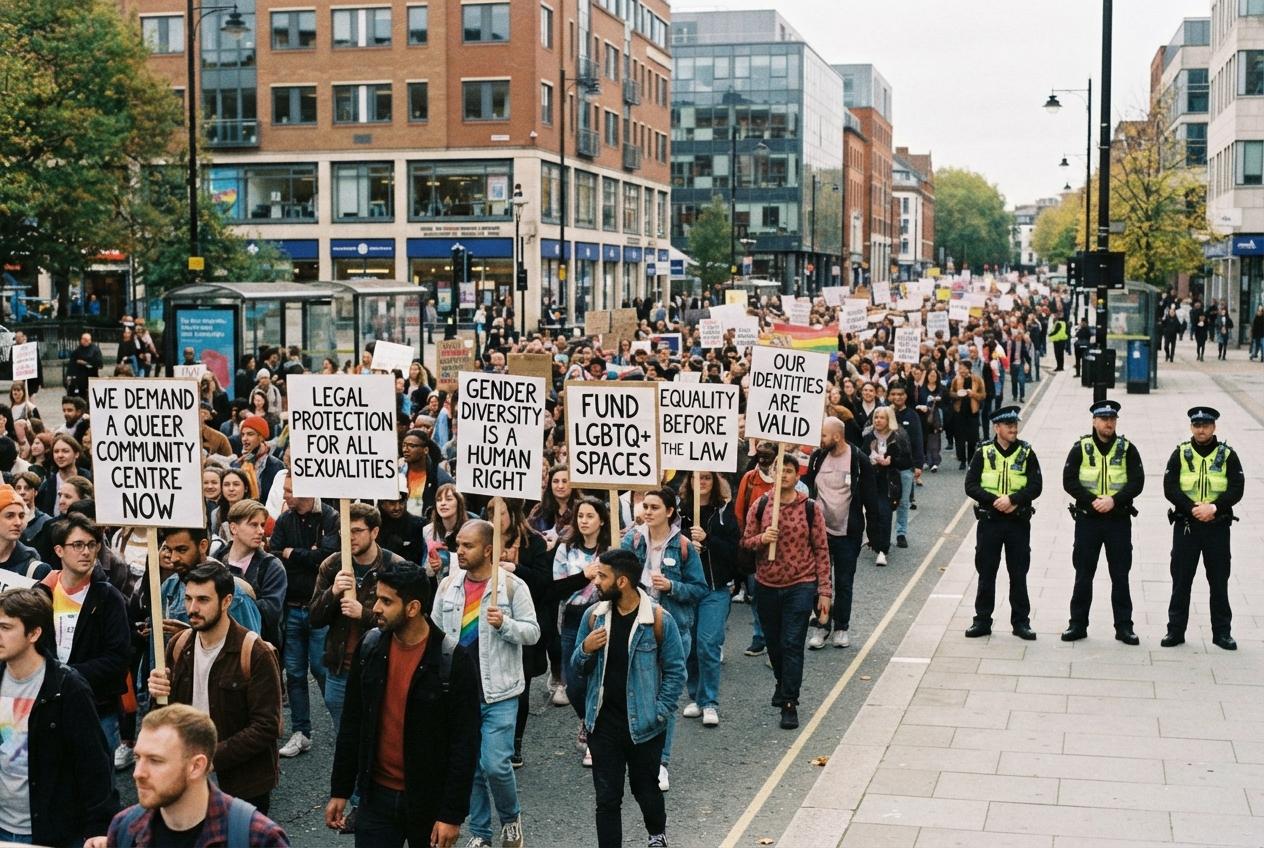
Shouting, singing and flags: thousands gathered at Koblenz's Christopher Street Day to demand better protection, a queer community centre and recognition of sexual and gender diversity , a colourful, peaceful demonstration that also carried a clear political warning about rising hostile language.
Essential Takeaways
- Big turnout: Organisers estimated around 6,000–7,000 people marched in Koblenz, many carrying homemade placards and rainbow flags.
- Main demands: Participants called for a queer centre in Koblenz, expansion of constitutional protections for sexual and gender diversity, and local government funding for protection measures.
- Tone of the day: The event was described as peaceful but determined, with a mix of celebration and protest.
- Political context: Demonstrators warned of a coarsening public language and the normalisation of right-wing rhetoric that can precede violence.
- Civic gestures: The Koblenz town hall raised the rainbow flag in solidarity, underlining municipal support.
Opening hook: A sea of colour and a steady, optimistic hum met the riverbanks in Koblenz as thousands marched for visibility and safety, their banners fluttering and slogans ringing clear.
Backstory and context: According to reported estimates, between 6,000 and 7,000 people took part in Koblenz’s Christopher Street Day, turning a local demonstration into a sizeable public statement. Organisers and participants weren’t just celebrating queer life , they were pushing for concrete change, including the creation of a queer centre and stronger legal protections. The town hall’s decision to raise the rainbow flag underscored the event’s civic resonance.
Why this matters now: Demonstrators emphasised that safety for LGBTQ+ people is a municipal duty and should be backed by state funding. That demand came against a backdrop of recent queerphobic incidents elsewhere, which leaders at the march cited as evidence the political climate has shifted. As one organiser put it, a rougher public language can make violence more likely , an observation that made the day’s calls for protection feel urgent, not ceremonial.
What's different this year: The Koblenz CSD blended festival atmosphere with pointed political messaging. While parties and culture have long been central to Pride events, this gathering leaned into advocacy , placards calling out right-wing rhetoric sat beside colourful floats. Observers noted that this combination reflects a wider trend: Pride events reclaiming protest as well as celebration.
Practical insight for attendees and supporters: If you plan to join a CSD or support local queer efforts, consider bringing more than goodwill. Local campaigns asking for a queer centre can be aided by petitioning city councillors, attending council meetings, or donating to grassroots groups. And if safety is a concern in your area, pressuring local authorities to list protection of queer people as a funded municipal responsibility is a concrete step.
Comparisons and wider trends: The tone in Koblenz echoed other German cities where Pride events balance joy with activism. According to contemporary coverage of CSDs, organisers increasingly prioritise legal recognition and municipal services alongside celebration. That shift reflects both renewed political contestation and a desire to turn visibility into durable rights.
Reaction and outlook: Police described the march as peaceful, and many attendees said the mood was both defiant and hopeful. While placards and chants send a strong message today, organisers will press on: campaigning for constitutional changes and a queer centre takes persistence. Still, seeing thousands walk together sends a simple, human signal , the community isn’t going away.
It's a small change that can make public life safer and more visible for many.
Source Reference Map
Story idea inspired by: [1]
Sources by paragraph: