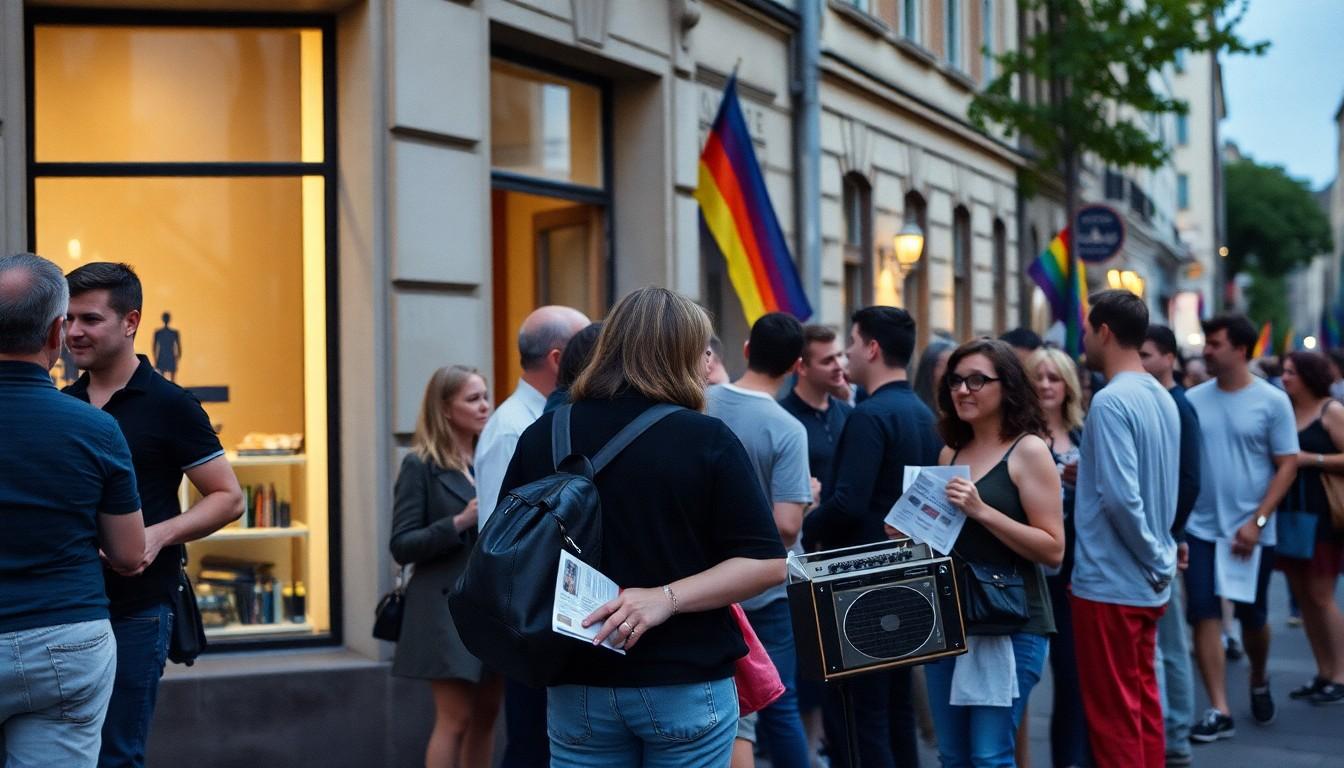
Shoppers, residents and families now see colourful floats and music at CSDs across Germany, but the movement began in violence, resistance and grassroots organising, and that shift from riot to street festival explains why Pride still matters today.
Essential Takeaways
- Origin story: The modern queer rights movement traces back to the 1969 Stonewall uprising in New York, where patrons fought back against police raids and sparked multi‑day protests.
- Early German adopters: The first German commemorations began in 1979 in cities like Berlin, Bremen and Frankfurt, mixing protest with music and public visibility.
- Political roots still present: CSDs grew from demands such as abolishing Paragraph 175 and later HIV/AIDS solidarity, not simply from a wish to party.
- Volunteer power: Organisers say much of CSD’s growth was driven by unpaid activists, grassroots fundraising and community labour.
- Today’s scale and feel: Events draw hundreds of thousands in big cities, but many smaller towns now host CSDs too, keeping protest and celebration side by side.
From stone‑throwing and batons to colourful parades: the Stonewall spark
The loudest fact about modern Pride is also the simplest: a violent series of clashes outside the Stonewall Inn in June 1969 lit the fuse for a movement that demanded public visibility. National Geographic and the National Park Service document how routine police raids and harassment escalated into nights of resistance, with people throwing objects and officers using force. This was terrifying and immediately transformative, because people who had hidden their lives began to step into the street.
That outrage turned into organisation. Within months activists in several US cities planned demonstrations and, crucially, annual commemorations. Those first marches combined anger with defiance, which helped shape a political culture that embraced visibility as strategy, a pattern echoed later in Germany and beyond.
How Germany turned a US uprising into Christopher Street Day
It took about a decade for the Stonewall anniversary to take root in the German public sphere. According to accounts from early organisers, groups in Berlin and Bremen held demonstrations in June 1979 to mark the tenth anniversary, and these were not solemn affairs alone. The idea to put a loudspeaker and music at the head of a march came from pragmatism and a desire to be seen.
That blend of protest and party mattered. It signalled a new way of demonstrating, people marched with banners but danced to pop songs too, surprising onlookers and shifting perceptions. Over time the anglophone label Christopher Street Day stuck in Germany, while the movement kept its political aims at the fore.
From Paragraph 175 to HIV solidarity: the movement’s political through‑line
The early German queer movement tackled immediate legal and social injustices. Paragraph 175, which criminalised sexual acts between men, haunted activists for decades until its repeal in 1994, and earlier versions of the law had even harsher penalties. The Frankfurt congress of 1979 and subsequent gatherings produced networks and organisations that pushed for legal change and social acceptance.
In the 1980s and 1990s, solidarity with people living with HIV and AIDS added urgency and new tactics. As historians note, the intersections of rights campaigns and health activism meant the events maintained a hard political core even as their public face became more festive.
Why volunteer energy matters, and how events scaled up
Organisers across cities emphasise that CSDs grew because people gave time and money. Early flyers and meetings were financed out of pockets; parties helped cover costs. Local Aidshilfe chapters and student groups organised events that were small at first, street parties with boomboxes and folding benches, but these grassroots efforts laid the groundwork for later growth.
Municipal support changed the game in many places. As city administrations began to tolerate and then support CSDs, the events moved from makeshift to institutionalised, with professional staging and security. Still, the backbone remains civic commitment and volunteer labour in many towns.
From big cities to small towns: why visibility still matters
Today Berlin, Cologne and Frankfurt attract huge crowds, sometimes into the hundreds of thousands, but smaller towns are increasingly hosting CSDs too. That spread matters because visibility in local high streets, not just capital boulevards, challenges prejudice where people live and work. As one organiser put it, marching past municipal offices and businesses is a deliberate tactic; it forces decision‑makers to see the community they govern.
Looking forward, the movement’s success poses fresh questions about balancing celebration and message. Pride has become mainstream in many ways, and that makes it both powerful and vulnerable: visibility is now a tool to win rights, but it must be guarded against purely commercial or apolitical turns.
It's a small change that can make every march and float count.
Source Reference Map
Story idea inspired by: [1]
Sources by paragraph: