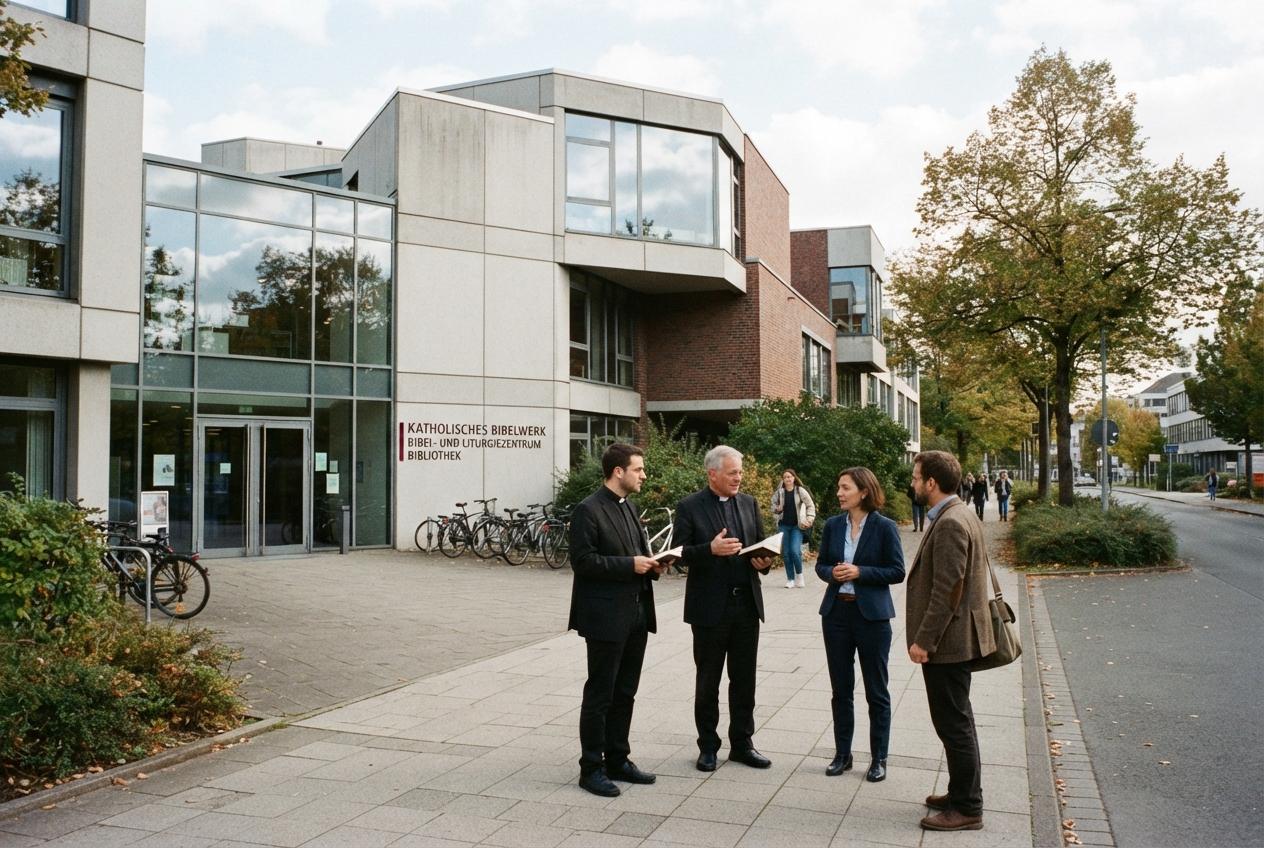
Shoppers and scholars alike are talking: Germany’s Catholic Bible Society has published a special journal issue inviting readers to read the Bible with queer sensitivity, sparking warm praise, heated pushback, and a wider conversation about how scripture speaks to LGBTQ+ lives.
Essential Takeaways
- New special issue: The Katholisches Bibelwerk released a themed edition of Bibel und Kirche focused on queer biblical interpretation, offering essays on passages across scripture.
- Strong reactions: The publication drew hundreds of online comments, with many expressions of gratitude and some hostile responses; the society publicly condemned hateful rhetoric.
- Scholarly intent: Contributors aim to treat queer reading as a serious hermeneutical approach that highlights historical context and liberating themes.
- Practical impact: The issue has already been used in conventions and workshops, showing demand among Catholics for resources that address queer experiences thoughtfully.
- Tone and use: The volume reads as an academic yet pastoral tool , accessible for parish study groups, chaplains, and university courses.
A bold idea landed in an academic journal , and people noticed
The strongest news here is simple: a respected Catholic publisher in Germany decided the time had come to explore scripture through a queer lens, and that decision made waves. According to coverage in katholisch.de, the Katholisches Bibelwerk (KB) rolled out a special issue of Bibel und Kirche titled “Bibel queer lesen,” inviting scholars to reinterpret texts with queer sensitivity. The result is vivid , essays that read familiar passages with fresh attention to identity, desire, exclusion and liberation , and the response has been equally vivid, online and in person.
Why the KB says this matters , and why crowds turned up
The Bible Society says queer studies are an “innovative and booming” field and that workshops and conventions are full, so the issue responds to real demand. Organisers presented the work at Katholikentag, the nationwide Catholic conference, where discussions apparently continued long after the panels ended. That kind of appetite suggests this isn’t an academic curiosity: it’s a resource people want to use in parish groups, classrooms and chaplaincies.
Praise, pushback, and how the KB handled the noise
No public conversation about religion and queer issues is without controversy, and this publication was no exception. A Facebook announcement from KB drew hundreds of comments , many thankful and appreciative , but some replies were hostile. The association pushed back firmly, saying they reject hatred and inflammatory rhetoric, and their director, Katrin Brockmöller, asked for constructive dialogue. That balance , opening a conversation while policing abusive responses , is a practical model for other institutions thinking of tackling sensitive topics.
What contributors hoped to change about Bible-reading
Several authors , including university chaplains and theologians , emphasized that queer readings can free scripture from being weaponised against LGBTQ+ people. Fr Burkhard Hose, a contributor and chaplain, thanked the KB for shifting the tone: rather than using scripture to exclude, the essays aim to place texts in their historical context and explore their liberating message for today. For readers, that means the issue offers both rigorous exegesis and pastoral sensitivity , useful if you’re leading a study group or simply trying to reconcile faith with queer identity.
Who will find the issue useful , and how to use it
Practically speaking, this special issue functions as an accessible workbench for different audiences. Parish leaders can pick a short essay to spark discussion at a meeting; university lecturers might set one piece as required reading; chaplains can cite historical context when counselling. If you want to use it, look for essays that match the biblical book or theme your group is already studying, and prepare a few guiding questions to keep conversation respectful and grounded.
Where this fits in the bigger picture of church debates
This publication is part of a wider shift: churches and theological institutes across Europe are increasingly engaging with queer studies, not as a fringe interest but as a serious scholarly field. Coverage in outlets such as Evangelische Zeitung and Domradio shows the issue landed across denominational lines. That suggests the conversation will continue , sometimes tense, sometimes generative , and that resources like this journal will be part of how communities navigate changing pastoral and social realities.
It's a small scholarly move that invites big, human conversations.
Source Reference Map
Story idea inspired by: [1]
Sources by paragraph: