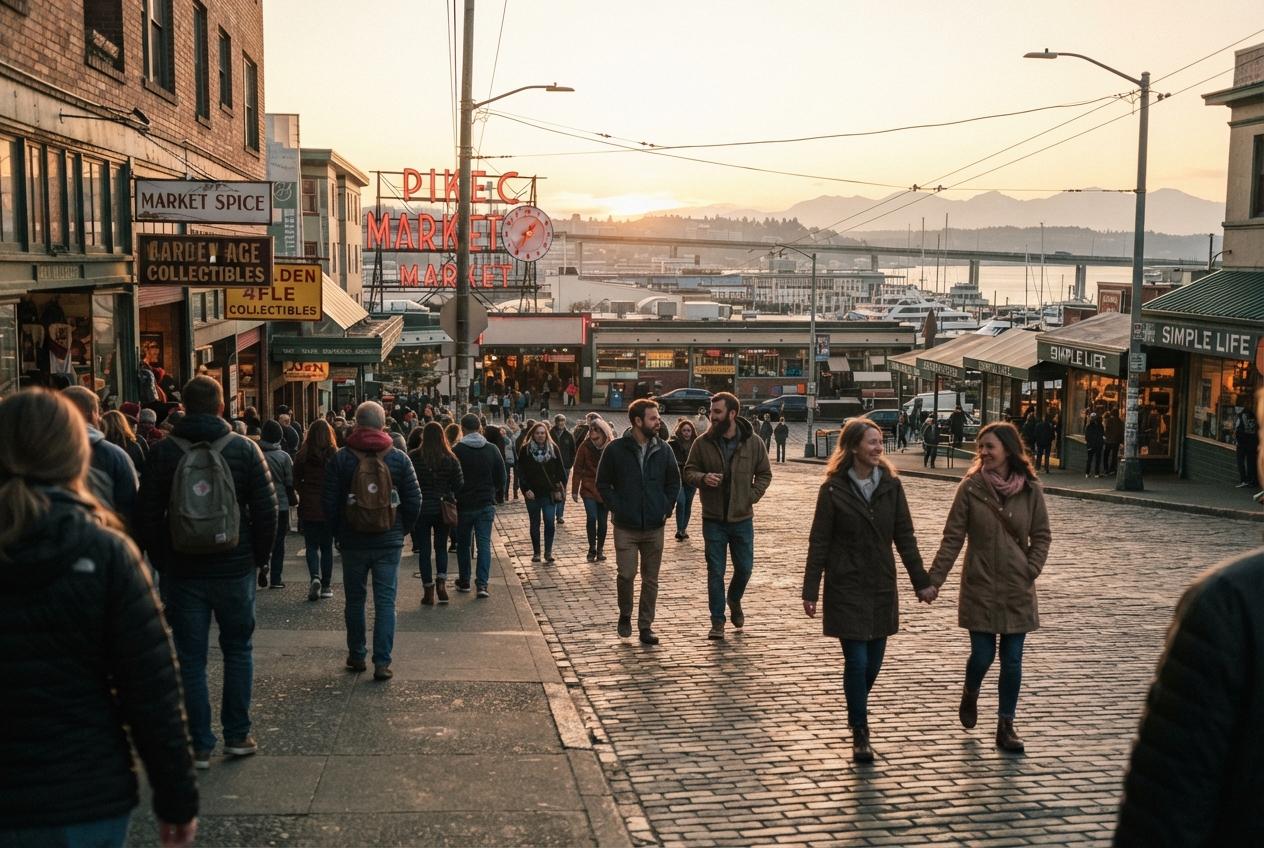
Shoppers are finding more than souvenirs in Seattle , they’re finding community. RE Andeen, who’s called the city home for 17 years, explains why Seattle’s queer visibility, neighbourhood warmth and market culture make it one of the proudest places to live for sapphic and LGBTQ+ people.
Essential Takeaways
- Strong queer presence: Seattle feels saturated with openly queer people in everyday life, from cafes to concerts, which creates a steady, reassuring hum of visibility.
- Pride as lived experience: Community events and an outspoken local culture mean queer rights and celebration are part of the city’s fabric, not an occasional headline.
- Must-see spot: Pike Place Market is a living neighbourhood hub , tourists and locals mingle, making it a great place to feel the city’s texture.
- Food to try: Regional salmon gets top billing , simple, fresh and deeply Pacific Northwest.
- Urban trade-offs: It’s expensive, traffic can be trying, and like many big cities, downtown can feel uneasy at times due to gaps in social services.
Seattle’s queer visibility feels everyday , not performative
Walk into a coffee shop or stand in a market queue and you’ll notice people who’ve been out and proud for years. That’s the image RE Andeen paints after nearly two decades in the city, and it’s easy to see why that normalised visibility matters. It softens the weight of other headlines and makes daily life feel safer and more celebratory.
This didn’t appear overnight. Seattle’s history of activism, arts scenes and community organising have layered into a culture where queer presence is expected and accepted. If you’re visiting and want to sense that warmth, look for small neighbourhood gatherings and local shows , they’re where you’ll meet the people who make the city hum.
Pike Place Market: more than a tourist stop, a living room for the city
Pike Place Market gets singled out for a reason , it’s where fresh food stalls, crafts and street performers collide with regulars doing their weekly shop. According to the market’s own materials, it’s an enduring public space that brings locals and visitors together, which means you can soak up authentic Seattle life without it feeling staged.
If you’re after a genuine moment, skip the busiest selfie spots for a quieter corner of the stalls, pick up a cup of coffee, and watch life flow by. Market vendors often reflect the city’s diversity, so it’s also a good place to pick up queer-owned crafts or chat with people who’ve lived here a long time.
Eat like a local: salmon, seafood and simple pleasure
Local salmon is the must-try food RE mentions, and for good reason. Whether it’s grilled, in chowder or part of a market plate, that clean, briny Pacific flavour is part of the region’s identity. Ivar’s is the sort of spot locals still recommend , order something classic like fish and chips and take it somewhere with a view.
Food is often how communities gather, and in Seattle that’s no different. Eating outdoors on a lakefront deck or at a market stall can feel small and restorative, a reminder that some pleasures are simply about fresh air and good company.
The city’s drawbacks: cost, traffic and social gaps
No city is perfect, and Seattle’s charms come with familiar urban headaches. Housing and living costs have climbed, so newcomers should budget accordingly. Traffic frustrates commutes, and downtown can feel less welcoming at night because the city’s safety nets for vulnerable people are under strain.
That honesty matters. Knowing the trade-offs helps you decide whether the cultural richness and queer visibility are worth the practical costs. For many, they are , but it’s sensible to plan ahead if you’re considering a move.
Why Seattle still gives people hope
What stands out in RE Andeen’s take is a quiet confidence: this city’s queer visibility isn’t a show, it’s a way of life. That gives residents hope that progress sticks, even when national headlines feel bleak. Community, everyday pride and a culture of openness make Seattle a place where sapphic life doesn’t have to hide.
If you’re exploring sapphic-friendly places or planning a trip, start with neighbourhoods and markets, eat local, and give space to the city’s complex realities. You might leave feeling a little steadier about queer life in America.
It's a small change that can make every visit feel more like coming home.
Source Reference Map
Story idea inspired by: [1]
Sources by paragraph: