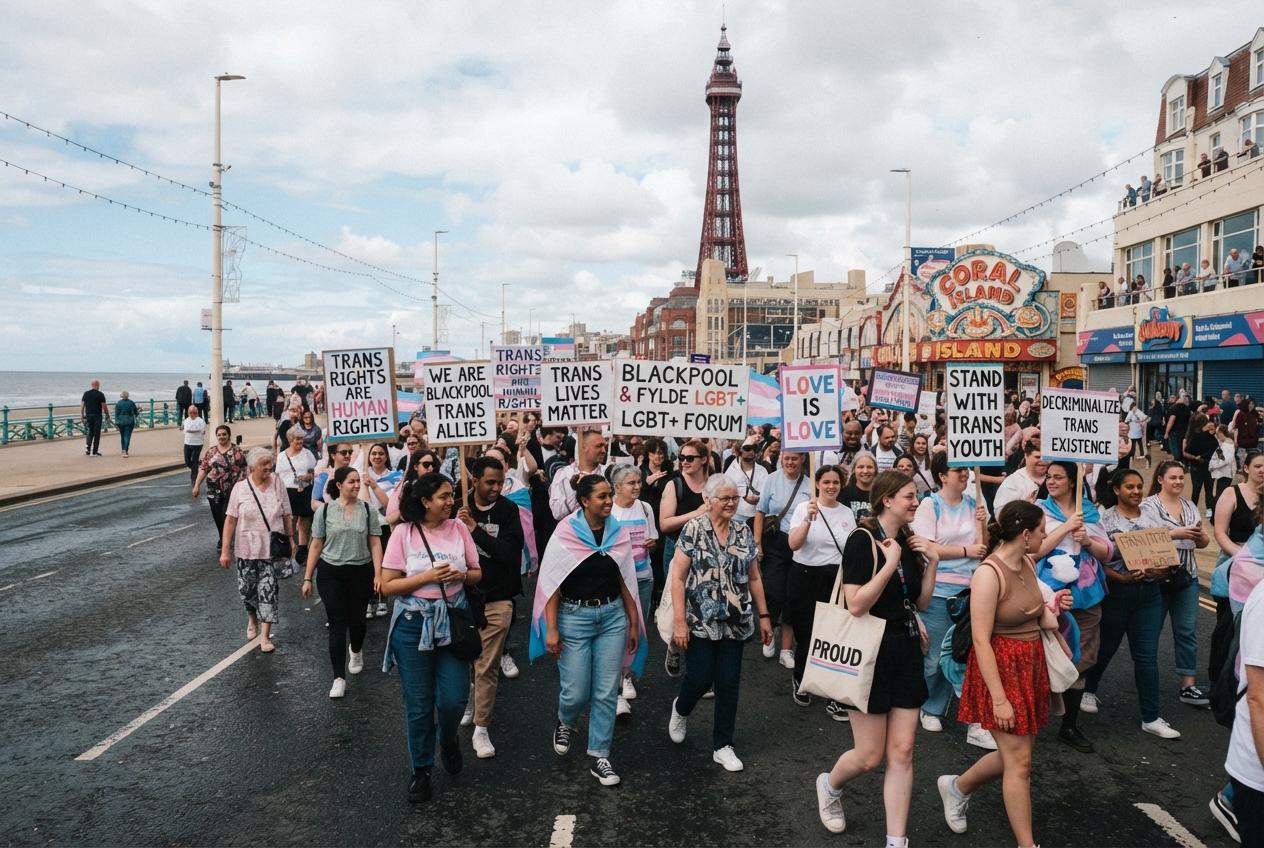
Shocked residents are talking after a Blackpool march for transgender visibility was met with a hostile counter-protest , and a recorded shout that “they all need slaughtering” drew no further police action, raising fresh questions about safety, policing and community trust.
Essential Takeaways
- What happened: A visibility march for trans rights in Blackpool faced a counter-protest that included abusive chanting, filming and one person walking across a trans flag , the most serious comment calling for people to be “slaughtered”.
- Police response: Lancashire Constabulary investigated but decided no further action was necessary, which local councillors and marchers say is worrying.
- Local reaction: Councillor Matthew Thomas and other community figures described the language as incitement and a hate crime, saying inaction risks normalising threats.
- Context: The march followed a Supreme Court ruling and new government rules on single-sex spaces that campaigners say make life harder for trans people.
- Atmosphere: Organisers called the demonstration broadly successful and visible, but many attendees felt intimidated where counter-protesters gathered and filmed the march.
What happened on the day , tense, filmed, and raw
The demonstration was meant to be a visible show of solidarity, and for a while it was , banners, applause from passers‑by and families joining in. Yet as the march progressed the mood shifted; counter‑protesters, some well known in anti‑trans online circles, began to weave through and film participants, creating a claustrophobic, intrusive feel. The single most troubling moment, a shout that transgender people should be “slaughtered”, was recorded and shared, leaving many shocked and fearful.
Reactions in the crowd ranged from stunned silence to calls for protection. Councillor Matthew Thomas, speaking afterwards, described the remark as dangerously close to incitement. For those at the march it wasn’t just an ugly slogan , it was a visceral reminder that visibility can attract violence, and that words matter.
Why the police decision matters for trust in public safety
Lancashire Constabulary investigated the incident and concluded no further action was necessary. That decision has provoked anger and confusion. To participants and local LGBT advocates, the lack of charges feels like a message that threats can be shrugged off, not investigated. It’s the kind of ruling that chips away at trust in institutions meant to protect everyone.
Local councillors say policing needs to be clearer about thresholds for hate crime and incitement. When officers are present but bystanders record threats on camera, people expect transparent follow‑through; otherwise, victims and witnesses are left wondering whether their safety counts.
The wider backdrop , legal changes and public debate
This march didn’t come out of nowhere. It followed a Supreme Court ruling and subsequent government guidance relating to single‑sex facilities, a decision that campaigners say will create more hurdles for trans people. According to national coverage of similar protests, those rulings have prompted emergency demonstrations in other towns as well and sharpened already heated public debate.
That legal backdrop fuels why visibility marches still matter: they’re not only about protest but also about explaining lived experience to neighbours and pushing back against policy shifts that affect daily life. At the same time, opponents who see such events as opportunities to film and provoke are contributing to a more combustible environment.
How communities and organisers coped on the ground
Organisers reported the march was broadly successful in visibility terms, but they also flagged intimidation tactics , filming, jostling and the deliberate trampling of symbolic items like flags. One counter‑protester was arrested and later released with no action, adding to frustrations.
Practical steps organisers and participants can take include notifying police in advance, documenting incidents carefully, appointing marshals to create buffer zones and sharing footage with legal advisers or community safety officers. When public events attract hostile groups that livestream and amplify confrontations, preparation matters.
What next , safer protests and clearer thresholds
The immediate ask from local leaders is twofold: clearer policing guidance on hate speech and more transparent communication about why decisions to take no further action are reached. Community figures hope that if footage circulates widely, prosecutors might reconsider; in other instances, public pressure has prompted fresh looks at evidence.
Longer term, it’s about rebuilding confidence , in policing, in municipal support and in the idea that showing up in public doesn’t mean risking abuse. That’s a small, stubborn hope, but for many marchers it’s exactly why they turned out in the first place.
It's a small change that can make every march safer and every voice count.
Source Reference Map
Story idea inspired by: [1]
Sources by paragraph: