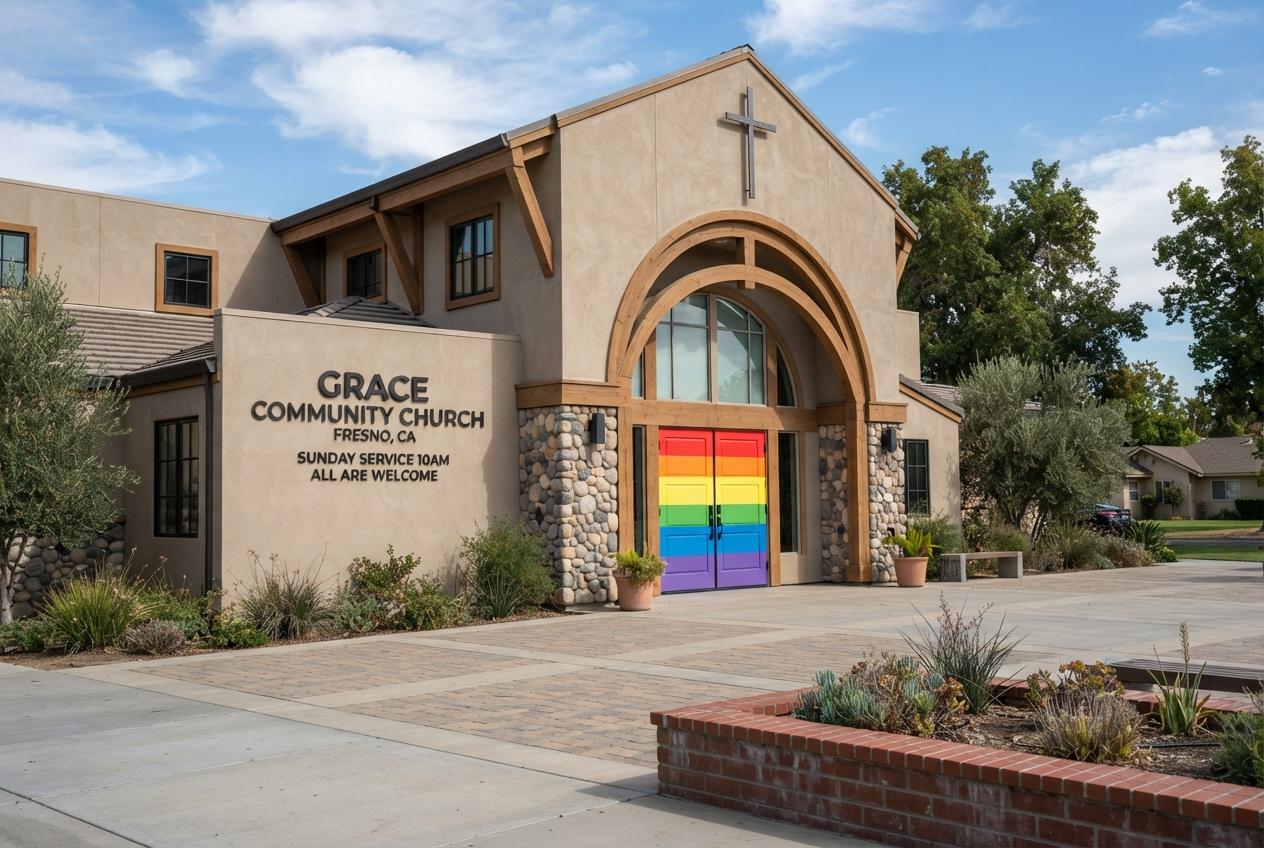
Shoppers and neighbours noticed a splash of colour turned to controversy in Fresno , The Big Red Church’s rainbow-painted doors were smashed for a second time, but parishioners and locals quickly put them back up; the episode matters because it’s about safety, resilience, and visible welcome in a changing community.
Essential Takeaways
- Repeated attack: The church’s rainbow doors were vandalised twice this summer, knocked over and smashed early on a Sunday morning.
- Quick community response: Neighbours reinstalled the doors by the time Sunday services ended, showing local support and solidarity.
- Open & Affirming history: The First Congregational Church of Fresno has identified as Open & Affirming for more than 30 years.
- Police stance: Fresno police told local media the incident is not being investigated as a hate crime.
- Tone and resilience: Church leaders and social posts framed the damage as painful but not deterrent , “They left a mark. We’ll leave a brighter one.”
Why those rainbow doors matter , and why people react strongly
The painted doors are more than decoration; they’re a tactile, bright invitation that reads as loudly as any sermon. The Big Red Church’s installation, complete with the line “God’s doors are open to all,” makes a visible statement about welcome, and that visibility can trigger strong reactions. According to local reporting, parishioners found the smashed doors early on a Sunday, and the pastor said the congregation has faced ugly messages before, so while the vandalism wasn’t a surprise, it still stung.
This isn’t isolated to Fresno. Newspapers and outlets have documented similar pro-LGBTQ displays at churches being targeted elsewhere, and those patterns make these incidents feel like part of a wider cultural tug of war. For congregations weighing whether to make such a statement, the trade-off is simple: visibility invites support and, occasionally, hostility.
The neighbourhood stepped in , a story about community muscle
What stood out was how quickly neighbours reinstalled the doors. By the time folks left services, the display was back in place, a small but powerful act of neighbourliness. The Tower District’s civic life and artsy reputation help explain why locals rallied: visible public art and community gestures matter in places that prize them.
It’s also practical reassurance. When a display is reinstalled quickly it reduces the impact of the vandalism , instead of letting fear or outrage set the agenda, the community reasserts normality and welcome. For other churches thinking about bold displays, this is a reminder to cultivate local allies before problems arise.
Police response and the question of hate crime classification
Fresno police told local TV that they were not treating the damage as a hate crime. That decision spotlights how law enforcement evaluates motive, and it can feel unsatisfying to congregations who see a clear link between the message and the attack. Church leaders and members, meanwhile, framed the episode as painful but not determinant , they stressed continuing to invite LGBTQ+ people into their congregation.
For congregations considering public statements or displays, it’s useful to know how local authorities typically classify crimes; dialogue with police and documented threats can matter if incidents recur.
Patterns beyond Fresno , not an isolated phenomenon
Similar reports have cropped up in other parts of the US, where pro-LGBTQ displays at houses of worship have been defaced or removed. Local press in Massachusetts and community outlets elsewhere have covered comparable vandalism of Pride flags and banners. Those patterns suggest a national thread of pushback against visible affirmations, even as many neighbourhoods push back in kind.
If you’re part of a church planning a visible welcome, look at neighbouring examples: secure your installation, photograph everything for records, and build a quick-response plan with neighbours and the police. Visibility is powerful, but preparation helps keep it sustainable.
How congregations and communities can respond constructively
There are simple, practical steps churches can take: choose durable materials for outdoor displays, fix installations securely, and involve local volunteers as stewards. Keep social channels ready with a short statement that centres resilience and invites community support , the Big Red Church’s message, “They left a mark. We’ll leave a brighter one,” is a neat model of that tone.
Beyond logistics, nurture relationships with local businesses, residents and media so support is ready if vandalism happens again. That social capital is often the first, fastest repair.
It's a small change that can make every welcome feel safer and more lasting.
Source Reference Map
Story idea inspired by: [1]
Sources by paragraph: