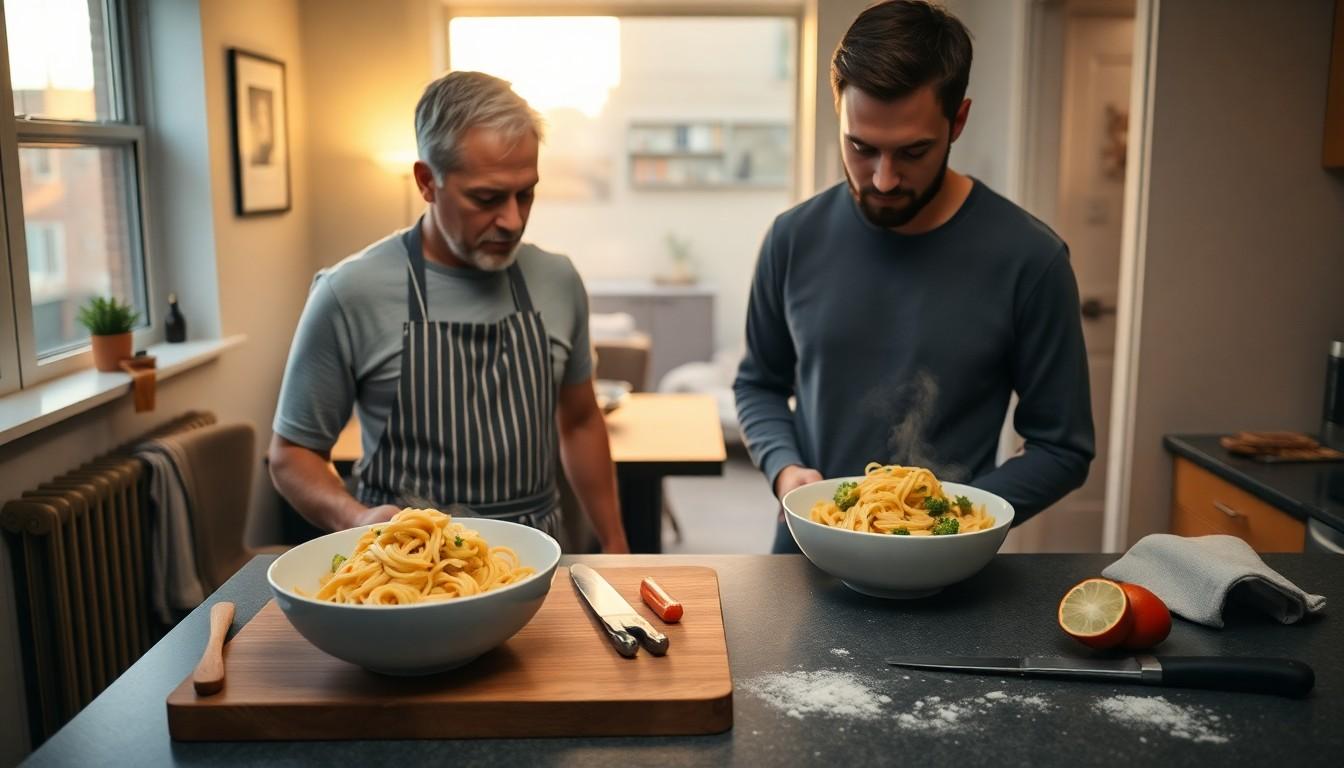
Shoppers and readers are returning to food stories that double as confessions , when queer people cook together, meals become a shorthand for desire, power and repair, and that matters because eating alongside someone often rewrites the rules of intimacy. Here’s why these cooking-as-love narratives are trending and how to make them work in real life.
Essential Takeaways
- Food is a love language: Cooking together or for someone signals time, care and a level of domestic trust that can feel huge after a hookup.
- Sensory bonding matters: Warm kitchens, garlic on fingertips and shared forks create vivid memories and quick emotional attachment.
- Power and boundaries show up at the stove: Who cooks, who cleans, who gets to taste first all index relationship dynamics.
- Practical start: Begin simple , a skillet meal or coffee , and use food to test compatibility, not as a commitment device.
- Community cooks differently: Group classes and shared meals can be safer ways to explore queer connection without romantic pressure.
Why a frying pan can feel like a promise
The opening scene of many queer love stories is domestic: light spilling through a kitchen, a skillet sizzling, hands brushing while someone cracks an egg. Those small sensory details , the warmth of a pan, a lemon-sour bite, garlic on a thumb , are exactly what writers and readers latch onto because they're concrete and immediate. According to Autostraddle features on food and queer intimacy, these moments tend to compress desire and care into a few gestures, and that compression is powerful. For readers, it’s easy to imagine both the erotic charge and the quiet safety of being fed. If you want to test a connection, a simple, sharable dish gives you a low-stakes way to see how someone treats you and their host skills at once.
Cooking together as a rehearsal for relationship habits
Sharing kitchen labour reveals habits that date nights alone might not. Who happily chops onions? Who leaves the sink messy? Autostraddle pieces exploring queer couples and cooking together point out that the stove becomes a stage where emotional labour and conflict styles show up. When you cook together regularly, you learn how someone handles stress, compliments, and critique , and that’s useful intel. A practical tip: try a one-dish meal you can both manage, then debrief over dessert. It’s less pressure than a full Sunday roast, but it shows patterns.
When food patches up fights , and when it doesn't
We've all seen the scene: a dramatic apology handed over a plate, or a single meal that temporarily heals a rift. Food can lubricate difficult conversations because eating together releases oxytocin and lowers defences. Autostraddle essays about food as love note that while a shared meal can feel restorative, it can also paper over deeper problems if it becomes the only strategy for repair. If apologies are frequent but behaviour isn't changing, consider setting a different boundary: meals can comfort, but they shouldn't become emotional currency for repeated hurt.
Queer cooking beyond the couple: classes, community and nourishment
Not every food story is romantic. Community kitchens, queer cooking classes and potlucks create spaces where people learn skills and build friendship networks without romance attached. These community-focused approaches are highlighted in reporting on queer cooking initiatives that emphasise safety, skill-sharing and belonging. If you're wary of entanglement but want to explore food and connection, sign up for a group class or a supper club. You’ll leave with recipes, new friends and the kind of shared memory that doesn’t automatically come with strings.
How to use food thoughtfully in dating and desire
If you’re tempted to use cooking as a shortcut to intimacy, be mindful. Start with small acts , a weekend shakshuka or shared fried chicken , and see whether it feels reciprocal and respectful. Notice how the other person responds when you set a boundary, like asking them to help with the dishes. It’s also fine to outsource: grabbing empanadas or splitting a bar of chocolate still creates intimacy without the implied domestic labour contract. And remember: making someone breakfast can mean many things; it doesn’t have to equate to a promise unless you both say so.
It's a small change that can make every bite more honest and every meal more human.
Source Reference Map
Story idea inspired by: [1]
Sources by paragraph: