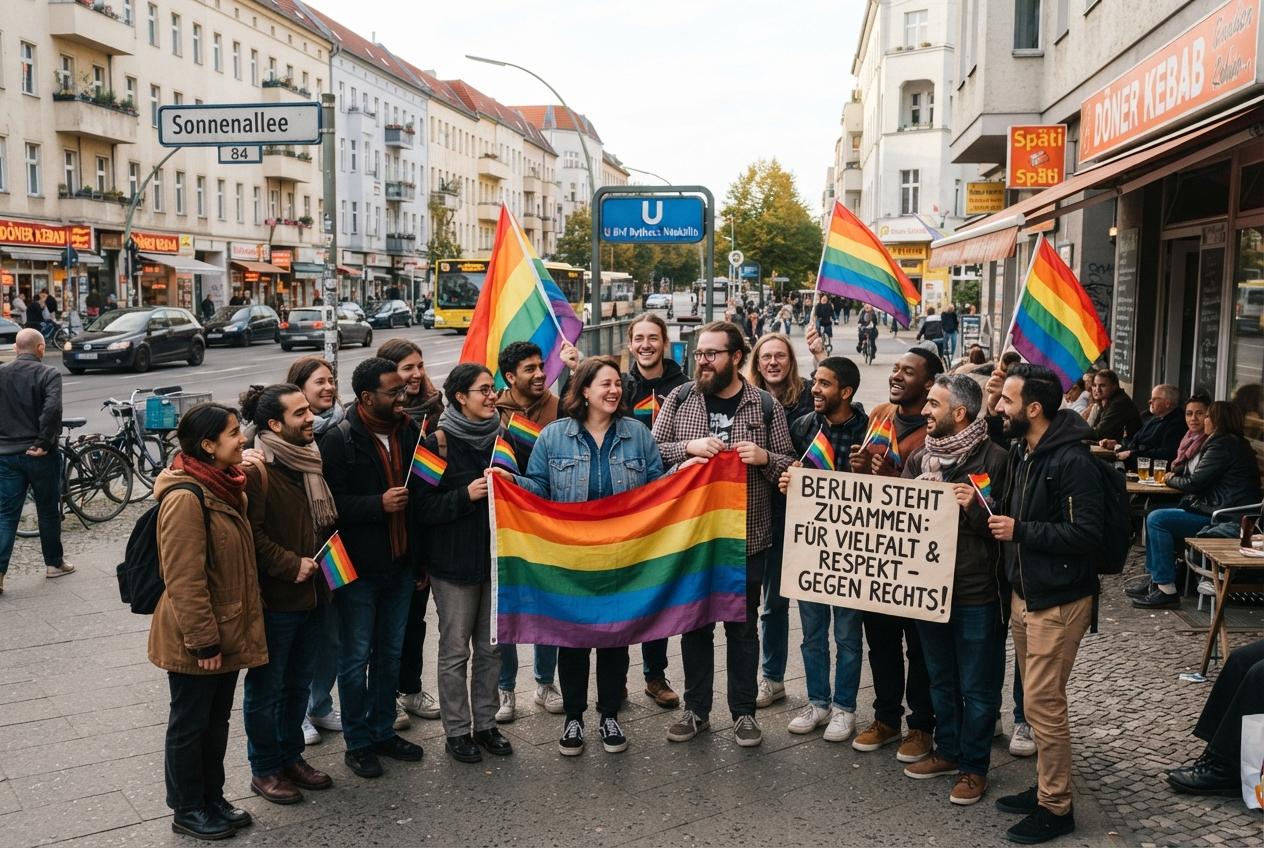
Notice the impulse: after the worst attack on queer life in Germany since 1945, many Berliners are wondering what solidarity looks like in practice. From Kreuzberg to Neukölln, owners, councils and neighbours are weighing visible support , rainbow flags, statements and safer spaces , and asking why that simple, public gesture still matters.
Essential Takeaways
- Inciting event: A violent attack targeting the CSD has shaken queer communities and sparked debate about public solidarity and safety.
- Visible support helps: Flags and public gestures offer emotional reassurance, signal inclusion and can challenge narratives that isolate queer people.
- Violence is widespread: Queerphobic incidents rose across Berlin boroughs, including arson and extremist attacks, not confined to one neighbourhood.
- Complex local politics: Calls for solidarity bump into debates about race, class and gentrification along streets like the Sonnenallee.
- Practical steps: Simple measures , flags, improved lighting, staff training, clear reporting channels , can combine symbolism with safety.
Why a rainbow flag still carries weight in a city of many voices
Flags are tactile and immediate; they catch your eye, soften a shopfront and say, we see you. After the attack on the CSD, that quick visual reassurance has felt necessary to many queer Berliners who want to step outside without scanning for danger. According to local reporting and community groups, queer-friendly signage can lower anxiety and foster a small but meaningful sense of belonging. It’s not a cure, but it’s a start.
The threat isn’t limited to one street , it’s citywide
Data and reporting from borough authorities show an uptick in extreme-right incidents and queerphobic crimes across several districts. Incidents such as the arson at a queer café and repeated attacks in outlying boroughs underline that no neighbourhood is immune. That pattern means solidarity shouldn’t be symbolic in one pocket of town and absent elsewhere; it needs to be diffuse and durable.
The Sonnenallee debate: solidarity tangled with race and class
The argument over whether the Sonnenallee should unfurl rainbow flags illuminates deeper tensions. Some politicians and media frame the street in simplistic, often racialised terms, while locals and long-time residents describe a layered, plural reality. For many racially marginalised queer people, solidarity has to resist transactional logic , it’s about mutual protection, not policing who “deserves” support. Local activists say this nuance matters when deciding where and how to show public allyship.
What practical solidarity looks like, beyond the banner
If you run a shop, café or community space, a flag is useful but small. Consider clear anti-hate policies for staff, accessible reporting paths for incidents, brighter street lighting and cooperation with local queer groups to host safety workshops. Councils and landlords can also support by funding prevention programmes and improving outreach , measures that tackle the material conditions which radicalise and exclude.
What politicians and institutions still need to do
Community leaders complain there’s been noise but little targeted, dignity-centred policy since the attack. Experts argue that prevention must address root causes like poverty and exclusion, rather than only punitive measures. That means sustained investment in education, exit programmes for extremists and trained support services for survivors. Public visibility , like flags , should be one part of a broader strategy that centres affected lives.
It’s a small thing to hang a flag, but it’s also a prompt: if we can make visibility meaningful, the next steps toward protection become easier to imagine.
Source Reference Map
Story idea inspired by: [1]
Sources by paragraph: