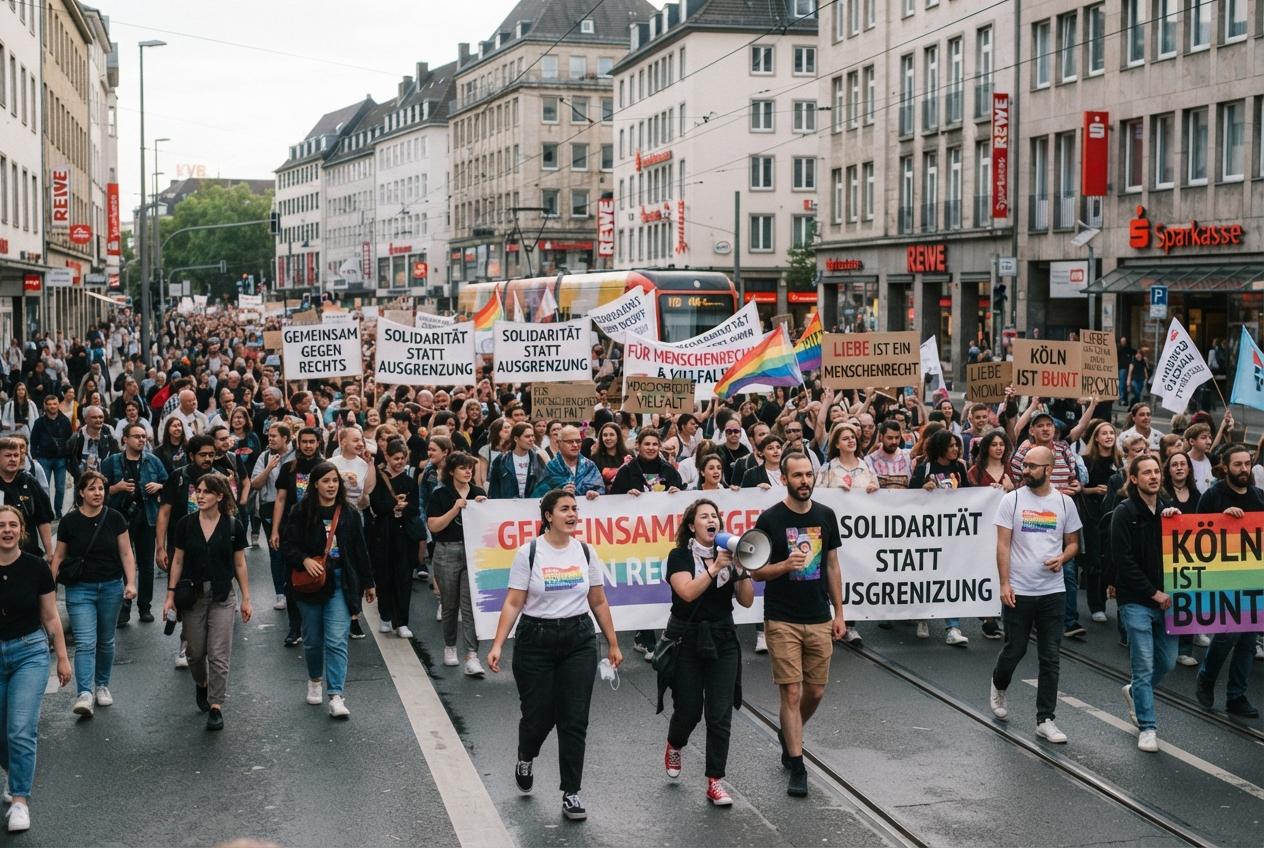
Rallying behind the rainbow: thousands gathered in Cologne in a public show of queer solidarity after the violent attack at Berlin’s CSD, joining under the banner "Cologne shows solidarity, Cologne shows stance" to demand stronger protection for queer life and communities.
Essential Takeaways
- Huge turnout: Organisers estimate about 10,000 people joined the Cologne march, far above the roughly 2,000 registered with police.
- Clear demand: Cologne Pride and allied groups want concrete measures from federal, state and local governments to protect queer structures.
- Broad message: Demonstrators rejected all forms of extremism while warning against scapegoating Muslim communities.
- Visible mood: The atmosphere mixed grief and defiance , sombre for the victims in Berlin, but determined and vocal on the streets of Deutz and the city centre.
A vivid response: Cologne's streets filled with colour and purpose
Cologne’s solidarity march began on the right bank in Deutz and wound into the city centre with a steady, determined flow of people. You could feel the mix of sadness and resolve: candles and banners sat alongside bright flags, and voices were loud enough to remind passers-by why everyone had turned out. According to Cologne Pride, the crowd ballooned to about 10,000, far exceeding the number police had on record for the registration.
The demonstration was organised quickly after the attack on the Berlin CSD, and it shows how local communities can mobilise. Radio Köln and local outlets reported wide participation from associations and ordinary citizens. For many, marching was both a tribute and a statement: grieving publicly but refusing to be silenced.
From grief to action: why organisers want policy change
Cologne Pride’s message was clear , words of sympathy aren’t enough. They’re pushing for tangible protections for queer life in schools, clubs, community centres and public spaces. That demand reflects a larger conversation taking place across Germany about rising queer hostility and how authorities should respond.
Organisers framed it as a responsibility for all levels of government. They called for long-term, sustainable measures to be funded and enforced, not just temporary security boosts. If you’re wondering what that might mean in practice, think education programmes, safer event planning and better-funded support services.
Rejecting extremism without fuelling prejudice
Organisers and speakers emphasised a firm stance against every kind of extremism , Islamist and right-wing , and were careful to say the Berlin attack should not be used to stoke hatred against Muslim people. That balancing act mattered to many participants, who wanted to show solidarity with victims while resisting simplistic or retaliatory narratives.
Local media coverage and statements from Cologne Pride underlined that nuance. The message resonated: communities can condemn violent acts and still protect vulnerable groups from being blamed. It’s a tough line to walk, but one organisers were explicit about keeping.
Community resilience: why public visibility still matters
After a shocking attack, pulling back indoors might feel safer, but many said showing up was essential. Demonstrators argued visible, collective presence helps reclaim public space for queer people and signals to policymakers that this isn’t a private issue , it’s civic. There’s a practical side here too: high turnout draws media attention, which in turn puts pressure on officials.
Speakers at the march framed visibility as both protective and political. They insisted Cologne will not cancel future CSD events and will keep organising, saying refusing to let fear dictate public life is part of resilient queer culture.
What you can do next: small steps that matter
If you want to support queer communities beyond turning up to a march, there are practical moves that help. Donate or volunteer with local queer centres, contact your municipal representatives about funding for safety and education, and support trauma and mental-health services for survivors. Even simple acts , amplifying verified information, avoiding inflammatory rhetoric online , contribute to a safer public conversation.
Organisers stressed that solidarity is ongoing: rallies are one moment, but sustaining change takes sustained effort.
It's a small change that can make every public space safer and more welcoming.
Source Reference Map
Story idea inspired by: [1]
Sources by paragraph: