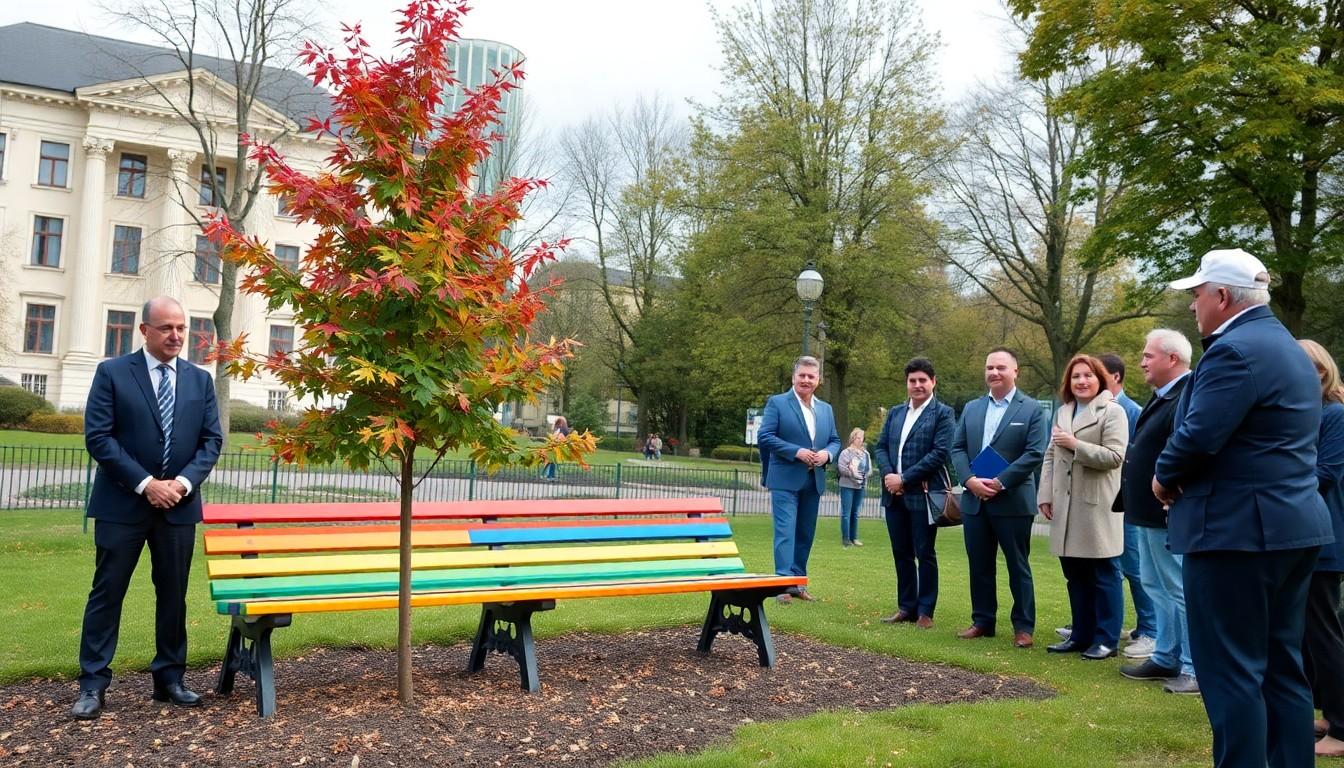
Marking grief with something that grows, Berlin officials and LGBTQ+ community members planted a maple and unveiled a rainbow bench in Tiergarten to honour the woman killed and the dozens injured when a van drove into the Christopher Street Day parade , a visible, resilient tribute where the attack happened.
Essential Takeaways
- Living memorial: A maple tree was planted at the Tiergarten site as a symbol of strength and renewal.
- Rainbow bench: A newly painted bench adds a colourful, public reminder of solidarity and remembrance.
- Casualties: The attack killed one woman and injured around 29 others, shaking Berlin’s Pride event.
- Community-led: Local authorities and LGBTQ+ representatives jointly organised the dedication, stressing dignity at the scene.
- Practical tone: The tribute aims to reclaim public space and offer somewhere quiet to reflect.
Why a tree and a bench? Simple, sensory symbolism
Planting a tree gives the memorial a slow, growing heartbeat , leaves whispering through summers to come. Officials said a new tree would fill the empty space at the attack site and stand for survival and rebirth, a living counterpoint to a violent, sudden act. The bench, striped in rainbow colours, offers an immediate, tactile place for people to sit, talk or pause, its paint and grain a small, human detail amid the park’s green.
How the community came together for the dedication
Local councillors joined LGBTQ+ groups for the ceremony, signalling that remembrance here is public and communal, not private. According to reporting from Berlin outlets, organisers wanted to ensure no gap was left where the attack happened , both to dignify the spot and to reassure residents and visitors. For many in the queer community, the gesture reads as both comfort and defiance: claiming back space used to celebrate identity.
The attack’s aftermath and why symbolic acts matter
After the van drove into the crowd at one of Europe’s largest Pride celebrations, authorities investigated motive and the city grappled with shock. Media coverage noted the scale of injuries and the investigations into intent. Memorials like trees and benches matter because they create everyday reminders in public life; they help a city process loss without walling it off, and they offer a place for ongoing solidarity and dialogue.
What this says about public memory and safety
Painting a bench in rainbow hues is a direct statement , the space remains open, visible and welcoming. Planting a tree, meanwhile, commits the city to maintenance and attention for years, which can be a subtle form of protection and insistence that the community is not transient. Urban planners and activists often point out that active stewardship of memorial sites can deter neglect and help integrate remembrance into everyday routines.
How visitors and locals can respond or get involved
If you visit Tiergarten, take a quiet moment at the bench or stand beneath the new maple’s shade, especially on warm afternoons when the leaves stir. Support local LGBTQ+ organisations offering victim support or community events; small donations or volunteering time can make a difference. For neighbours worried about safety, engage with local councils or community groups to discuss lighting, signage or increased presence during public events.
It's a small, living change that makes every return to the park feel a little more deliberate and a little less empty.
Source Reference Map
Story idea inspired by: [1]
Sources by paragraph: