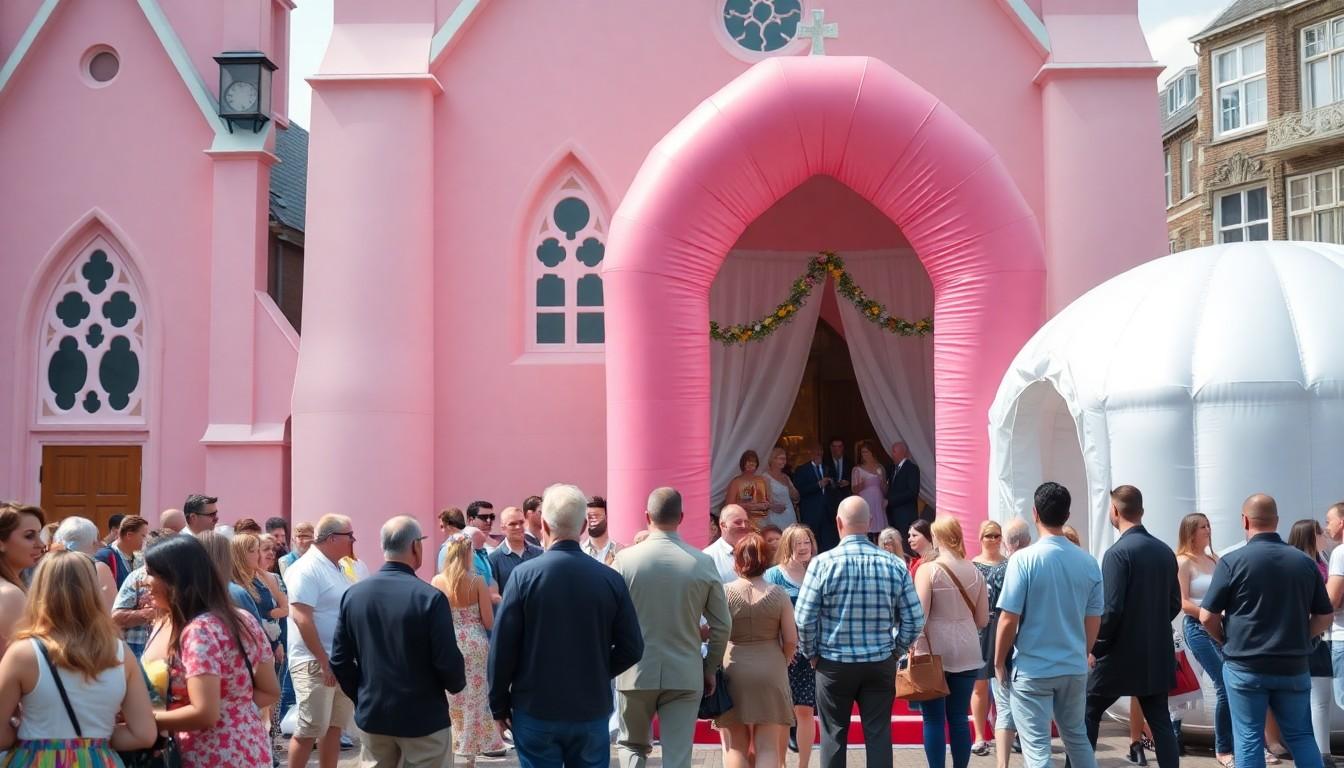
Shoppers and festivalgoers lined Amsterdam’s canal paths as Pride turned nostalgic and playful; dozens queued in a pink inflatable chapel to be “married for a day,” celebrating who gets to say “I do” while the Dutch rethink what marriage means.
Essential Takeaways
- Anniversary moment: The event marked 25 years since the Netherlands legalised same‑sex marriage, a milestone still steeped in emotion.
- Vivid scene: People arrived in rainbow finery, sequins and bold outfits; the ceremony was theatrical, light and affectionate.
- Declining marriage rates: National figures show fewer adults marrying overall, with cohabitation agreements gaining ground , they’re common and legally useful.
- Symbolic, not always permanent: Many participants treat the day as celebration and protest: a reclaiming of rights that remain under pressure globally.
- Practical choice: For couples unsure about formal marriage, a cohabitation contract offers legal clarity without a wedding.
A colourful flash of joy marking a legal milestone
Amsterdam’s Married For A Day was a party with purpose, and you could feel it in the tacky‑glitter air. Dozens queued to tie the knot , metaphorically , inside an inflatable pink chapel as part of Pride’s anniversary events. According to national reporting, this moment connects directly to the Netherlands’ spot in history as the first country to legalise same‑sex marriage 25 years ago. The ceremony was equal parts carnival and commemoration, and the mood was mostly celebratory.
Why people still care about the right to marry
For some newlyweds at the chapel, the right to marry is not simply symbolic. As one participant put it, the ability to marry is a fundamental freedom , something that feels tangible when you stand in front of friends and paradegoers and exchange vows, even for a day. Prime Minister Rob Jetten, who has been visibly part of Pride festivities, has also underlined that marriage and visibility matter, especially as LGBTQ+ rights face challenges in other parts of the world. The ceremony was a reminder that legal recognition still carries weight.
Marriage declining, but legal frameworks evolving
National statistics show a steady fall in the share of married adults over recent decades, down from the mid‑1990s to today. At the same time, Dutch couples increasingly use cohabitation agreements , legal documents many sign when they move in together to arrange finances and property. These contracts are practical: they give certainty without the rituals of a wedding, which helps explain why marriage numbers slip even as relationships remain stable.
What Married For A Day says about modern commitment
The event captures how definitions of partnership are shifting: marriage remains cherished by many, but other options are gaining traction. For some, a one‑day wedding is protest theatre, for others it’s a joyful rehearsal for a future civil marriage, and for others still it’s the best way to mark love in public without changing their legal status. It’s a good reminder that ceremonies are as much about community and recognition as they are about paperwork.
Choosing what’s right for you: ceremony, contract or both?
If you’re weighing your options, think practically: a marriage gives a clear legal status and social recognition; a cohabitation agreement can secure finances and property without a wedding. Couples who want ritual but aren’t ready for legal ties might hold symbolic ceremonies or, like those at the inflatable chapel, celebrate for a day and decide later. And if you care about visibility, joining public events can be both uplifting and politically resonant.
It’s a small change in form, but a big one in meaning , and whether you want sequins, a signature or a signed contract, the point is to pick what makes your relationship stronger.
Source Reference Map
Story idea inspired by: [1]
Sources by paragraph: