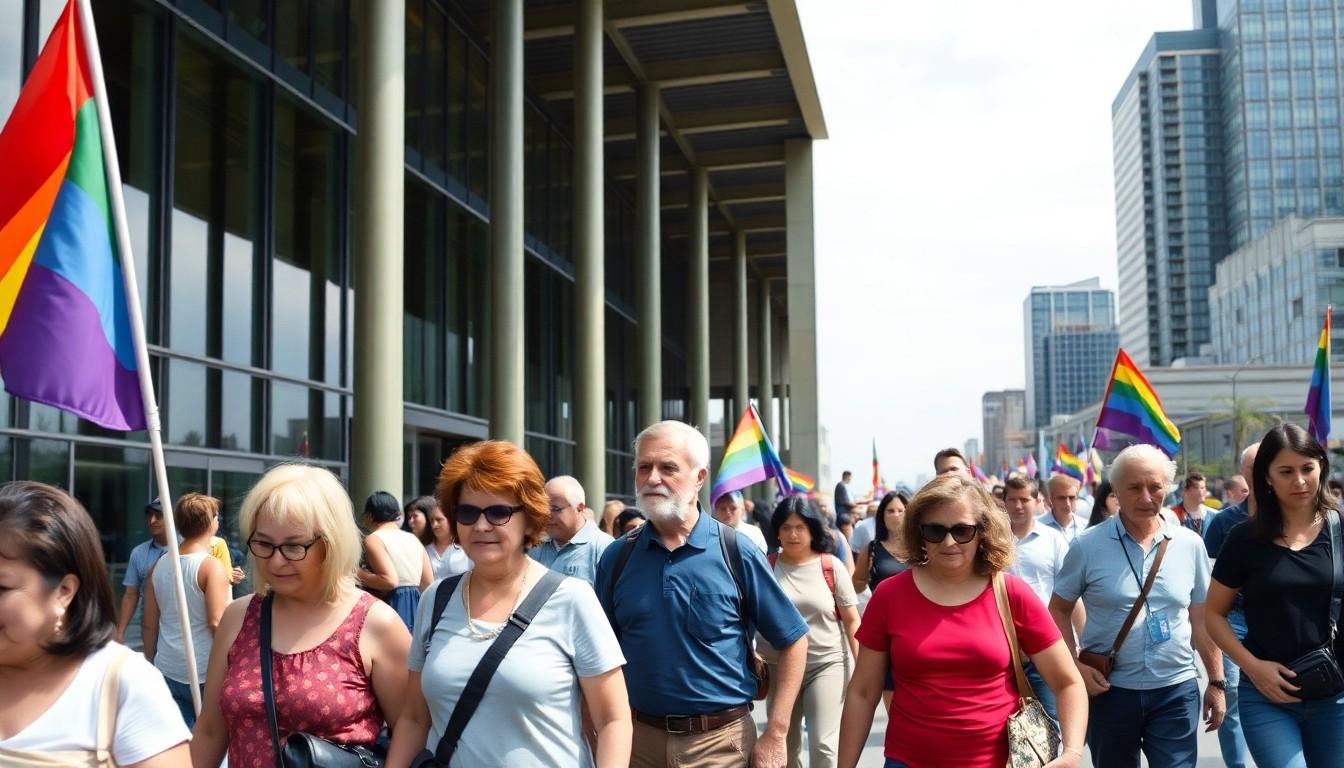
Celebrate, remember, and learn, Heather Jamieson and Christine Allen’s 30-year Toronto Pride story shows who fought for rights, how everyday love carried on despite barriers, and why Pride still matters to people who lived the struggle and the joy. Their journey through commitment ceremonies, parenting hurdles and public celebration maps the wider arc of queer progress in Canada.
Essential Takeaways
- Long partnership: Heather and Christine have been together for three decades, sharing a home, two children and a practice of renewing vows every five years.
- Pre-legal marriage: They held a community-run commitment ceremony in 1998, years before Ontario legally recognised same-sex marriage.
- Parenting challenges: Building a family required a sperm donor, adoptions and carrying paperwork while out in public; both mothers on a birth certificate is now possible.
- Pride’s evolution: They marched in the inaugural Dyke March and have watched Toronto Pride grow from grassroots protest to global festival.
- Continued caution: Despite legal gains, they still gauge public spaces for safety before showing affection, reflecting progress that’s meaningful but incomplete.
A glance that changed everything , meeting before apps
They met on a university campus in Guelph in the mid-1990s, a scene that feels both ordinary and oddly exotic now: two people noticing one another without the help of a dating app, decoding quiet signals in a crowd. The image of Jamieson standing in the rain to greet Allen’s return is cinematic and tactile; you can almost feel the wet jacket and the teddy bear tucked under the shelter. Stories like this remind us how queer people once navigated dating , by sight, community events and sheer nerve.
Back then, community networks mattered in a way algorithms now try to replicate. According to local community histories, spaces like university women’s centres and The 519 were vital meeting places where friendships and romances began. If you’re looking for connection today, the lesson is simple: shared places still create durable bonds, whether that’s a club, a charity event or a volunteer group.
Saying “I do” without legal recognition
They were engaged within months and staged a commitment ceremony in 1998 that looked and felt exactly like a wedding, even if the law didn’t agree. Friends pulled together potluck food, borrowed flowers and an Anglican priest led vows written by the couple themselves , proof that community can make rituals real when statutes lag behind.
Canada’s road to marriage equality shifted rapidly in the early 2000s, and Ontario recognised same-sex marriage in 2003, but millions of queer lives were already lived with the chosen-language of marriage long before courts caught up. The couple’s story underscores a broader truth reported in retrospective coverage: legal change followed years of ordinary commitments, public protest and grassroots organisation. If you’re celebrating anniversaries this summer, remember many ceremonies once carried far more risk than cake-cutting.
Two mums, lots of paperwork , parenting before the system adapted
Becoming parents was expensive, complicated and emotionally gruelling for Heather and Christine. Fertility services were limited, they relied on a generous friend as a donor, and Jamieson later had to adopt to secure legal parity for both mothers. For years they travelled with adoption documents in their bag in case anyone questioned who their children belonged to.
Today, younger queer couples often have access to fertility clinics, donor registries and automatic parental recognition, and that’s no small thing. Public policy shifts have made family-building more dignified, but these improvements are recent and rooted in decades of advocacy. If you’re planning to start a family, check local fertility clinics and legal frameworks early , the paperwork and timelines still matter.
Pride through their eyes , from Dyke March to global celebration
The couple marched in the first Dyke March in Toronto, an event designed to centre lesbian visibility within Pride celebrations. For them it was affirming and transformative; for many it remains a political act as much as a party. Over 30 years they’ve watched Toronto Pride balloon into one of the world’s largest festivals, changing in scale and tone but still anchored in memory and resistance.
Organisers and community centres have historically shaped this growth, creating safer spaces when few existed. As festivals grow, there’s a living debate about what Pride should prioritise , visibility, protest, corporate sponsorship or grassroots needs. For veterans like Heather and Christine, Pride is still about people, rituals and remembering those small acts that made survival and joy possible.
Progress isn’t tidy , victories and daily choices
Legal victories matter; they granted rights, protections and recognition the couple once lacked. But Heather and Christine’s habit of scanning a room before holding hands shows how social change runs slower than statutes. Slurs from strangers and the instinct to assess safety are part of their lived archive, and they’re a reminder that acceptance can be both legal and fragile.
That duality matters for allies and policymakers alike. Celebrate legislation, but support community services and local groups that help people feel safe every day. And if you’re part of a younger generation that takes these rights for granted, listening to stories like this offers perspective on how ordinary devotion helped build extraordinary change.
Closing line
It’s a small change that can make every vow and every public kiss feel safer: remember the people who lived the struggle and keep building the spaces they made.
Source Reference Map
Story idea inspired by: [1]
Sources by paragraph: