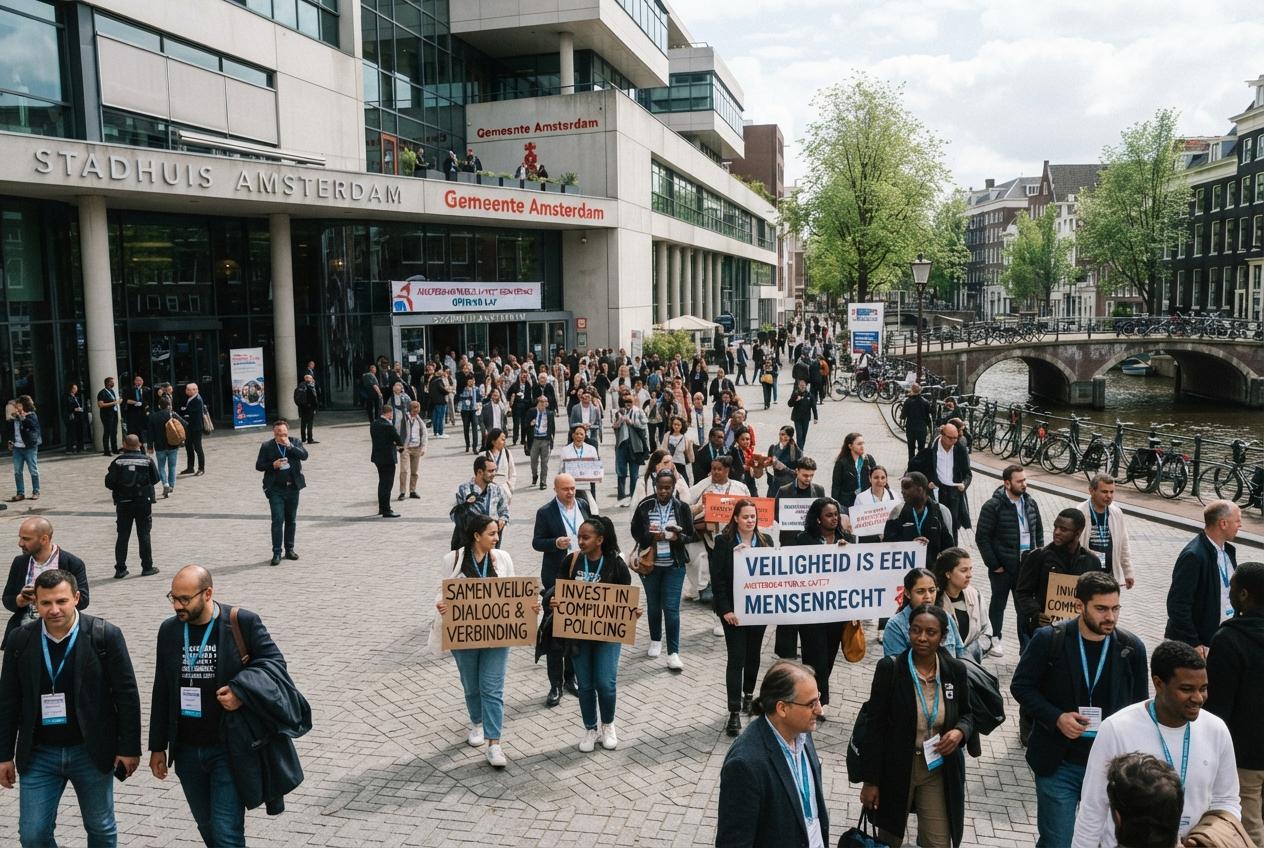
Shoppers, visitors and Pride-goers are watching as Amsterdam prepares for WorldPride 2026; organisers and city leaders are beefing up security, building reporting networks and pushing new anti-hate funding after recent attacks, because safety matters as much as celebration.
Essential Takeaways
- High-level warnings: Prime Minister Rob Jetten and Amsterdam Mayor Femke Halsema publicly warned of rising anti-LGBTQ hate at the Human Rights Conference ahead of WorldPride.
- Enhanced security: The city is increasing visible protection and broadening reporting points for anti-LGBTQIA violence, with extra measures after the Berlin attack.
- Funding commitment: The Dutch cabinet plans to spend €7.5 million over three years on queer community safety, plus local training for handling online hate.
- Online threat focus: Officials single out online hate and disinformation as major risks that spread faster than grassroots outreach.
- On-the-ground tension: Pro-Palestine demonstrations briefly disrupted speeches, showing the event will be politically charged as well as celebratory.
Why leaders raised the alarm , and what it feels like in the room
When the Human Rights Conference opened, the tone was sober and a little taut; you could almost feel the organisers’ relief when applause drowned out protesters. According to local reporting, Prime Minister Rob Jetten and Mayor Femke Halsema both referenced the deadly Berlin attack as a wake-up call. That concrete, fearful detail made the risk feel immediate rather than abstract. For visitors, the takeaway is simple: the party will be joyous, but guarded.
Officials are framing their warnings around a twofold threat: organised extremist groups and a polluted online information space. Jetten described well-funded networks that hide behind free speech claims to spread division, and Halsema stressed that rainbow groups are often the first victims when intolerance rises. So while the atmosphere aims to stay festive, the messaging is clear , stay alert and follow safety guidance.
What Amsterdam is actually doing to keep people safe
City authorities have widened the number of reporting points for anti-LGBTQIA violence and are adding extra visible security at key events. Local updates show police and stewards will be more present, and organisers have fast-tracked channels where victims or witnesses can report incidents. Those practical steps make a real difference: visible staff and simple reporting routes reduce fear and let concerns be handled quickly.
On the policy side, the national government earmarked €7.5 million to bolster queer safety over the next three years, and has pledged a "dialogue on online discrimination" with training for municipalities. That funding and capacity-building should help cities react faster to threats, while educational programmes aim to lessen the long-term harm of disinformation.
Online hate: the invisible front you need to know about
Officials named online hate as one of the biggest threats to the LGBTQ community, and for good reason , harmful narratives and targeted harassment can reach millions faster than NGOs can respond. Jetten warned that disinformation often outpaces outreach from youth workers or charities, which is why the cabinet wants structured conversations and training this year.
For visitors and community groups, the practical tip is to document abuse, use trusted moderation tools on social channels and link up with established reporting hubs. Municipal workshops planned this year will advise local teams on how to flag coordinated campaigns and protect vulnerable participants.
Protests, politics and Pride: how tensions may play out
Even before speeches began, pro-Palestine demonstrators interrupted Jetten with chants and accusations about Israel policy, and the prime minister addressed them directly. That moment underlines that WorldPride will carry political layers alongside celebration; it won’t be insulated from global flashpoints.
Organisers are walking a careful line: protect freedom of expression while preventing intimidation and violence. If you’re attending, expect peaceful protests nearby and follow steward instructions , avoiding escalation keeps everyone safer and the event on course.
Practical tips for visitors: stay safe, enjoy Pride
Plan your routes and know where reporting points are; keep emergency numbers and the Pride app handy. Travel light and consider meeting points with friends in case crowds get thick. If you see or experience harassment, report it promptly and, if safe, gather evidence for authorities. Finally, trust your instincts , if a place feels unsafe, move to a well-staffed area.
It’s a small change that can make every celebration a little safer.
Source Reference Map
Story idea inspired by: [1]
Sources by paragraph: