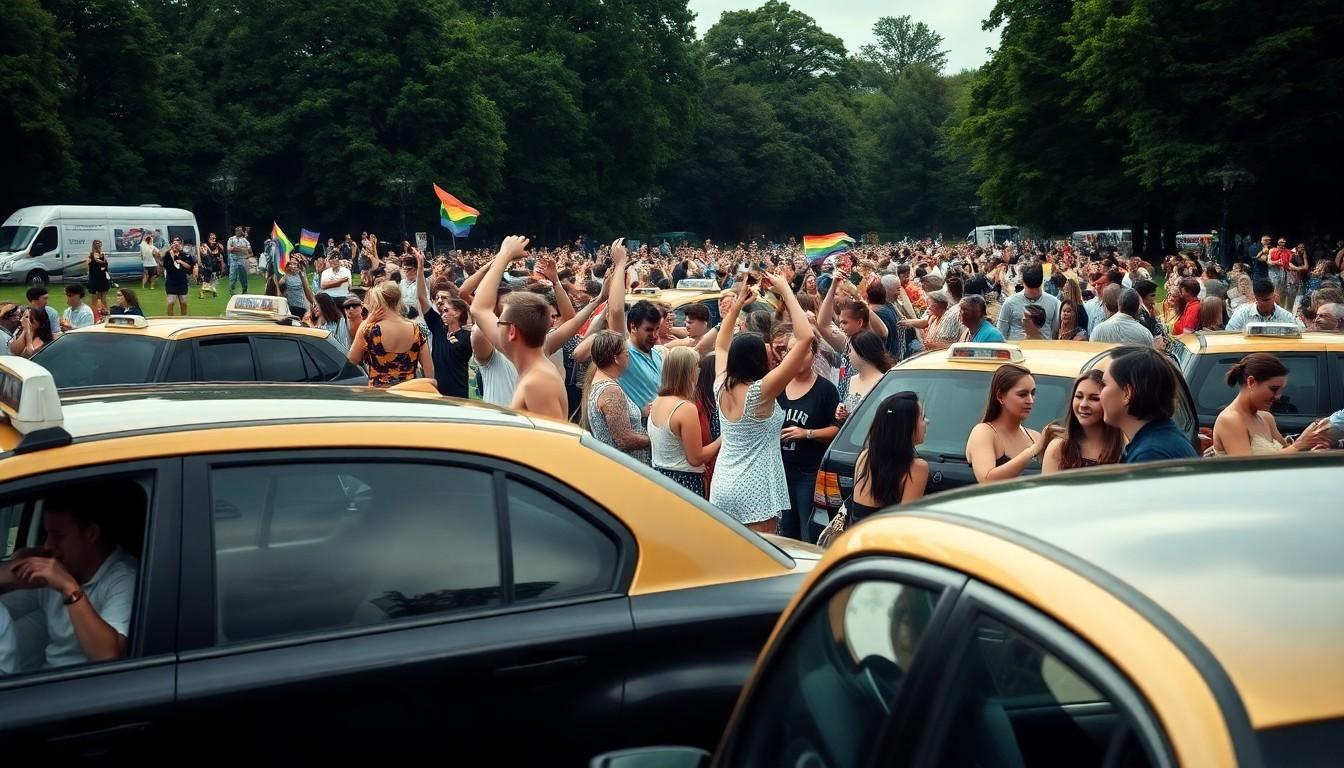
Shoppers are turning up the volume on Pride coverage after Moonchild Sanelly lit up Brighton Pride, calling Preston Park a “holy Mecca” and praising the UK’s big, expressive celebrations , a contrast she says South Africa still hasn’t quite reached. Fans loved the energy, the cross-generational joy and the feeling of freedom.
Essential Takeaways
- Electric opener: Moonchild Sanelly opened Brighton Pride with a high-energy set that had crowds dancing full-body across Preston Park.
- Cultural contrast: She told the Daily Star the scale and freedom of UK Pride is something she wishes to see more of back home in South Africa.
- Personal stakes: The artist spoke about safety and everyday realities for queer people, noting legal gains in South Africa but persistent social challenges.
- Crowd reaction: Her performance brought out party instincts across generations , from grandparents to children , and prompted boisterous, liberating movement.
- Vibe details: Expect bold visuals, teal-blue hair, self-designed outfits and a no-holds-barred stage presence that encourages everyone to “shake ass.”
Moonchild’s set: what made it feel like a “holy Mecca”
She didn’t just sing , she transformed a field into a sweaty, joyful dancefloor. The moment description that keeps coming back is pure kinetic: people letting go, hands up, bodies moving in that Brighton way. According to the Daily Star, Moonchild immediately called the scene a “holy Mecca,” and you can hear why , the sound, the colour and the sheer scale make Pride feel epic rather than intimate.
That scale is important. Brighton Pride is known for its parade, the festival site in Preston Park and headline acts that pull big crowds. When artists like Moonchild harness that scale, it amplifies the sense of safety and release that makes Pride more than a party , it becomes communal catharsis.
Why she contrasts the UK with South Africa
Moonchild is openly bisexual and has been candid about queer life and body positivity in her music. She told the Daily Star the UK’s Pride events feel bigger and more expressive than many events she plays in South Africa, where celebrations can be venue-based and smaller in scale.
She also flagged a sobering reality: South Africa has progressive LGBTQIA+ laws on paper, from constitutional protections to same-sex marriage, yet many queer people still face stigma and violence. Her comments are a reminder that legal change isn’t the same as everyday safety or cultural acceptance.
The performance that made everyone dance , even the “quiet ones”
What delighted Moonchild most was coaxing the shyest people into movement. She laughed about turning reserved festival-goers into full-party versions of themselves, watching grandmothers and grandchildren all caught up in the same spontaneous joy.
That cross-generational energy is a hallmark of Brighton Pride, which mixes family-friendly zones with pumped-up headline slots. For artists it’s a rare chance to see different audiences collide in one shared experience, and for fans it’s an invitation to release whatever’s been held back.
Safety, progress and why the conversation matters
Her backstage comments also touched on safety in everyday life , for instance, the small, cautionary customs people adopt in taxis or public spaces. This matters because it shows how Pride’s freedom can be both celebratory and aspirational: a vision of how public life could feel when fear is reduced.
Observers and activists often point out the gap between legal frameworks and lived experience. Moonchild’s take echoes reporting from rights groups and journalists who note that victory speeches and statutes don’t always erase stigma, and that visible, large-scale Pride can be a form of social proof for inclusion.
What this means for future Prides and artists
Performers bringing that “holy Mecca” energy help set a template for future line-ups: big, bold, inclusive and unashamedly fun. As Brighton continues to attract headline acts and national attention, smaller cities and nations watch and sometimes emulate the scale and pageantry.
For artists from countries where Pride looks different, these stages offer a platform to compare notes, push boundaries and imagine what homegrown events might become. Moonchild’s wish to export a bit of the UK’s scale is part performance review and part cultural hope.
It's a small change that can make every Pride feel a little more open and a lot more electric.
Source Reference Map
Story idea inspired by: [1]
Sources by paragraph: