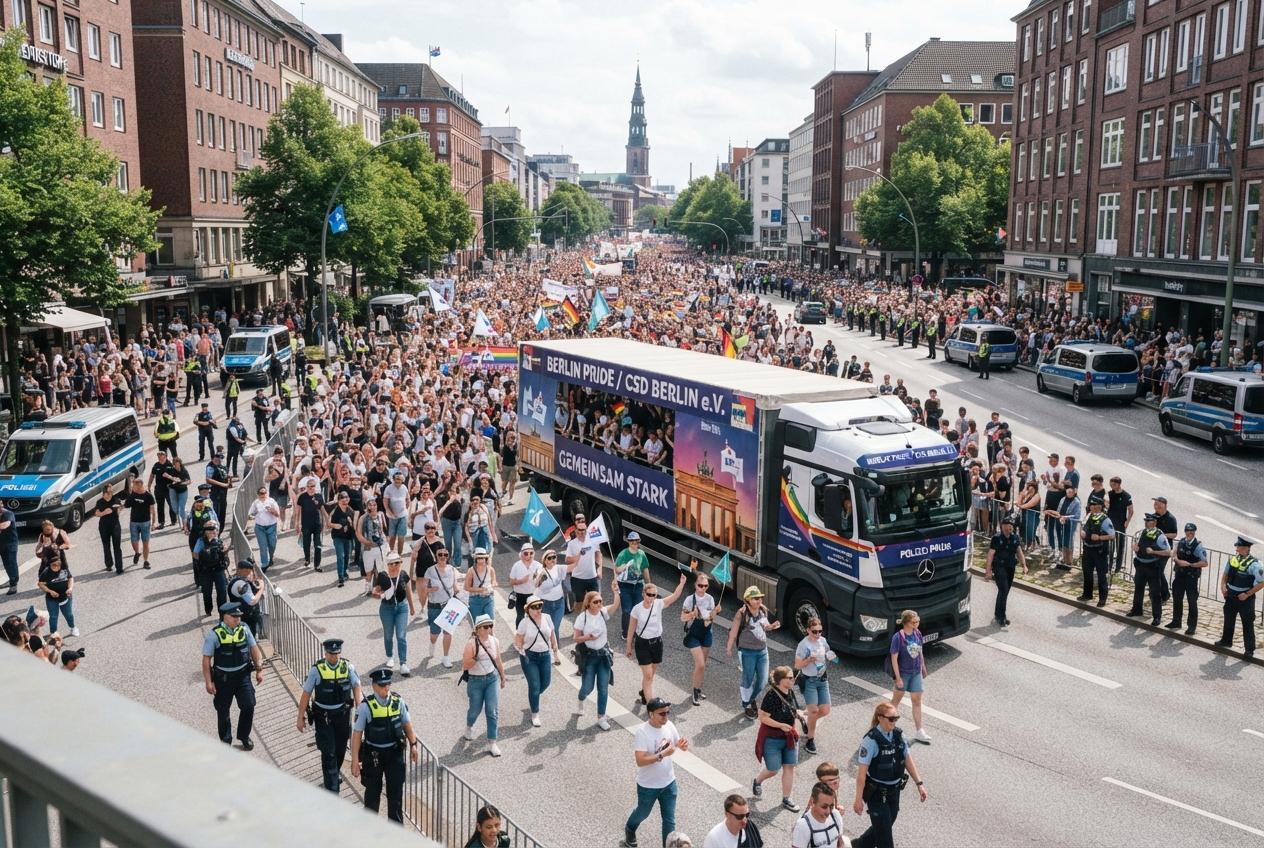
Shoppers, residents and tourists poured into Hamburg this weekend as one of Germany’s biggest Pride parades marched with extra security, drawing around 300,000 people , a show of solidarity and defiance after last week’s deadly attack near Berlin Pride. Here’s what happened, why it matters, and what to watch next.
Essential Takeaways
- Huge turnout: Organisers and police put the crowd at roughly 300,000, up from about 260,000 last year, signalling broad public support.
- Tighter security: Authorities said they deployed about twice as many officers as in 2025, and visible barriers and checks were in place.
- Respectful tone: A Berlin CSD truck joined the procession and participants wore dark clothing as a mark of mourning and solidarity.
- Motto and mood: The parade carried the slogan “Queer in solidarity. Take a stand , for a future without fear,” mixing grief with celebration.
- Context of violence: The increased security came after a van and machete attack near Berlin’s Pride closing event left one woman dead and many injured.
A show of solidarity on Hamburg’s waterfront
Hamburg’s Pride snaked through the port city with the usual splash of colour but also a quiet undercurrent of grief. The crowd felt big and buoyant, yet you could tell people were holding something back; there was a low, respectful energy as well as the usual laughter and music.
Organisers added a Berlin CSD truck late in the line-up and asked riders to wear dark clothes , a simple, visual gesture that anchored the event in both mourning and mutual support. According to reports, attendees repeatedly mentioned that they were “bringing pride out onto the streets” while carrying grief in their hearts.
Why security was stepped up , and what that looked like
Police in Hamburg said they doubled their officer numbers from last year, and the city put in more checkpoints, visible patrols and barriers around key sections of the route. It felt more controlled than a typical Pride, but not militarised , more like a carefully managed public festival than a parade under siege.
This response followed a lethal assault at Berlin’s CSD closing party, when a vehicle ploughed into a crowd and an attacker used a machete. Authorities in Germany quickly framed the incident as an act of terror and tightened protections around public events. For festival-goers, the extra checks were a trade-off many were willing to accept for peace of mind.
The wider political fallout and legal debate
Berlin’s attack has pushed legislators and security officials into action. Politicians signalled moves to tighten extremism laws and boost resources for counterterrorism, arguing the measures are necessary to prevent copycat attacks and protect vulnerable communities.
Opponents warn against measures that could stoke fear or unfairly profile groups, and activists are pressing for balanced steps that protect public safety without eroding civil liberties. Expect debates on surveillance, border controls and radicalisation prevention to intensify in the coming months.
How communities are coping , grief, resolve and practical steps
People at the parade mixed mourning with celebration , a natural human reaction. Speakers and local officials urged calm but insisted Pride must go on, both as resistance and as healing. Hamburg’s deputy mayor explicitly framed attendance as a civic act of courage and solidarity.
Practical advice from organisers included arriving early, following stewards’ directions, and keeping an eye on children in denser sections. If you’re planning to join a big public event now, consider travel plans that avoid late-night closures, carry ID, and set a reunion point in case you get separated.
What this means for Pride festivals across Europe
Hamburg’s turnout suggests that attacks might change how Pride looks, but not whether it happens. Cities across Europe are likely to boost security at large gatherings, and organisers will keep finding ways to combine remembrance with celebration.
For attendees, the lesson is simple: resilience matters. People came to sing, march and grieve together, and that collective choice sends a clear message that public spaces will remain places for joy and protest alike.
It's a small change that can make every march a bit safer and every celebration more meaningful.
Source Reference Map
Story idea inspired by: [1]
Sources by paragraph: