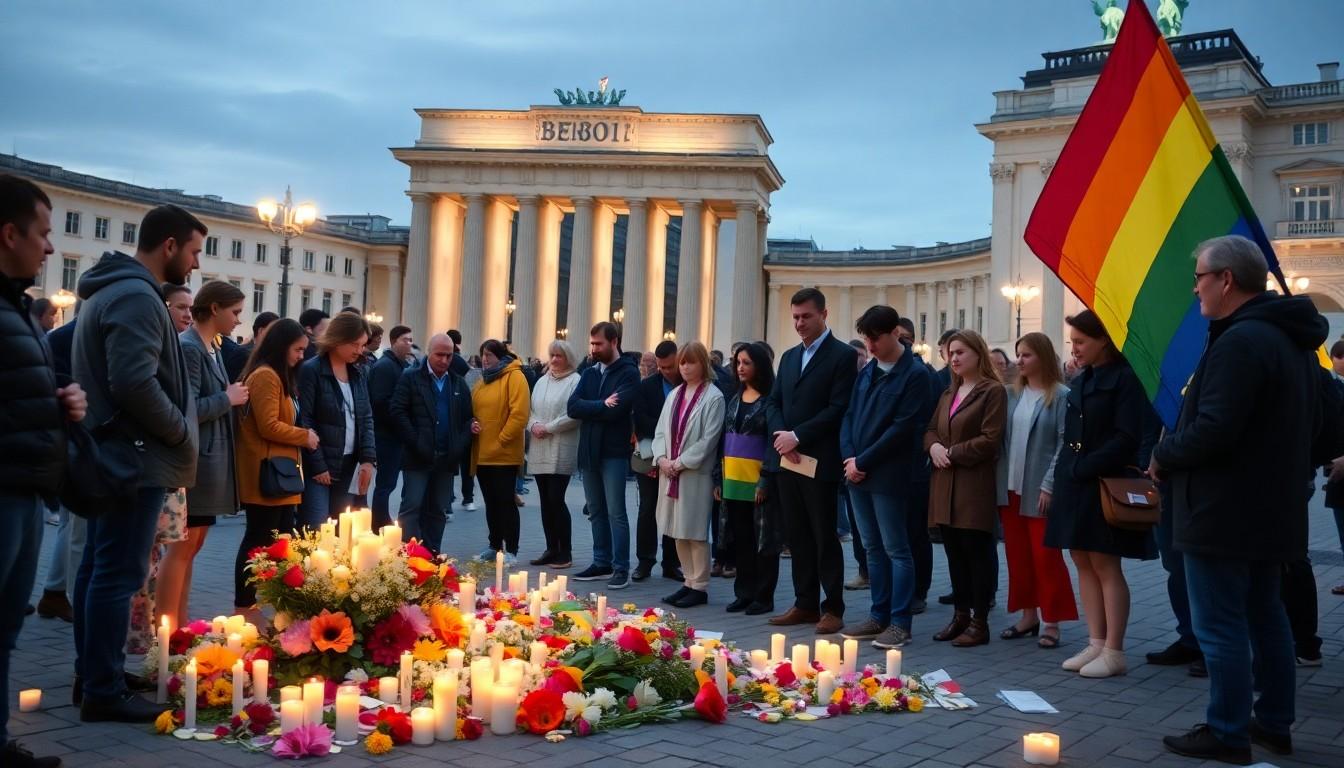
Watchers keep coming to the Brandenburger Tor: candles, flowers and chalked messages mark grief and defiance after the Islamist attack at the Christopher Street Day. Berliners, queer groups and civic leaders are choosing remembrance, solidarity and practical safety measures , and the city is quietly reshaping how it mourns and moves on.
- Visible memorials: Candles, bouquets and handwritten rainbow notes remain at Pariser Platz and in the Tiergarten, creating a quiet, tactile place to grieve and reflect.
- Community vigils: Queer groups and civic organisations are holding regular gatherings and a planned vigil at the attack site to show solidarity and support.
- Public emotions: Officials and speakers describe a mix of sorrow, anger and resolve; many say grief looks different for everyone and needs space.
- Everyday caution: Several public figures admit they now alter simple behaviours , holding hands or visiting crowded festivals , underlining a new, uneasy normal.
- Practical responses: Authorities and communities are discussing security measures at public events while emphasising that queer life must not be driven indoors.
A quiet shrine at the Brandenburger Tor , grief you can touch
The image of candles flickering against the cold stone of the Pariser Platz is simple and stubbornly human. People keep leaving handwritten notes with messages like “we stay colourful” and vows to carry on loving openly. According to reporting in Germany, the memorials have become a focal point where personal sadness meets public attention. For many, these physical tokens make grief visible and shared, and they offer a place to stop and breathe.
Communities often turn to ritual after a shock, and this has been no different in Berlin. The steady stream of visitors shows that remembrance isn’t a one-day act. If you want to pay respects, bring a small, weatherproof note or a single flower; it’s a gesture that helps others feel less alone.
Vigils and speeches: turning sorrow into solidarity
Local queer organisations have organised vigils at the site of the attack, and leaders onstage have been clear: mourning and resistance can sit together. Speakers have reminded crowds that grief wears many faces , some cry, others shout, some simply hold each other. Public figures have echoed those nuances, urging respect for different ways of coping.
This blend of solemnity and defiance is important. Solidarity events provide practical support , information for victims, contacts for counselling, and a visible reminder that the community stands together. If you’re attending, consider offering practical help: signpost resources, volunteer for a helpline or simply stay and listen.
Safety in public life: small changes, big emotional weight
A surprising and sobering detail: some politicians and public figures admit they now habitually scan the surroundings before public displays of affection, or avoid crowded fêtes as visibly identifiable couples. That admission came up in public commentary and personal essays, reflecting how the attack has changed day-to-day decisions for many queer people and allies.
That shift matters because it’s about freedom of movement and feeling safe. Authorities are under pressure to balance visible security measures at events with the need to preserve open, joyful public spaces. When choosing events, look for organisers who publish clear safety plans and support services , that can make a real difference to whether people feel able to attend.
Officials, activists and the wider conversation
City politicians and queer representatives have repeatedly emphasised that terror aims to sow fear and division. Their message has been consistent: don’t let attackers reclaim public life. Public discussions have also raised broader questions about prevention, policing and community resilience , from better intelligence-sharing to increased support for grassroots LGBTQ+ groups.
For readers wondering how to help: donate to vetted victim support funds, volunteer with local queer networks, or simply amplify messages of inclusion. Small, practical acts strengthen the social fabric just as effectively as larger policy changes.
What comes next: memorials, justice and everyday bravery
Berlin’s response mixes ceremony with concrete help: ongoing vigils, offers of counselling to survivors, and a public conversation about how to keep festivals safe without turning them into fortresses. News outlets and human-rights groups continue to follow investigations, and city leaders have promised reviews of security at large gatherings.
It’s a slow, sometimes awkward recovery. But watching strangers leave flowers and neighbours hold vigils is a reminder that civic life can be repaired, not by ignoring fear but by meeting it together.
It's a small change that can make every public moment feel a little safer and more meaningful.
Source Reference Map
Story idea inspired by: [1]
Sources by paragraph: