Shoppers and drivers in Lima, Ohio, have noticed a billboard stirring strong reactions , and locals and groups are fighting back with counter-messages that matter. This story looks at who put up the sign, why it prompted rapid pushback, and how community-led billboard campaigns are turning hostility into visible support.
Essential Takeaways
- Controversial message: A billboard in Lima reads a statement denying that children can have two same-sex parents, prompting statewide criticism and concern.
- Sponsored by national group: The sign is part of a campaign by Them Before Us, an organisation opposing marriage equality and promoting traditional parenthood.
- Local backlash: Ohio LGBTQ groups and allies quickly mobilised fundraising and launched counter-billboards with affirming messages and Pride imagery.
- Visible reassurance: Organisers say counter-ads aim to reassure LGBTQ kids and families who might see hostile messages in public spaces.
- Fast mobilisation: Grassroots groups raised notable funds within days, showing how quickly communities can respond to targeted messaging.
Why one billboard landed like a provocation
A stark black-and-white photo and rainbow-coloured text made the Lima billboard hard to miss, and it landed like a provocation in a city that has an active LGBTQ community. The sign’s blunt claim about parentage touched a raw nerve , parents and advocates described it as hurtful and unnecessary, not debate. Local reaction mixed anger with worry for children who might see the message and feel singled out or confused.
The billboard was funded by a national group that argues for reversing marriage equality, and that framing matters because it signals this isn’t just local opinion but part of a broader strategy. According to reporting, the organisation’s rhetoric often questions the legitimacy of same-sex parenting and links parenting to narrow biological definitions. For many viewers, that felt less like civic discussion and more like an attack on families.
Who’s behind the sign , and what they say
Them Before Us, which has pushed campaigns questioning same-sex parenting, is the organisation identified with the billboard campaign. The group argues, publicly, that marriage is primarily about procreation and that children fare best with opposite-sex biological parents. Its leaders say billboards are meant to spark conversation and “de-normalise” family forms they oppose.
Critics point out how that rhetoric can read as accusatory and demeaning toward adoptive, blended, and LGBTQ-headed households. Local candidates and advocates described the billboard’s timing , amid election season , as intentionally provocative, and emphasised that public spaces should not be tools for spreading messages that isolate residents.
How local groups answered , from fundraising to friendly signs
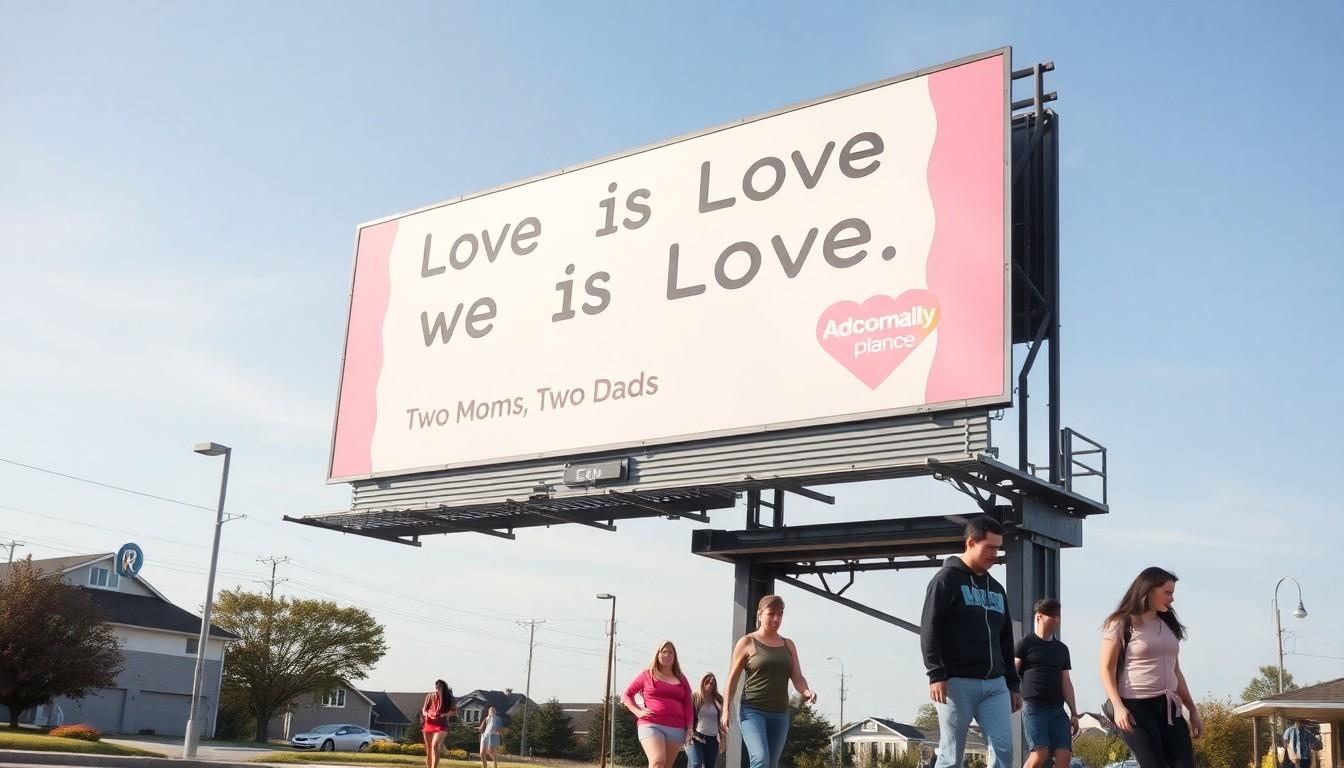
Instead of letting the message stand uncontested, Dayton-based Have a Gay Day and other grassroots organisations moved fast to buy their own billboards. One counter-design mirrors the original’s typography while flipping the sentiment: “Many children have two dads. Many children have two moms.” Another version uses a Progress Pride flag background and the simple reassurance, “You Are Loved.”
Organisers report quick fundraising success, with thousands raised in a short span, showing how visible backlash can translate into practical responses. The goal isn’t just to argue back; it’s to make sure kids and families who drive past the original sign also see affirming messages that counteract isolation or shame.
What this means for children, families and public debate
Public messaging like billboards reaches everyone, including kids who aren’t equipped to process political nuance. Advocates warned that hostile signs can lead to questions at home or school that are difficult for some children to handle, and that’s part of why rapid, affirming counter-adverts matter. They send a clear emotional cue: you’re seen and you’re welcome.
At the same time, this episode speaks to a larger trend of national groups using local media to test messages and sway public opinion. Community responses suggest that local organisers can, and often will, meet that challenge with visible, funded reassurance , a pattern that will be important to watch in other towns.
Tips if you see a hostile message in your town
If a billboard or ad in your area feels targeted or hateful, consider these steps: document it with a photo, check who paid for the ad via local media or billboard company records, connect with local LGBTQ or ally groups to pool resources, and, if you’re moved to act, donate to or help fundraise for counter-messaging that reassures vulnerable residents. A friendly, visible sign can blunt the harm and remind people they’re not alone.
It's a small contest of visibility, but one that can make every public message a little kinder.
Source Reference Map
Story idea inspired by: [1]
Sources by paragraph: