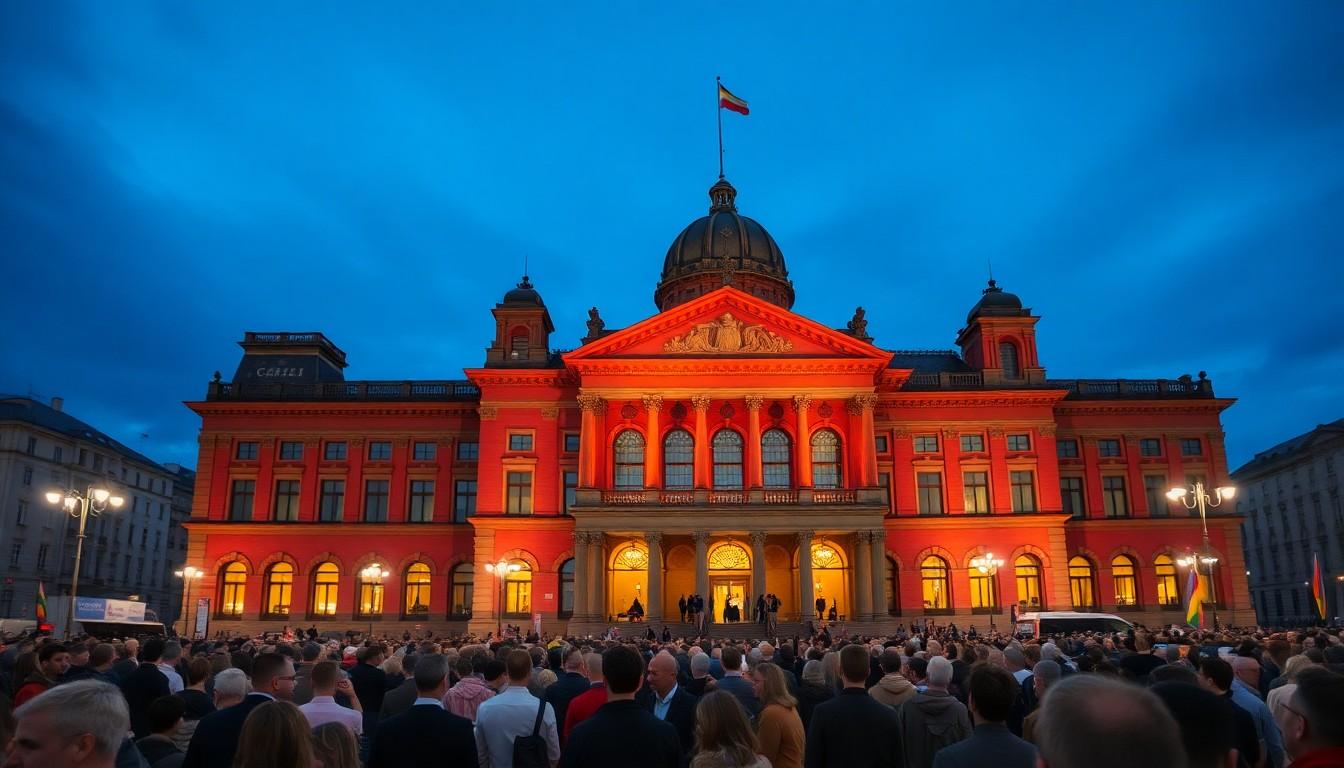
Remembering together: communities across Berlin and beyond held vigils and protests at the Tiergarten, the Rotes Rathaus and in Oranienburg after the attack at the Christopher Street Day, as organisers and officials called for solidarity, legal protections and practical support for victims.
Essential Takeaways
- Large turnout: Organisers said up to 4,000 people gathered at the Ahornsteig in the Tiergarten; police estimated around 1,000, with further crowds by the Rotes Rathaus.
- Community-led focus: Event organisers prioritised giving the queer community the platform, limiting political speeches while public figures attended.
- Calls for legal change: Campaigners urged explicit protection for queer people in Article 3 of the Basic Law.
- Immediate support offered: The federal victims’ commissioner announced quick financial aid of €3,000–€5,000 per victim initially, with further possible compensation later.
- Wide solidarity: Smaller vigils, including in Oranienburg, underlined nationwide support and a shared refusal to be intimidated.
A quiet, powerful vigil at the Tiergarten , people came to feel and to act
The evening at the Ahornsteig felt hushed and raw, a mix of candles, flowers and whispered names. According to organisers, thousands gathered where the attack happened, though police put numbers lower; either way, the turnout made a clear public statement. The event was called by the Verband Queere Vielfalt Berlin-Brandenburg and the national LSVD, who wanted the space to belong to survivors and the queer community rather than to politicians. If you were there, you’d have noticed the determined calm , grief with a backbone.
This kind of grassroots-led memorial matters because it centres the people most affected and resists the quick politicisation that can follow such tragedies. Organisers and participants repeatedly warned against using the attack to stoke hatred against Muslim people or those with particular origins, while also naming the attacker’s likely Islamist motives. It’s a delicate balance: to call out the ideology behind an act without letting it justify prejudice against whole communities.
Why organisers limited political speeches , and why leaders still attended
Event planners deliberately cut down formal political addresses so that survivors and activists could lead the narrative. Yet Berlin’s mayor and senior senators were present, signalling official recognition without dominating the stage. That split approach helps maintain focus on victims while ensuring authorities can be held to account.
Speakers from community groups urged policy change instead of rhetoric. One prominent ask was to amend Article 3 of the Basic Law to explicitly protect queer people , a concrete legal demand that turns mourning into action. For anyone organising or joining vigils, think about what tangible outcomes you want: legal reform, better protection at public events, more funding for survivor services.
Practical support for victims , the immediate money and what it means
The federal victims’ commissioner announced a staged financial package, starting at €3,000–€5,000 for those affected, with further compensation possible later depending on injury severity. That kind of quick cash can help with immediate needs , hospital costs, travel, or replacing lost income , and it signals a state commitment to care for victims of terror.
But money alone won’t fix trauma. Officials also asked witnesses and helpers who feel overwhelmed to seek psychological support via central help points. If you or someone you know was there, try to accept offers of practical help and give grief time; clinicians say early support reduces long-term impact.
From Tiergarten to Oranienburg , solidarity beyond the capital
Smaller gatherings in places like Oranienburg, where about 80 people met on the Schlossplatz, showed the ripple effect of the attack and the solidarity it provoked. Local leaders spoke of standing tall, and those quiet meetings matter because they knit national support into local communities.
Across these actions you see a familiar pattern: public mourning at the scene, political attention at civic sites like the Rotes Rathaus, and quiet local actions elsewhere. If you want to support such efforts, look for local groups offering practical volunteering or donations to verified survivor funds rather than amplifying unverified social posts.
What next , protections, prosecutions and the longer conversation
Police investigations and legal proceedings will follow, and security at large public events is already under scrutiny. Campaigners pressing for constitutional recognition of queer protections hope the public response turns into policy change. Meanwhile, officials have also emphasised not letting the attack be used as fodder for xenophobia.
There’s a human side to the aftermath that statistics don’t capture: neighbours helping neighbours, friends hosting each other, and volunteers offering rides or childcare so those affected can attend hearings or therapy. Those small acts add up into a practical, public kind of resilience.
It's a small change that can make every march, party and vigil safer , and that’s the point of gathering: to turn mourning into measures that protect life and dignity.
Source Reference Map
Story idea inspired by: [1]
Sources by paragraph: