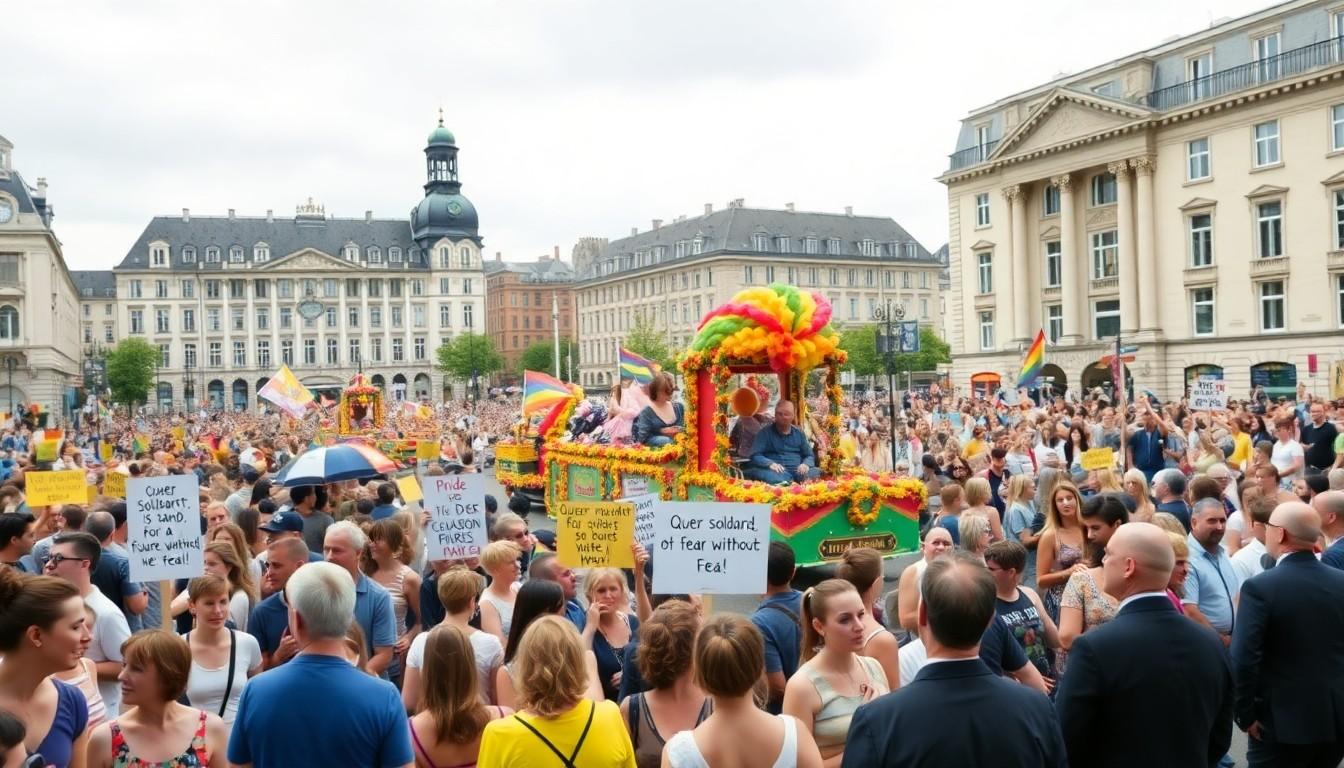
Shoppers, students and families turned out in force as Hamburg staged a loud, proud Christopher Street Day , a buoyant mix of celebration and defiance one week after the deadly Berlin attack, and a reminder that queer communities and allies across Europe are choosing visibility over fear.
Essential Takeaways
- Mass turnout: Organisers expected around 250,000 people to take part in Hamburg’s Pride, with 60 colourful floats and wide civic participation.
- Heightened security: Hamburg police doubled officer numbers and reworked security plans following the Berlin incident, creating a more visible but calm presence.
- Solidarity gestures: A tribute float from Berlin’s CSD association and participants in dark clothing honoured victims and underlined cross-city support.
- Public mood: Many attendees blended festivity with a sober tone , celebrating diversity while signalling resilience and the demand for safety.
A loud, colourful response after a tragedy
Hamburg’s parade mixed confetti and sombre moments, with a sensory contrast that was hard to miss , music and cheers alongside quiet tributes. According to coverage, tens of thousands marched through the city centre under the banner “Queer solidarity. Take a stand - for a future without fear!”, showing how festival energy can coexist with grief and resolve. The scene felt both joyful and determined, a public answer to violence.
Security dialled up, but the party went on
Local police doubled staff compared with last year after reviewing plans prompted by the Berlin attack. That visible presence aimed to reassure rather than intimidate, and organisers worked with authorities to balance safety with the communal spirit. If you’re planning to attend future CSD events, expect more checkpoints and clear stewarding , it’s a small trade-off for peace of mind.
Berlin’s pain, Hamburg’s solidarity
A Berlin CSD float travelled to Hamburg in tribute, with participants wearing dark clothing to honour victims and show cross-city solidarity. Christopher Street Day traces back to Stonewall in 1969 and these gestures connect modern European Pride to a long civil-rights geography. Seeing neighbouring cities support one another felt like a real-time lesson in collective care.
Politicians, drag stars and everyday allies on the route
Local figures turned up in force: Olivia Jones, a household name in Hamburg’s drag scene, mixed levity with leadership, while centre-left politicians used the platform to urge broader political backing for LGBT+ rights. SPD parliamentary leader Matthias Miersch publicly suggested that a chancellor’s attendance would send a strong message, underlining how Pride doubles as visibility for policy as well as party.
What the public mood says about safety and solidarity
Polls in the wake of the Berlin attack showed many Germans felt shaken about public safety, yet the turnout in Hamburg suggested people didn’t want fear to dictate daily life. Pride events in other cities , Bonn, Amsterdam and Brighton among them , also carried similar tones of resilience. If you’re watching the calendar, look for events that mix celebration with clear security notices; organisers are increasingly transparent about measures.
It's a small change that can make every march safer and every message louder.
Source Reference Map
Story idea inspired by: [1]
Sources by paragraph: