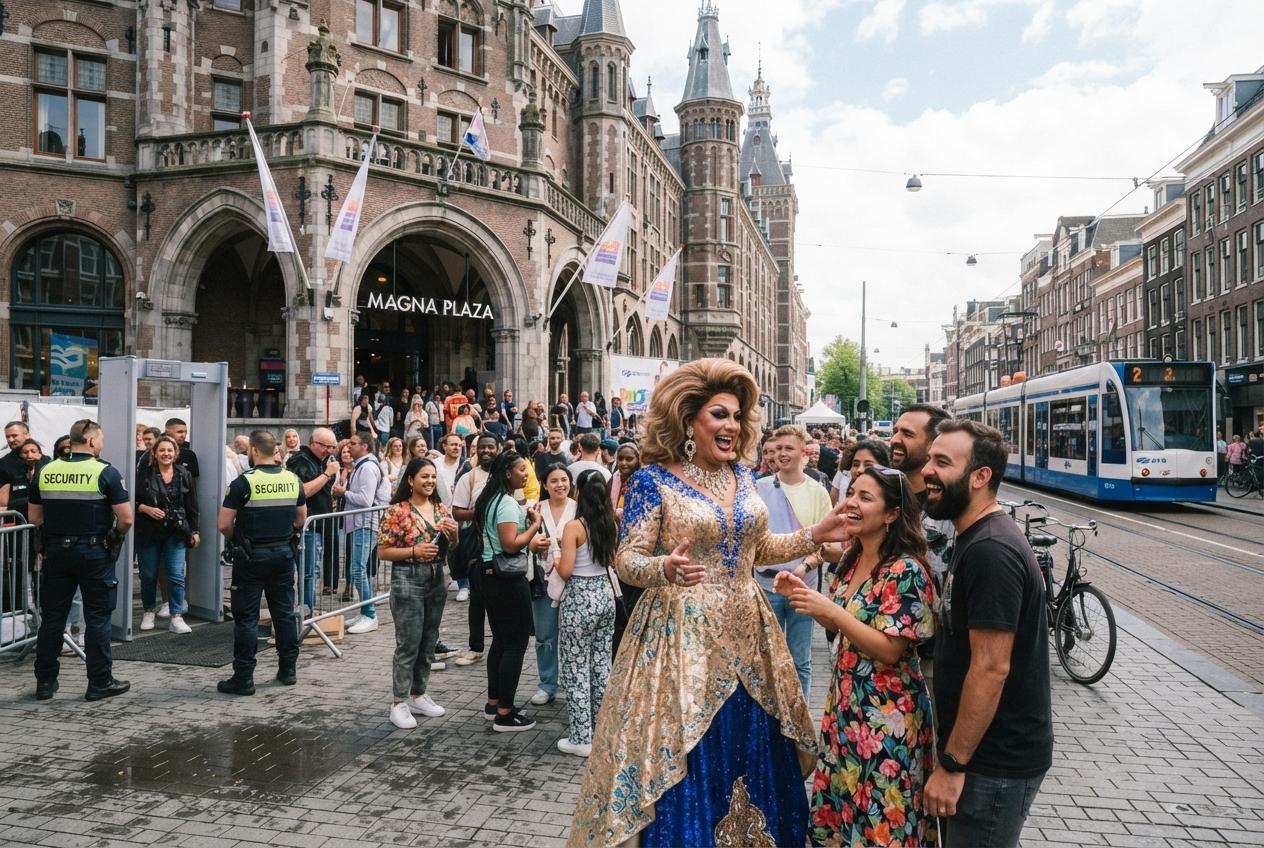
Celebrate, protest, and be seen, Pride in Amsterdam remains a vivid, family-friendly spectacle that combines joy with a vital reminder: everyone deserves to walk, dress and love freely. A drag performer’s day at Magna Plaza shows how visibility and community still make this event special.
Essential Takeaways
- Up-close performance: A short drag-king show at Magna Plaza drew enthusiastic crowds and selfie queues with families and children.
- Warm atmosphere: Attendees described a cheerful, communal vibe despite visible security measures like concrete blocks.
- Safety perception: Extra precautions were noticeable, but many felt safe and supported throughout the day.
- Dual meaning: Pride functions both as a celebration of freedom and an active protest for visibility and rights.
- Lingering concerns: Some queer people report increased intolerance in smaller cities, underlining why public Pride matters.
A personal moment at Magna Plaza , small stage, big emotion
The highlight came in front of the grand glass façade of Magna Plaza, where a drag king gave a brief, high-energy set and welcomed guests for photos. The scene was delightfully intimate, with a string of families and children lining up for selfies; those small human moments landed hardest. According to local coverage, performers left the stage buzzing, needing a moment to catch their breath and remove makeup after the surge of hugs and applause.
That street-level intimacy is exactly what makes Pride approachable. While the Canal Parade gets the headlines, these pop-up shows and meet-and-greets are where many people first feel included. If you’re planning to attend next time, bring a compact camera and patience, those queues can be long, but the smiles are worth it.
The mood: warm, bright and unapologetic
Visit reports emphasise the warmth of the crowd and the sheer number of people joining in the fun across the city. From the Zeedijk to the Dam, there was a sense of collective joy and visible allyship. Organisers and visitors alike described the weekend as vibrant and colourful, full of laughter and music.
That atmosphere matters because it signals normality: queer presence woven into public life rather than hidden away. For newcomers, that warm welcome lowers the threshold to participate. For regulars, it’s a yearly recharge of connection and visibility.
Safety checks were visible, but didn’t eclipse celebration
You couldn’t miss the practical security steps: concrete blocks and extra personnel in key places. Those measures followed high-profile incidents elsewhere, and the aim was clear, protect the crowd without turning the festival into a fortress.
Most attendees reported feeling safe and comfortable despite the precautions. It’s a useful reminder that large festivals now balance openness with vigilance. If you’re attending, expect screening points and give yourself extra time to get through them; it keeps the day relaxed rather than rushed.
Pride is party and protest , a simple, powerful duality
For many, including performers and visitors, Pride is both celebration and statement. It’s a party because it showcases freedom, fashion and fierce performance. It’s a protest because it insists on visibility and rights, saying loudly that people may love and present as they wish.
This dual purpose carries weight when you hear accounts of growing intolerance in some towns. That’s why showing up, whether on a boat, by a shopfront or marching down a street, still matters. Visibility chips away at anonymity, and that helps change attitudes over time.
Why visibility still counts , and what to do about it
Even in progressive cities, there are reports of verbal abuse and isolated attacks. Those incidents explain the emotional urgency behind attendance: being seen is itself protective and empowering. For visitors and allies, simple acts, wearing a rainbow pin, standing near a performer, applauding a passer-by, help make public space safer and more welcoming.
If you want to support Pride beyond showing up, consider donating to local queer charities, volunteering on an info desk, or attending smaller community events that run alongside the main programme. It’s these consistent gestures that keep Pride meaningful year to year.
It's a small change that can make every parade, performance and photo safer and more joyful.
Source Reference Map
Story idea inspired by: [1]
Sources by paragraph: