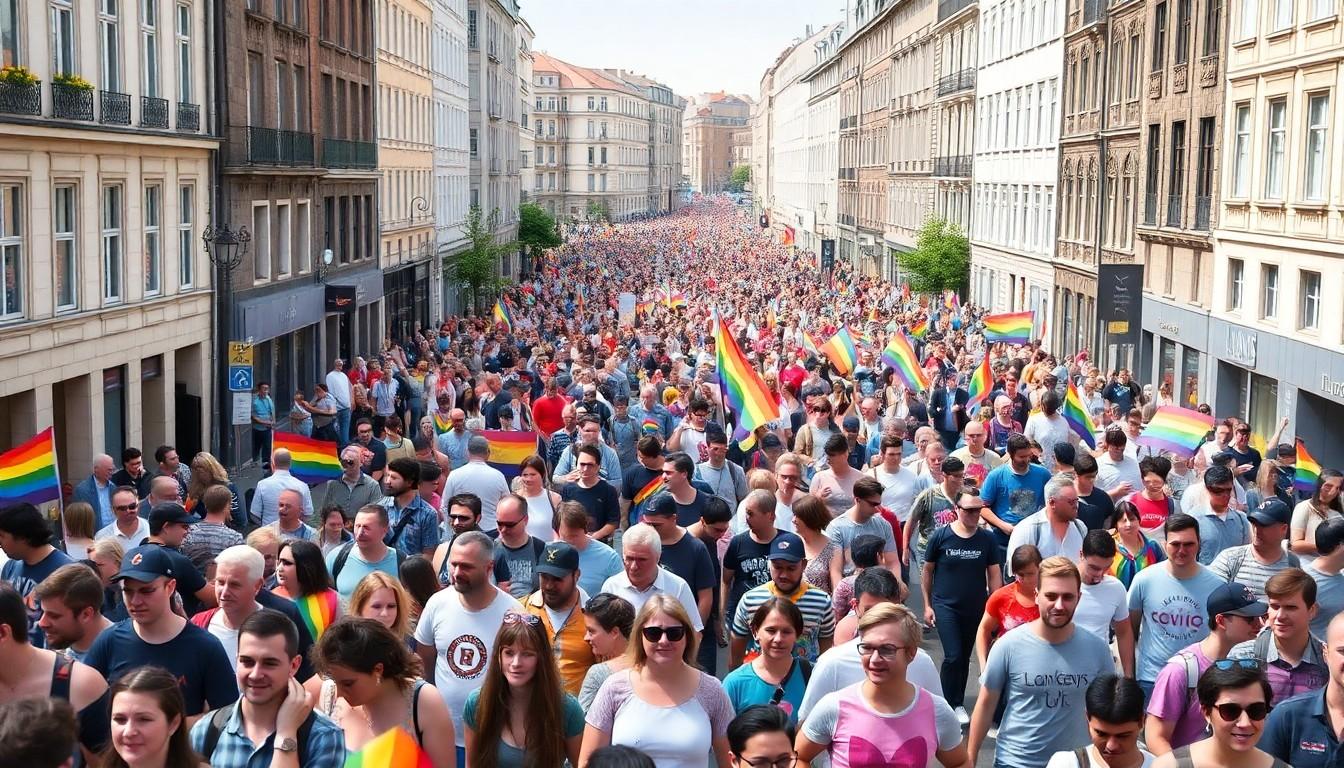
Thousands turned out in Hamburg and Amsterdam this weekend for loud, colourful Pride events , a week after the deadly attack in Berlin , showing solidarity, resilience and a refusal to be intimidated. Here’s what happened, why it mattered and what to know if you’re planning to join future Pride marches or canal parades.
Essential Takeaways
- Huge turnout: Organisers said about 300,000 people joined Hamburg’s Christopher Street Day march, a record for the city, with a peaceful, joyful atmosphere.
- Heavier security: Hamburg doubled police presence compared with last year following the Berlin attack; no major incidents were reported.
- Canal spectacle: Amsterdam’s Canal Parade featured around 80 decorated boats as a highlight of World Pride, drawing international visitors and political support.
- Political visibility: Dutch Prime Minister Rob Jetten, the Netherlands’ first openly gay PM, urged young LGBT people to be proud and visible while condemning recent violence.
- World Pride scale: The multi-day World Pride in Amsterdam expected huge crowds, with parades also planned across other cities including Brighton.
Opening Hook: Hamburg’s record CSD felt both jubilant and resolute, a city-wide party with a sturdy undercurrent of defiance , confetti and slogans, but tighter security and a sharper sense of purpose.
What happened in Hamburg and why it mattered Hundreds of thousands gathered near Lübecker Straße and marched through the St. Georg neighbourhood toward the city centre, organisers and police agreed. Sixty trucks acted as mobile stages for community groups, political parties and even the Protestant church, while banners called for “solidarity with the queer community” and a future without fear. Authorities said the mood was peaceful and celebratory, and there were no serious incidents.
The turnout felt momentous after the Berlin attack last week, in which a vehicle was driven into Pride participants and a woman was killed. Hamburg’s organisers and police reviewed safety plans and substantially increased manpower, and that visible security , along with the crowd’s calm , helped the event remain a celebration rather than a flashpoint. If you’re attending large Pride events, expect bag checks, fenced perimeters and more officers than in previous years; it’s the new normal for big public gatherings.
Amsterdam’s Canal Parade: colour, boats and political backing Amsterdam’s Canal Parade , one of World Pride’s flagship spectacles , rolled with some 80 elaborately decorated boats, each a burst of colour and music on the water. The parade remains uniquely Dutch: intimate, splashy and endlessly photogenic. Prime Minister Rob Jetten used the occasion to speak directly to young LGBT people, urging them to come out when they can and to protest hostility where it persists.
World Pride has broadened the stage for LGBT issues, bringing political leaders and tourists alike. If you prize spectacle, book canal-side spots or the boat experience early; popular vantage points fill fast and the best views often cost a small premium. For first-timers, bring layers , evenings on the water can turn breezy , and charge your phone for photos.
Security and the wider context after Berlin The Berlin attack has cast a shadow over Pride events across Europe, prompting organisers to reassess risk and police to scale up protection. Hamburg’s decision to double police presence compared with last year was a direct response. Organisers balanced visibility and celebration with practical measures: checkpoints, designated routes and co‑operation with emergency services.
Across cities, organisers stress that safety measures aren’t about scaring people off but enabling safe celebration. If you’re attending, stay aware of exits, follow stewards’ instructions and keep an eye on friends in dense crowds. The community’s refusal to shrink from public life is the message here , Pride goes on, but with sensible precautions.
What this means for World Pride and beyond World Pride in Amsterdam is one of the biggest LGBT gatherings globally, and this year it arrived with extra emotional weight. Organisers expected hundreds of thousands for the Canal Parade alone, and related events were scheduled across the UK and Europe. The mix of party, protest and political visibility shows Pride’s dual role: a festival and a serious statement about rights and safety.
For cities hosting large public celebrations, the challenge is now long-term: how to keep events accessible and joyful while ensuring security doesn’t suffocate the spirit. Expect more co‑ordination between organisers, police and city authorities in future years.
Practical tips if you plan to attend Pride events
- Travel light and bring only essentials: water, a charged phone and ID if needed.
- Agree a meeting point with friends in case you get separated.
- Respect security checks and follow steward advice; they’re helping keep everyone safe.
- If you’re there for photos, consider quieter canals or side streets for better shots without blocking crowds.
- Support local charities and community groups on the floats , donations and volunteer hours make Pride happen.
Closing line Pride proved resilient this weekend: bright, noisy and determined to remain public , a small but powerful way to answer fear with colour.
Source Reference Map
Story idea inspired by: [1]
Sources by paragraph: